



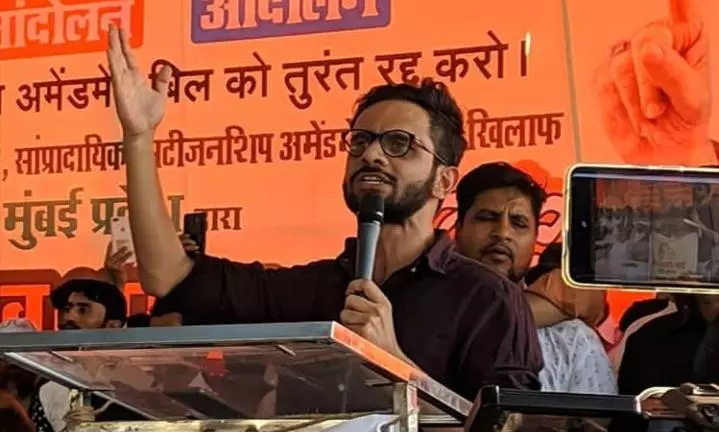
2020 Delhi riots: Why SC denied bail to Umar Khalid, Sharjeel Imam
Supreme Court cites UAPA bar to deny bail to Umar Khalid and Sharjeel Imam, saying material shows planning and mobilisation role in 2020 Delhi riots

The Supreme Court on Monday (January 5) denied bail to activists Umar Khalid and Sharjeel Imam in the larger conspiracy case linked to the 2020 Delhi riots, observing that prosecution material indicates their involvement in “planning, mobilisation and strategic direction” of the violence.
A Bench of Justices Aravind Kumar and NV Anjaria said the statutory bar under Section 43D(5) of the Unlawful Activities (Prevention) Act (UAPA) applies in their case.
UAPA bail bar applies, says top court
“This court is satisfied that the prosecution material taken at face value as required at this stage discloses a prima facie attribution of essential and formative role by the appearance in appeals… of Umar Khalid and Sharjeel Imam in the alleged conspiracy,” the Bench said.
Also Read: 'It is unfortunate': Umar Khalid's father on Supreme Court bail denial for son
The court noted that the material suggests “involvement at the level of planning, mobilisation and strategic direction, extending beyond episodic or localised acts,” adding that “this statutory threshold under 43D (5) of UAPA therefore stands attracted qua these appellants”.
Under Section 43D(5), an accused cannot be granted bail if the court finds reasonable grounds to believe the accusations are prima facie true after perusing the case diary or chargesheet.
While denying relief to Khalid and Imam, the Supreme Court granted bail to Gulfisha Fatima, Meeran Haider, Shifa Ur Rehman, Mohd Saleem Khan, and Shadab Ahmad.
The court clarified that granting bail to these accused does not dilute the seriousness of the allegations or amount to any finding on guilt.
Arrests and background of the case
Imam was arrested on January 28, 2020, for speeches made during the anti-Citizenship (Amendment) Act protests and was later arrested in the larger conspiracy case in August 2020. Umar Khalid was arrested on September 13, 2020.
The accused were booked under the UAPA and provisions of the erstwhile IPC for allegedly being the “masterminds” of the 2020 Delhi riots, which left 53 people dead and over 700 injured during protests against the CAA and the proposed National Register of Citizens (NRC).
Also Read: SC denying bail to Umar Khalid, Sharjeel Imam a 'big slap' on Congress' face: BJP
Opposing bail, the Delhi Police told the Supreme Court that Khalid, Imam, and others conspired to strike at the sovereignty and integrity of the country through a “regime change operation” executed under the guise of “peaceful protest”.
The police argued that the alleged offences involved a deliberate attempt to destabilise the State and therefore warranted “jail and not bail”.
‘Premeditated and pre-planned conspiracy’
The police claimed the violence was not spontaneous but part of a “deep-rooted, premeditated and pre-planned” conspiracy.
“The evidence gathered from the period preceding the execution of the conspiracy; documented communications, coordinated plans, and alignments between actors; establishes a clear meeting of minds,” it said.
According to the police, the material demonstrates not only knowledge but intention to bring the country into disrepute through targeted and strategic actions.
Rebutting arguments on prolonged incarceration, the police said the petitioners had “for malafide and mischievous reasons” delayed the commencement of trial to seek bail.
It dismissed concerns over the trial involving around 900 witnesses as a “red herring” manufactured to obtain bail.
Allegations involving student mobilisation
The police alleged that Khalid and Imam broke the “secular fabric” of Jawaharlal Nehru University (JNU) and created a communal WhatsApp group titled ‘Muslim Students of JNU’.
They were also accused of using students of Jamia Millia Islamia to instigate and mobilise protests at Jamia, Shaheen Bagh, and other locations.
“They adopted a model of Chakka-Jaam in the name of protest and planned to convert it into disruptive Chakka-Jaam at an appropriate time, disruption of supplies and services essential to normal life and attempting to dismember constituent provinces of India from the Union of India,” the police affidavit said.
Also Read: Gas leak at ONGC Mori-5 well sparks fire in Andhra Pradesh
According to the police, the motive behind the Chakka-Jaam strategy was the killing and injuring of police personnel and “non-Muslims” on a mass scale through communal violence.
The affidavit alleged that “Imam under the tutelage of Umar Khalid and other top conspirators conspired and engineered the first phase of the Delhi riots from December 13 to December 20, 2019”.
Meetings and alleged coordination
The police further alleged that Khalid held a “secret meeting” in Seelampur in January 2020 with Gulfisha Fatima, Natasha Narwal, Devangana Kalita, and others, where instructions were allegedly given to stockpile weapons and materials to engineer riots.
Fatima was accused of acting as a key coordinator who helped turn peaceful sit-ins violent, while Meeran Haider was alleged to have overseen protest sites, collected funds, and encouraged attacks on police and non-Muslims.
The bail pleas of Khalid, Imam, and others are scheduled to come up for further hearing before the same Supreme Court Bench on Friday.