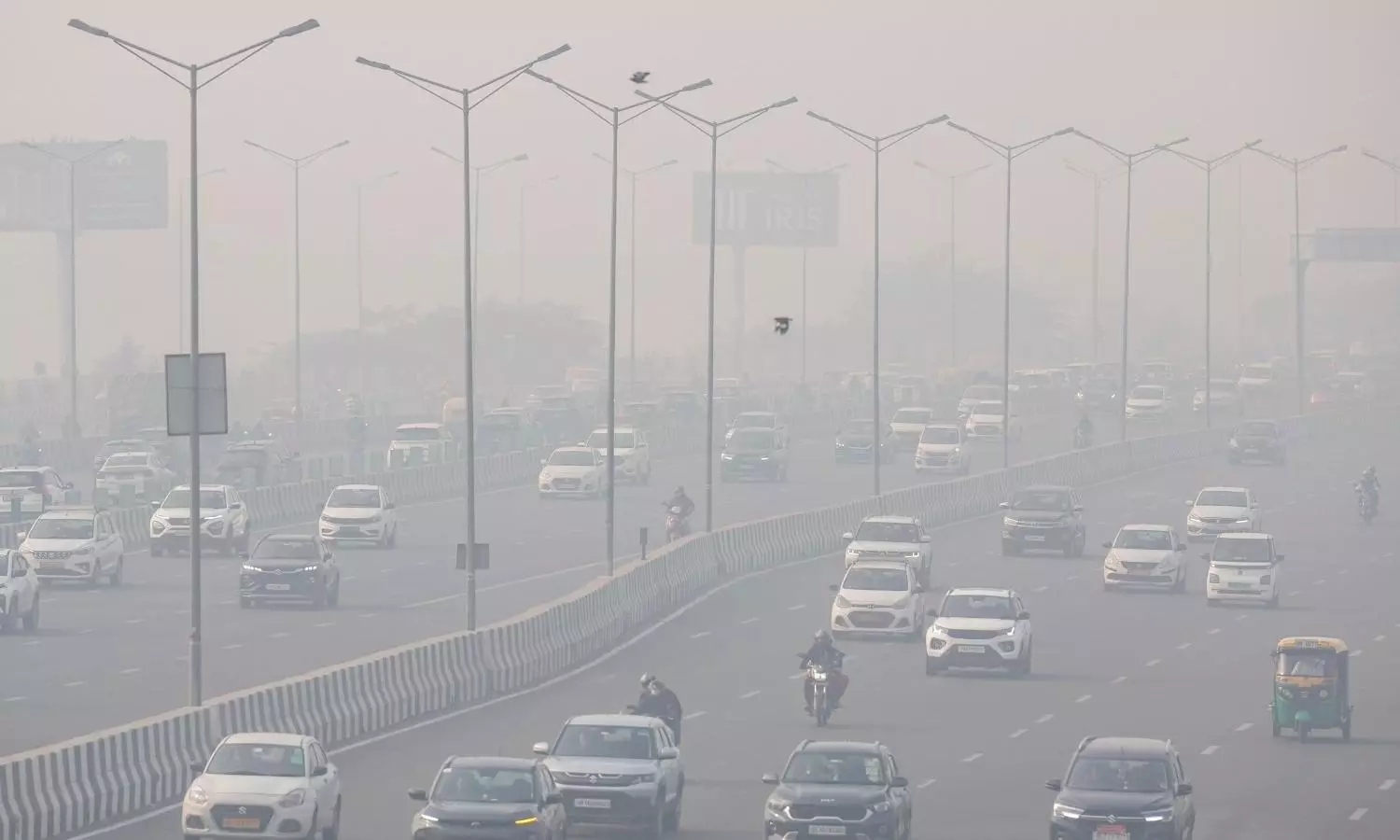
GRAP lifted in Delhi: Is air pollution problem under control?
Expert says the recent improvement in air quality is largely due to seasonal changes, while core pollution sources largely remain unaddressed

The Delhi government has withdrawn the Graded Response Action Plan (GRAP) from the capital, but the question remains whether the relief from pollution is merely a function of the weather.
According to Shambhavi Shukla, an expert at the Centre for Science and Environment (CSE), GRAP is an emergency measure that is often implemented between October 15 and March 15. In winter, due to low mixing height and slow wind speed, Delhi traps pollutants like a bowl. Now, with the onset of summer, the pollutants move upwards with the wind, leading to an improvement in the air quality. This situation clearly shows that the change in weather has played a greater role than government efforts in reducing Delhi's suffocating pollution.
Pollution sources persist
Shambhavi Shukla's scientific argument is that the main sources of pollution in Delhi remain active year-round. These include vehicle exhaust, construction dust, and industrial emissions. The government often shows activity only during the winter, while the pace of work on permanent solutions is extremely slow.
Also read: All major Indian cities recorded unsafe AQI, Bengaluru least affected: Study
If government initiatives were truly effective, Delhi could have been prevented from becoming a "gas chamber" every winter. Experts believe that unless we address these sources rigorously year-round, the situation will spiral out of control again by October. Removing the GRAP is a process, but it is by no means the end of the pollution problem.
Air quality gap remains
Data analysis from the past few years shows that some administrative measures have helped bend the pollution curve. This has led to a drop of about 25 per cent in air pollution levels.
But Shambhavi Shukla warns that this is a drop in the ocean. Delhi still needs to reduce its PM 2.5 levels by another 60 per cent to meet safe national standards. This goal cannot be achieved if the government continues to spend crores of rupees on temporary measures like 'smog towers' or 'water sprinkling'.
Also read: India sets own norms, says global air quality rankings carry no official sanction
The opposition has also alleged that water is deliberately sprinkled near monitoring stations to artificially improve readings, which is a disguise for the underlying problem.
Public transport crisis
Delhi's transportation system remains a major source of pollution. Nearly 15 years ago, the court clearly mandated that Delhi's roads should have at least 10,000 buses, based on its population and area. Ironically, even in 2026, Delhi has only 7,500 buses available.
Also read: Delhi records worst February air quality in three years
A large number of these are CNG buses that have already passed their intended lifespan. According to Shambhavi Shukla, emissions will not decrease until public transport becomes robust and reliable enough to encourage people to abandon their private cars. While e-buses are arriving, their speed and number remain far below demand.
Underutilisation of funds
One of the most shocking aspects concerns the utilisation of funds. Delhi was allocated a budget of approximately Rs 80 crore under the National Clean Air Program (NCAP). Records show that the Delhi government has been able to utilise only 20 per cent of this fund.
Also read: Delhi air pollution: ‘Impossible to fix in 9 months’, says minister Sirsa
The deadline for this important program is about to expire on March 31, 2026, but the failure to implement the schemes despite the availability of the budget reflects a gross administrative failure. There is a severe lack of coordination between the Transport Department, MCD and Delhi Pollution Control Committee (DPCC) for pollution control.
Lack of monitoring
Shambhavi Shukla also highlighted that while coal is banned in Delhi's formal industrial areas, the situation in unauthorised colonies is dire. The government doesn't have accurate data on the thousands of small factories operating in the informal sector. There's no one to monitor what's being burned in their boilers.
Furthermore, fires at landfill sites and garbage burning in the streets continue. Unless local teams are formed to curb these issues, Delhi's air will continue to be toxic.This article was originally published in The Federal Desh