



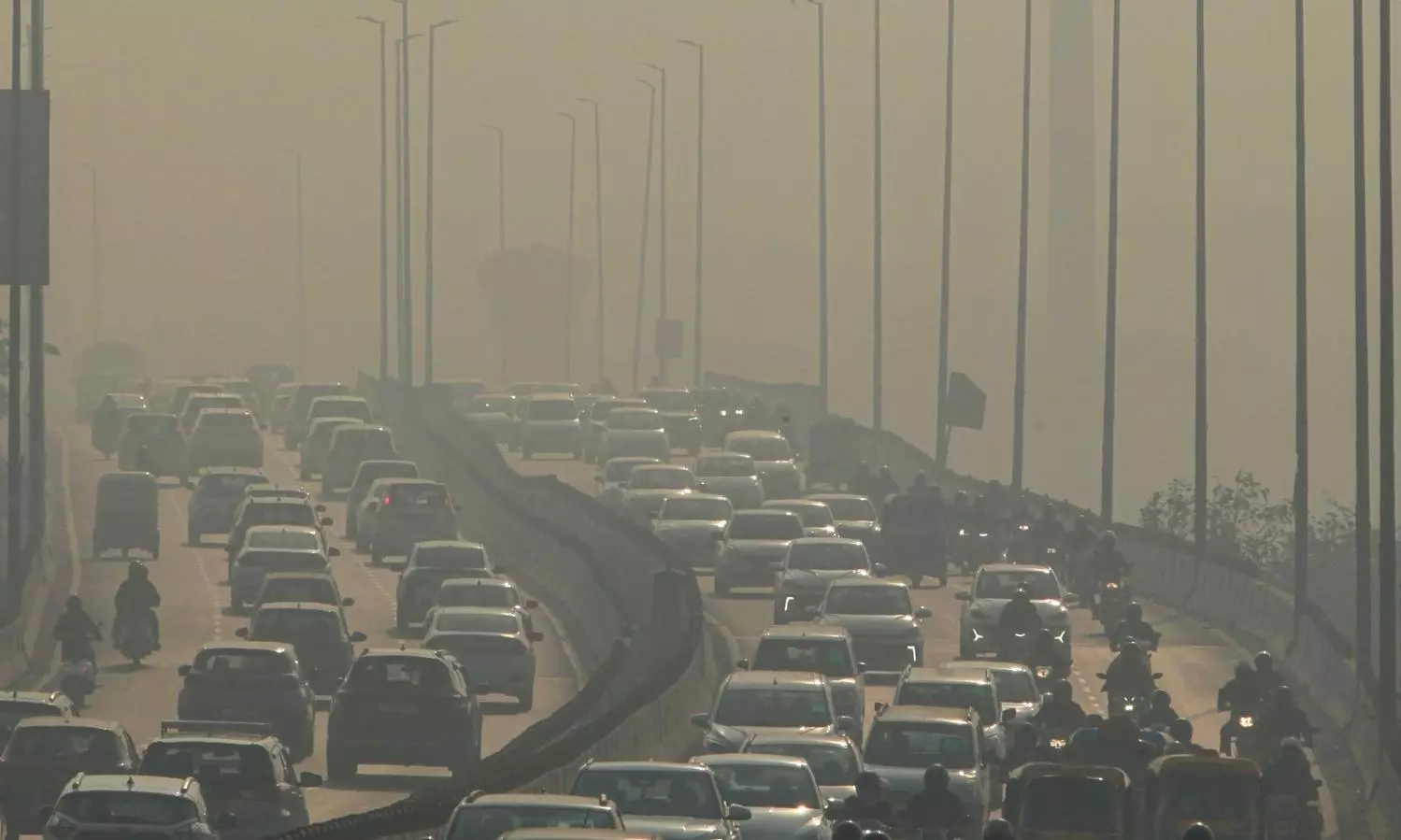
All major Indian cities recorded unsafe AQI, Bengaluru least affected: Study
A decade-long study shows no major Indian city met safe AQI levels from 2015–2025. Delhi remains the most polluted, while Bengaluru recorded the least toxic air

None of the major Indian cities has achieved the level of safe Air Quality Index (AQI) level in the last decade-2015-November 20, 2025- a recent study revealed. The study of annual average AQI of 11 Indian cities showed that while New Delhi remained the worst performer, Bengaluru has the least polluted air among metro cities with AQI in the “good category.”
The study attributed the grim situation regarding urban air pollution in India to meteorology and geography, which consistently contribute towinter smog, particularly in the Indo-Gangetic region.
‘Cities with moderate AQI levels also unsafe’
The study, by Climate Trends, a research-based consulting and capacity building initiative, found that although cities like Kolkata, Mumbai, Chennai, Chandigarh, and Visakhapatnam had moderate AQI levels, they were still unsafe, reported the Business Standard.
Also Read: Delhi AQI at 332; air quality remains in ‘very poor’ category
While in some cities the AQI improved after 2020, none of them were close to falling into the healthy air quality category. Delhi remained the most polluted city in the decade with an AQI of around 180 in 2025.
As for cities in North and West India like Lucknow, Varanasi, and Ahmedabad, the AQI there consistently remained at unhealthy levels.
No AQI improvement despite decreasing farm fire
Moreover, even with a major drop in farm fires, there was no significant improvement this year in Delhi’s air quality.
“The absence of big rainfall events in October and weak western disturbances eliminated natural pollutant washout, accelerating early smog formation,” stated the study.
Also Read: Delhi’s air quality remains unchanged at 'very poor' amid continuing pollution crisis
It noted that the decade of data highlights how air pollution in India continues to be a nationwide, long-standing, and deeply rooted problem, shaped by rapid urban growth, expanding traffic, industrial activity, and seasonal patterns.
The organisation stressed that these conditions call for comprehensive, science-driven policy responses rather than short-term fixes.
It further observed that even cities showing relative improvement have not yet entered the safe AQI bracket, underscoring the extent of the challenge.
Advancements in technology fall short
According to Climate Trends, recent policy actions and advancements in technology have not been sufficient to resolve the issue. Major urban centres are still grappling with significant air quality concerns, indicating the need for stronger pollution-control measures, consistent regulatory enforcement, and long-term planning changes within urban development frameworks.