Turban off, crown on: Samrat Choudhary’s journey from BJP’s target to Bihar CM
Once ousted by BJP over age fraud, Samrat Choudhary’s rise blends Amit Shah’s backing, his impressive performance, and the Luv-Kush caste calculus

If politics makes strange bedfellows, Samrat Choudhary has been sleeping with the enemy for the past eight years. But then, as they say, there are no permanent enemies, no permanent friends, only permanent interests in politics. And Choudhary could be the brand ambassador of that—much like his predecessor though with varying results.
As Choudhary, alias Rakesh Kumar, was crowned the first BJP chief minister of Bihar on Wednesday (April 15), the irony was not lost on observers. Here was a man who had lost his Cabinet seat because of the same saffron party 26 years ago, being handed over the baton willingly by another of his “enemies”, whom he had vowed to oust from the hot seat and not take off his saffron muretha (turban) until then.
Thankfully, Choudhary did not wait to take off the turban until JD(U) chief Nitish Kumar actually made way for him; he took off the muretha in January 2024 itself, when Nitish returned to the NDA fold, now a saffron scarf a permanent fixture around his neck to make it clear where his ideology, and loyalties, lie.
Old enmity
Yet, there was time when this man possibly could not stand the sight of saffron. For over a decade, he aggressively attacked the BJP for robbing him of the post of minister of horticulture, weight and measurement in the RJD government headed by Rabri Devi way back in 1999.
Also read: BJP's Samrat Choudhary sworn in as Bihar chief minister
He had reportedly presented three different dates of birth in documents submitted in different places. The BJP and the Samata Party hung on to the issue, made a hue and cry that he was underage, and got the then Bihar Governor, Suraj Bhan, a senior BJP leader, to sack Choudhary in November 1999.
Not only that, a probe was ordered, and on the basis of its report, Bhan directed the state government to lodge a case of fraud, forgery, and misrepresentation against Choudhary and sought the recovery of salaries and allowances paid to him as minister. It had been widely projected as victory by the BJP against the “jungle raj” of the RJD government.
An ‘outsider’
It is no surprise then that even eight years after he joined the saffron party, Choudhary is still seen as an “outsider” by a section of the Bihar unit. Mainly the senior leaders with an RSS background are not comfortable over the rapid rise of Choudhary—joining the party in 2018, becoming the state unit vice-president that same year, a minister in 2021, the state party chief in 2023, deputy chief minister in 2024, and finally, the chief minister in 2026.
A major reason for their discomfort is that Choudhary does not have an RSS background. Many of these senior BJP leaders have been expressing reservation in private that the party leadership has shown more faith in Choudhary than in the “original” party workers. In fact, a strong lobby in the state BJP was against Choudhary becoming the chief minister. Even the RSS was in favour of an EBC leader being elevated to the post of chief minister.
Also read: How will Bihar remember Nitish Kumar’s two-decade reign as CM?
Yet, the top party leadership, mainly Amit Shah, went with Choudhary. The question is, why?
‘Amit Shah’s man’
First, Choudhary is widely considered to be “Amit Shah’s man” in the state BJP. It was Shah who handed over the state party command to him when Nitish dumped the BJP and joined hands with the RJD in 2022. Choudhary deftly played the role of an aggressive Opposition leader, as expected by Shah. He hardly missed any opportunity to target both Lalu Prasad and Nitish Kumar during the 17 months from August 2022 to January 2024, when Nitish headed the Mahagathbandhan government in the state in alliance with the RJD.
According to BJP leaders, Choudhary also successfully completed the tasks assigned to him by Shah to create a new organisational set-up of the party and strengthen it from the top to the grassroots in record time. Reportedly, Shah liked Choudhary’s political strategy as well as his aggression and it was under his instruction that Choudhary was projected as a strong leader after the NDA returned to power last year.
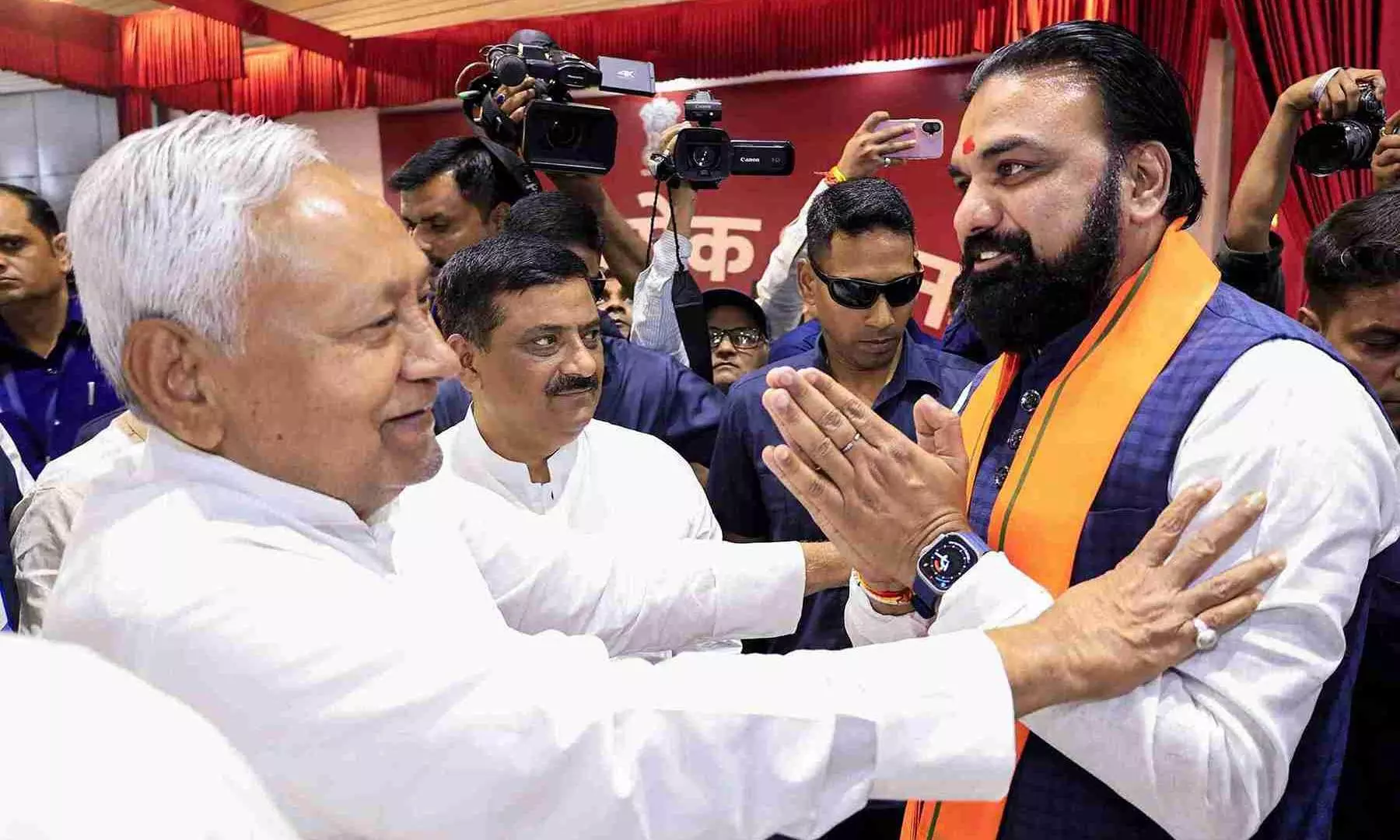
Choudhary’s capability was not lost on Nitish Kumar either. The immensely experienced former chief minister publicly favoured Choudhary’s elevation in recent weeks. Amusingly, Choudhary has once donned the saffron turban vowing not to take it off until Nitish was removed from the CM’s chair.
Also read: Bihar gets first BJP CM in Samrat Chaudhary, but will his govt be stable? | Capital Beat
Choudhary’s experience as a former minister and as deputy chief minister also reportedly worked in his favour. When the BJP got to play a dominant role in the state government last year, the party got the prime portfolio of the home department for the first time in 20 years, and Choudhary was placed in charge of it. And he did not disappoint.
The caste factor
Second, and perhaps more importantly, Choudhary’s caste works in his favour. He belongs to the Kushwaha or Koeri community, an agrarian OBC that is the second largest social group after the Yadavs in Bihar’s caste-ridden politics. The Kushwahas, along with Nitish’s Kurmi caste, another OBC, form a solid traditional support base of the NDA.
A senior BJP leader and former minister told The Federal that the party top leadership found a strong OBC leader in Choudhary, who has also successfully proved his image as a hardline Hindutva leader who can play development issues to influence and consolidate the non-Yadav OBCs, a big factor not only in Bihar but also the neighbouring Uttar Pradesh, which is set to face assembly elections next year, a big challenge for the party. Putting him in the CM’s chair in Bihar is expected to send a political message to Uttar Pradesh as well, particularly in eastern belt bordering Bihar.
Besides, the BJP is also believed to be eyeing Nitish’s traditional Luv-Kush (Kurmi and Koeri/Kushwaha) support base. With Nitish moving out of Bihar politics to Delhi as a Rajya Sabha MP, the future of his party, JD(U), is being seen in political circles as uncertain at best. It is widely accepted that Nitish’s strength in state politics for two decades was fully based on the overwhelming support of “Luv-Kush”, which the BJP now plans to make a dent into by using Choudhary.
Also read: The rise of Samrat Choudhary, from RJD roots to BJP’s first Bihar CM
The Kushwahas account for 4.21 per cent of the total population of Bihar, while the Kurmis make for 2.87 per cent. Together, they account for about 7 per cent of the population, which is still less than half of Yadav’s 14.26 per cent, but they matter in more than 40 of the 243 assembly seats.
This caste equation of non-Yadav OBCs plays a significant role in Uttar Pradesh too. “In the 2024 Lok Sabha polls, the opposition Samajwadi party consolidated the non-Yadav OBCs, mainly Luv-Kush, along with the traditional Yadav support in its favour, resulting in the BJP’s poor performance. Taking this as a warning, the BJP seeks to repeat its formula in the 2022 assembly polls, when it got overwhelming support from Luv-Kush. Choudhary’s elevation was made specifically to woo this category,” said a political analyst in Bihar.