Union Budget leaves poll-bound Assam empty-handed, yet again
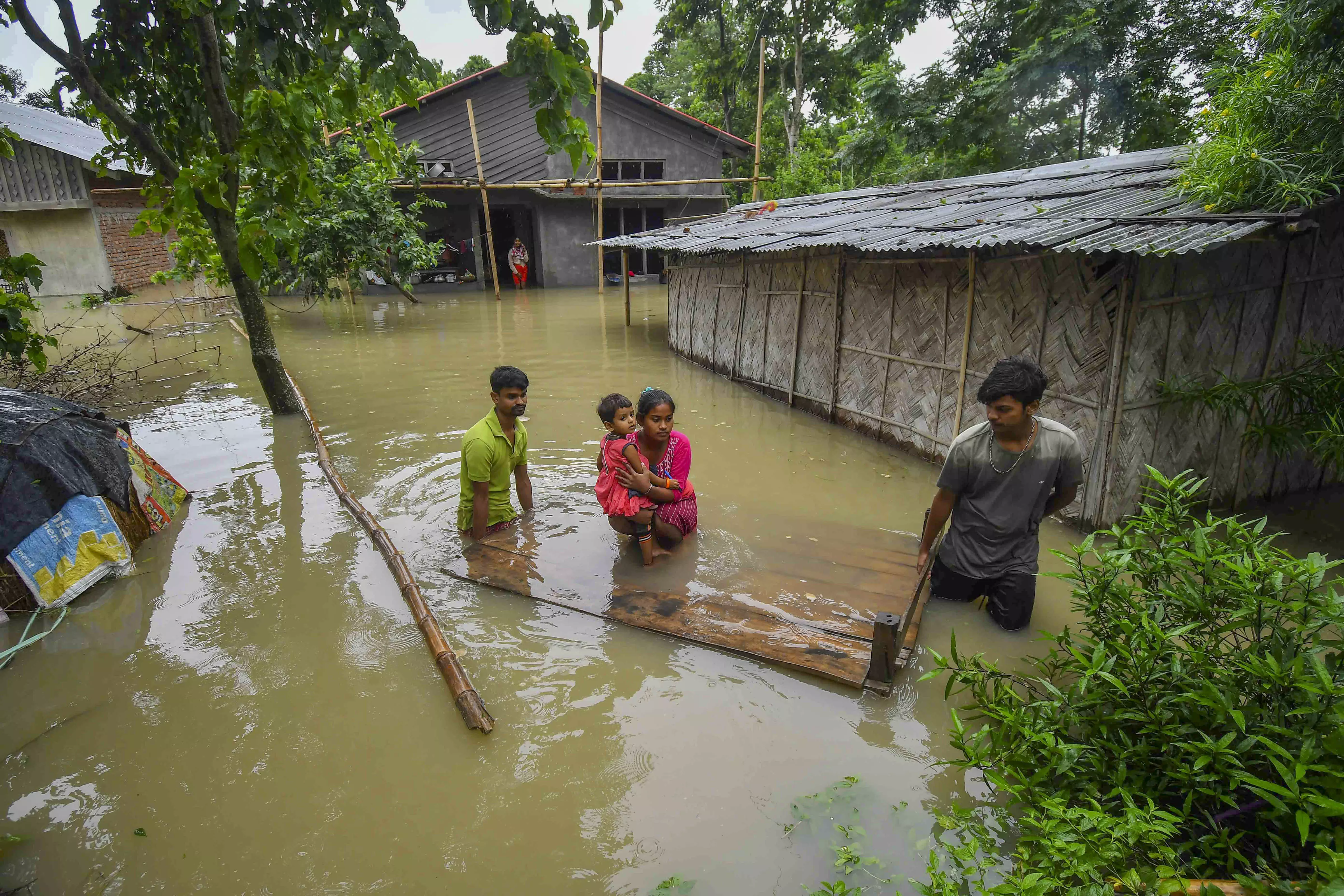
In a state where floods are a yearly headache, roads deteriorate rapidly, and riverbank erosion displaces thousands, long-term assurances ring hollow

With barely two months left for the Assembly elections in Assam, the Union Budget 2026-27 has triggered disappointment across the state, as it stopped short of announcing any major state-specific initiative at a time when the ruling party’s expectations were high. Instead of bold interventions to address recurring floods, unemployment, and fragile infrastructure, the Budget offered regional assurances under the Centre’s North East-focused narratives.
Finance Minister Nirmala Sitharaman’s emphasis on the “Purvodaya” vision for eastern and north-eastern India found mention in tourism, healthcare, and connectivity initiatives. However, on the ground in Assam—where floods are a yearly headache, roads deteriorate rapidly, and riverbank erosion displaces thousands—the announcements appear distant and insufficient.
Also read: What does each state get from Budget 2026-27?
What Assam got
Among the limited takeaways for the state is the proposed upgrade of the National Mental Health Institute in Tezpur as a Regional Apex Institution. While the move could strengthen mental health and trauma care in a disaster-prone region, it is an expansion of an existing facility rather than a new hospital or project that brings immediate employment or infrastructure creation.
Assam is also included in a new Buddhist Circuit scheme along with five other north-eastern states, aimed at developing temples, monasteries, and pilgrimage amenities. Additionally, the Budget speaks of developing five tourism destinations across Purvodaya states and deploying 4,000 electric buses across the entire North East. Critics, however, question the scale of these measures. Spread across eight states, it remains unclear how many buses Assam will actually receive or whether the tourism initiatives will translate into tangible local benefits.
The Centre has reiterated its commitment to capital expenditure, pegged at around Rs 12 lakh crore, which could strengthen connectivity in the long term and reinforce Assam’s role as the gateway to the North East. Yet, for many in the state, long-term assurances ring hollow when immediate concerns remain unaddressed. Notably absent from the Budget was any fresh allocation for flood and disaster management, even as Assam awaits nearly Rs 27,000 crore promised earlier for that.
Also read: Repackaged Budget sops for Bengal irk state players: 'Humpty Dumpty Budget'
Cautious Himanta focuses on tax devolution
The contrast with last year’s Budget has further sharpened criticism. The Union Budget 2025–26 had approved a new 12.7-lakh metric tonne urea and ammonia plant at Namrup, with an investment of over Rs 10,600 crore—an announcement that generated optimism around jobs and industrial growth. No comparable industrial push has been offered this year.
Assam Chief Minister Himanta Biswa Sarma adopted a cautious tone, expressing hope that Assam will receive a higher share of revenue devolution following the acceptance of the 16th Finance Commission recommendations, which will provide Rs 1.4 lakh crore in grants to states.
“The formal acceptance of the 16th Finance Commission recommendations is expected to enhance Assam’s share in tax devolution to 3.258 per cent from 3.128 per cent, providing greater fiscal space for development. Overall transfer to our state is set to increase substantially through this Budget,” Sarma said.
Also read: Budget 2026 and the unanswered crisis facing India’s MSMEs
Opposition highlights what Assam needed
Congress leader and former Rajya Sabha MP Ripun Borah bluntly said the Budget had “nothing for Assam,” particularly highlighting the absence of funds for flood and disaster management.
“Assam is yet to receive Rs 27,000 crore from the Centre for flood and disaster management, and there is no mention of it,” Borah said. He also alleged delays in fund release under the Ministry of Development of North Eastern Region (DoNER), and termed the Budget “pro-corporate,” accusing it of neglecting MSMEs, rural infrastructure, poverty alleviation, village schools and healthcare.
For a state heading into elections amid persistent economic and environmental challenges, Union Budget 2026–27 offers more continuity than conviction—with barely any reason to celebrate.