Budget 2026 and the unanswered crisis facing India’s MSMEs
Experts panel examines whether the Budget's credit-led approach can restore MSMEs after years of shocks, without a clear manufacturing or demand revival plan

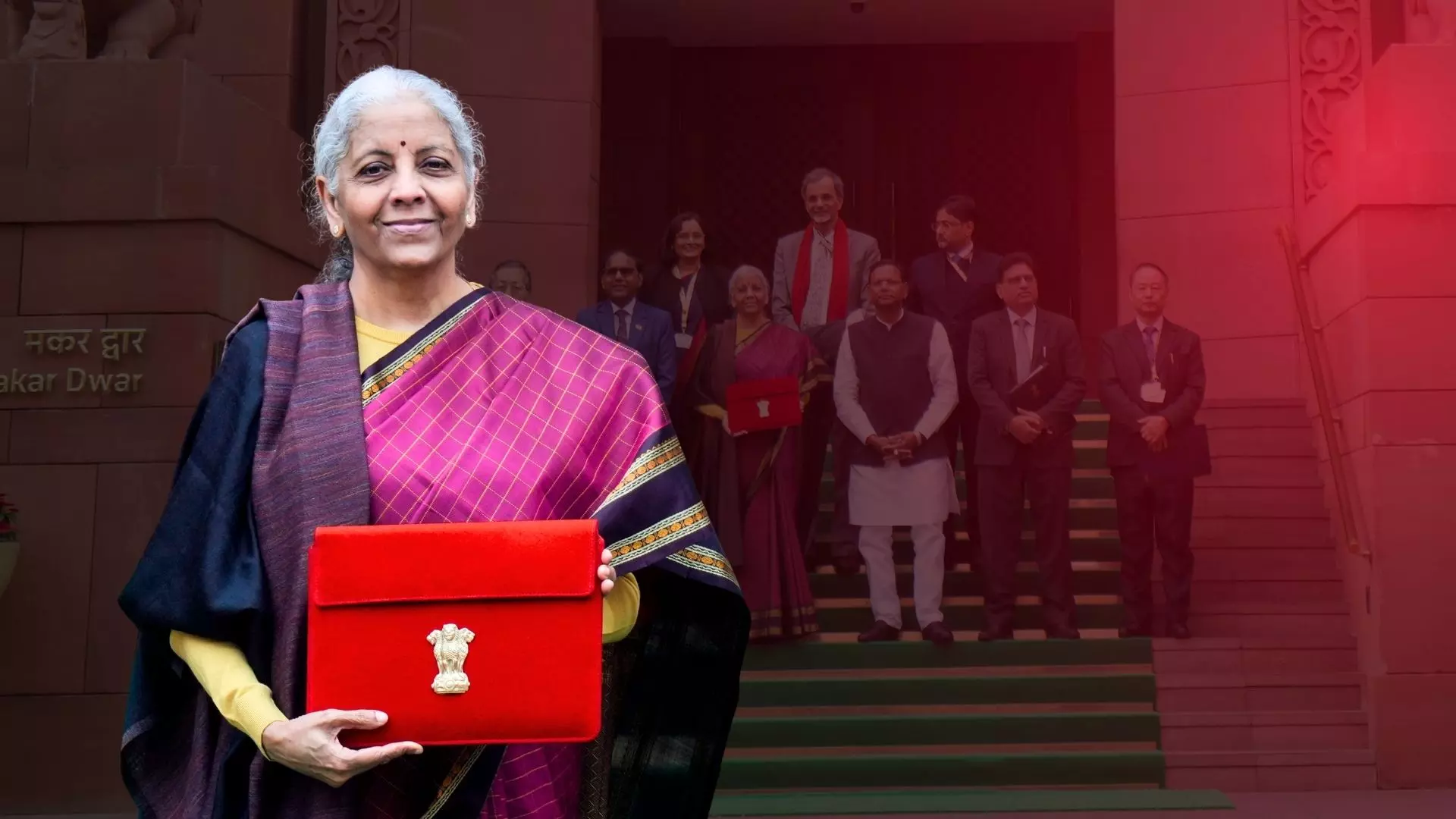
Union Budget 2026-27 once again places micro, small and medium enterprises (MSMEs) at the centre of India’s growth narrative. From expanded credit lines to assurances of stability, the government has pitched MSMEs as the backbone of recovery in an uncertain global economy.
But do these measures address the deeper scars left by demonetisation, GST, the Covid-19 shock and ongoing global trade disruptions? Or does the Budget risk treating a structural crisis as a narrow credit problem?
In a special panel discussion, The Federal spoke with Biswajit Dhar, trade economist; Kalaiyarasan Arumugam, economist; Vidya Mahambare, professor of economics at Great Lakes Institute of Management; Jai Asundi, Executive Director of CSTEP; TK Arun, columnist and economist; and S Srinivasan, Editor-in-Chief of The Federal.
The discussion revealed a shared diagnosis: macro stability has been prioritised, but the deeper problem—why private investment, especially among MSMEs, refuses to revive—remains unresolved.
Fiscal caution over strategic push
TK Arun opened the discussion with a sharp critique of the budget’s overall stance. He argued that the government had chosen fiscal compression at a moment that demanded expansion.
“This is not just any other year. We are facing serious geopolitical and technological challenges, and yet the budget size is being compressed,” Arun said. He pointed out that overall expenditure had been reduced to 13.6% of GDP, even as growth momentum remained weak.
According to him, the Centre has also diluted focus by spending heavily on schemes that constitutionally fall under state subjects. “This may give political mileage, but is this what the country requires at a time of grave strategic challenge?” he asked.
A tilt towards services
Vidya Mahambare offered a contrasting reading. Her central takeaway was that Budget 2026 signals a quiet but decisive shift towards services-led growth.
“My one big takeaway is the clear move towards services,” she said, pointing to announcements on tourism, medical tourism, education services, global capability centres, and cloud services. Manufacturing reforms, she noted, were present but incremental.
Mahambare argued that this shift reflects labour-market realities. “We have educated our youth, including women. You cannot force them back into low-end factory jobs,” she said, adding that regional variation in manufacturing strategy is unavoidable.
Investment puzzle
Kalaiyarasan Arumugam argued that the budget does not adequately respond to the Economic Survey’s diagnosis of structural weaknesses. While growth and inflation numbers appear healthy, he warned that India’s external position is increasingly fragile.
“Our foreign exchange reserves are built on volatile capital inflows, not manufacturing or merchandise trade surpluses,” he said. “That makes us extremely vulnerable in a world of geopolitical disruption.”
On MSMEs, Arumugam stressed that credit-focused solutions are insufficient. “India’s manufacturing ecosystem is not constrained only by capital. Many firms have surplus cash, yet they are not investing,” he said. The real constraints, he argued, lie in weak demand, poor technology diffusion, and lack of integration between MSMEs and large firms.
Manufacturing sans direction
Biswajit Dhar was blunt in his assessment of India’s manufacturing strategy. Despite multiple initiatives, he said, manufacturing has failed to gain ground.
“Twelve years ago, the target was to raise manufacturing to 24% of GDP. Today it is still languishing around 16–17%,” Dhar said. He criticised the lack of focus in policy design, arguing that schemes are announced without consolidation or long-term strategy.
On trade, Dhar challenged the assumption that MSMEs are driving labour-intensive exports. “Leather, textiles and garments together account for less than 5% of our total exports,” he said. Free trade agreements, he warned, are widening deficits because India has not built competitive manufacturing capacity.
MSMEs: credit versus capability
Several panellists converged on the idea that MSMEs are being treated as a single category, masking deep differences. Dhar cautioned against conflating micro enterprises with SMEs.
“Ninety-nine per cent of MSME employment is in micro enterprises, and they don’t even access formal credit,” he said. These firms, he added, remain trapped in informality and high-cost borrowing.
Arumugam reinforced this by citing enterprise data. “In Tamil Nadu alone, around 50,000 registered MSMEs have still not recovered from successive shocks,” he said, warning that tariff pressures are now compounding these losses.
Credit markets and automation
Arun argued that MSME revival requires deeper financial reform, not just guarantees and schemes. “We need a functional high-risk debt market,” he said, suggesting that sub-investment-grade bonds should be allowed so NBFCs can lend to MSMEs at reasonable rates.
He also warned that policy continues to rely on outdated assumptions about labour-intensive growth. “These industries will be automated whether we like it or not,” Arun said. “If we don’t prepare Indian industry for robotics and AI, production will simply shift elsewhere.”
From a climate and infrastructure perspective, Jai Asundi viewed the budget’s long-term investments as a tentative but positive signal. He pointed to allocations for carbon capture and energy transition as evidence of longer-horizon thinking.
“These are not tap-on, tap-off investments. They require decades of planning,” Asundi said. He also highlighted the importance of tier-two and tier-three cities as future MSME hubs. “If growth spreads beyond the big metros, MSMEs can integrate better into both local and global value chains,” he noted, while cautioning that sustainability must remain central.
Federal constraints
S Srinivasan highlighted the fiscal limits faced by states and local bodies. While the Finance Commission has retained a 41% tax devolution, he noted that effective transfers are much lower due to rising cesses.
“How much actually reaches states and local bodies is still unclear,” Srinivasan said, warning that MSME clusters and urban infrastructure plans depend heavily on state capacity.
On the budget as a whole, he described it as cautious rather than transformative. “This feels like a safe budget—plugging gaps, not making big moves,” he said.
Across the panel, one question remained unresolved: why is private investment still not picking up? Consumption has improved modestly following tax cuts, but firms remain hesitant.
As Mahambare put it, “Firms invest only when they see future profits.” Until demand visibility improves—both domestically and through exports—MSMEs are likely to remain cautious, regardless of incentives.
The content above has been transcribed from video using a fine-tuned AI model. To ensure accuracy, quality, and editorial integrity, we employ a Human-In-The-Loop (HITL) process. While AI assists in creating the initial draft, our experienced editorial team carefully reviews, edits, and refines the content before publication. At The Federal, we combine the efficiency of AI with the expertise of human editors to deliver reliable and insightful journalism.