Why activists see red as Assam plans to trim Kaziranga’s eco-sensitive zone to 1 km
Environmentalists fear shortening ESZ from 10 km to 1 km will shrink grasslands and breeding areas of animals, and encourage illegal mining activities

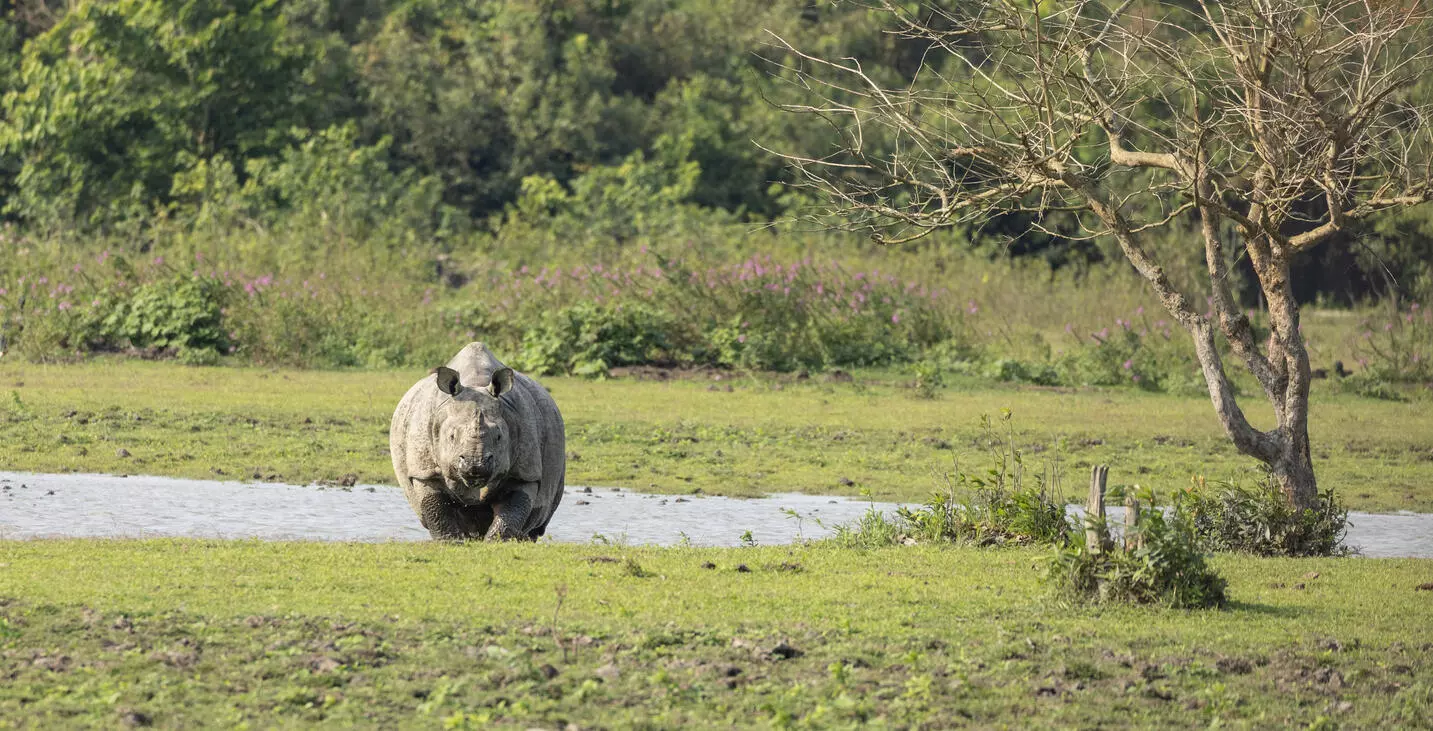
The Assam government’s announcement to trim the limit of the eco-sensitive zone (ESZ) circling the Kariranga National Park and Tiger Reserve from the existing 10-km radius to 1 km has sparked a row with environmentalists fearing that the move will jeopardise wildlife, including the one-horned rhinoceros in the area, and shrink grasslands and breeding areas.
Why govt wants ESZ trimmed
Announcing the government’s decision during his visit to Bokakhat on August 8, Assam Chief Minister Himanta Biswa Sarma said the state government would submit a proposal to the Centre within the next two months for formal notification and demarcation of the ESZ.
Sarma said the ESZ currently extends up to 10 km by default as it has not yet been formally notified. He said reducing the zone to 1 km would ease several restrictions affecting development activities in areas surrounding Kaziranga.
Also read: How Assam’s Kaziranga National Park became a stronghold for the vulnerable fishing cats
He said a formal notification and demarcation of the ESZ would provide greater clarity regarding development regulations and help facilitate infrastructure projects in and around Bokakhat.
Impact on rhinos, breeding grounds
Environmentalists have strongly opposed the proposal, and raised questions over the balance between development and conservation, particularly in view of the ecological sensitivity of areas adjoining Kaziranga, a UNESCO World Heritage Site.
Golaghat-based environment activist and journalist, Apurba Ballav Goswami, said shrinking the ESZ would pose “a threat to the wildlife of the national park, especially the rhino, considered the pride of Assam.”
Environment activist from Dhekiajuli, Dilip Nath, said the move to trim the ESZ radius will be a major violation of the apex court order on the same in 2022.
Nath says the Supreme Court passed the order considering two factors — the animals' breeding space and the grassland for their food.
“If the government reduces the ESZ, the grassland will be reduced, and the number of animals will also come down,” he added.
“If they go ahead with the move, we have no other option but to move the apex court,” Nath said.
What is an ESZ?
An ESZ is a buffer area designated around national parks, wildlife sanctuaries, and other protected areas to curb unregulated human activity and development pressure on the surrounding ecology.
As per the Supreme Court’s 2022 verdict, the boundary of such a zone can extend up to 10 km from the edge of a protected area. The actual limit, however, is not uniform; it depends on the ecological sensitivity of the region concerned and the specific government notification issued for it.
Also read: Why Kaziranga Elevated Corridor Project is crucial for Assam's wildlife, connectivity
The zone is intended to reduce pressure on protected forests, safeguard wildlife habitat and preserve corridors used by animals for movement. It also helps reduce human-wildlife conflict and places restrictions on industry, mining and polluting activities near forest boundaries.
Declaring an ESZ does not mean a blanket ban on all human activity. Depending on the area, activities are classified as prohibited, regulated or permitted. Large polluting industries and commercial mining are generally either strictly regulated or banned outright. Construction of hotels and resorts, felling of trees, and building or widening of roads require clearance under applicable environmental rules. Activities such as ongoing agriculture and eco-friendly farming are, by contrast, generally permitted.
What does SC verdict say
On June 3, 2022, a three-judge bench of the Supreme Court held that every national park and wildlife sanctuary in the country must have a mandatory eco-sensitive zone of at least 1 km measured from its demarcated boundary.
The court said activities inside the 1-km radius need to be based on the Ministry of Environment and Forest (MoEF)’s Guidelines for the Declaration of ESZ around National Parks/Wildlife Sanctuaries issued on February 9, 2011. Where an existing or proposed buffer already extended beyond 1 km, that larger buffer would prevail.
Also read: Climate crisis pushing eastern India’s world heritage parks to the brink
The Centre's February 2011 ESZ guidelines had proposed a 10-km boundary based on responses from states and Union territories. This 10-km limit continues to apply by default wherever a park-specific ESZ has not yet been notified, which is the situation the chief minister described for Kaziranga.
Inglee Pathar links?
In the wake of the chief minister’s announcement, questions have been raised over the 60 bigha (roughly 8,64,000 sq ft) of land at Inglee Pathar area around the national park and whether the ESZ reduction proposal move is linked to a proposed five-star hotel near Kaziranga.
Also read: Assam land rights activist Pranab Doley arrested amid Kaziranga hotel project row
Adivasis and tea tribes in the area have been protesting the five-star project, reportedly approved by the Assam Tourism Development Corporation, which proposes a forcible acquisition of their agricultural land.
Activist Pranab Doley has been arrested and is currently in jail in connection with this stir.
SC ban on digging activities
Kaziranga National Park and Tiger Reserve is home to Assam’s famed one-horned rhinoceros, wild elephants, tigers, bears and deer, among other species. Areas bordering the park are used by locals for foraging and witness regular animal movement.
RTI activist Rohit Choudhury had earlier approached the Supreme Court, flagging how mining of stone, sand and soil by a mafia in areas close to Kaziranga was threatening the park.
The court subsequently set up a high-powered empowered committee, which visited areas bordering the park and submitted its report. Following this, the Supreme Court banned the digging of stone, sand and soil in the ESZ around Kaziranga.
Nath said the proposed reduction of the ESZ would fuel expansion of unchecked mining around the park, particularly in the Parkup Pahar Range of KNPTR.
Illegal mining still rampant
In a report submitted to the Supreme Court on May 30, 2025, the Central Empowered Committee (CEC) directed the Assam chief secretary and the director general of police (DGP) to fully implement the Court’s 2019 ban on mining in the eco-sensitive catchment areas of Kaziranga.
The directive followed an anonymous complaint in December 2024 from a government employee, who warned of unchecked mining around the park, particularly in the Parkup Pahar Range. The whistleblower also submitted satellite images, geo-tagged photos and detailed evidence pointing to over a dozen illegal mining sites, including unauthorised culverts constructed to divert water from Borjuri waterfall.
Also read: Tiger Day: 5 reasons India remains the global tiger capital
The CEC’s investigation confirmed that illegal mining had resumed in key catchment zones feeding into Kaziranga, despite a Supreme Court order banning such activities and prohibiting new construction on private land within nine designated animal corridors.
The proposed reduction of the ESZ from 10 km to 1 km has therefore brought renewed focus on the existing restrictions, the Supreme Court’s orders on activities around Kaziranga and the need to maintain the balance between development and conservation.