



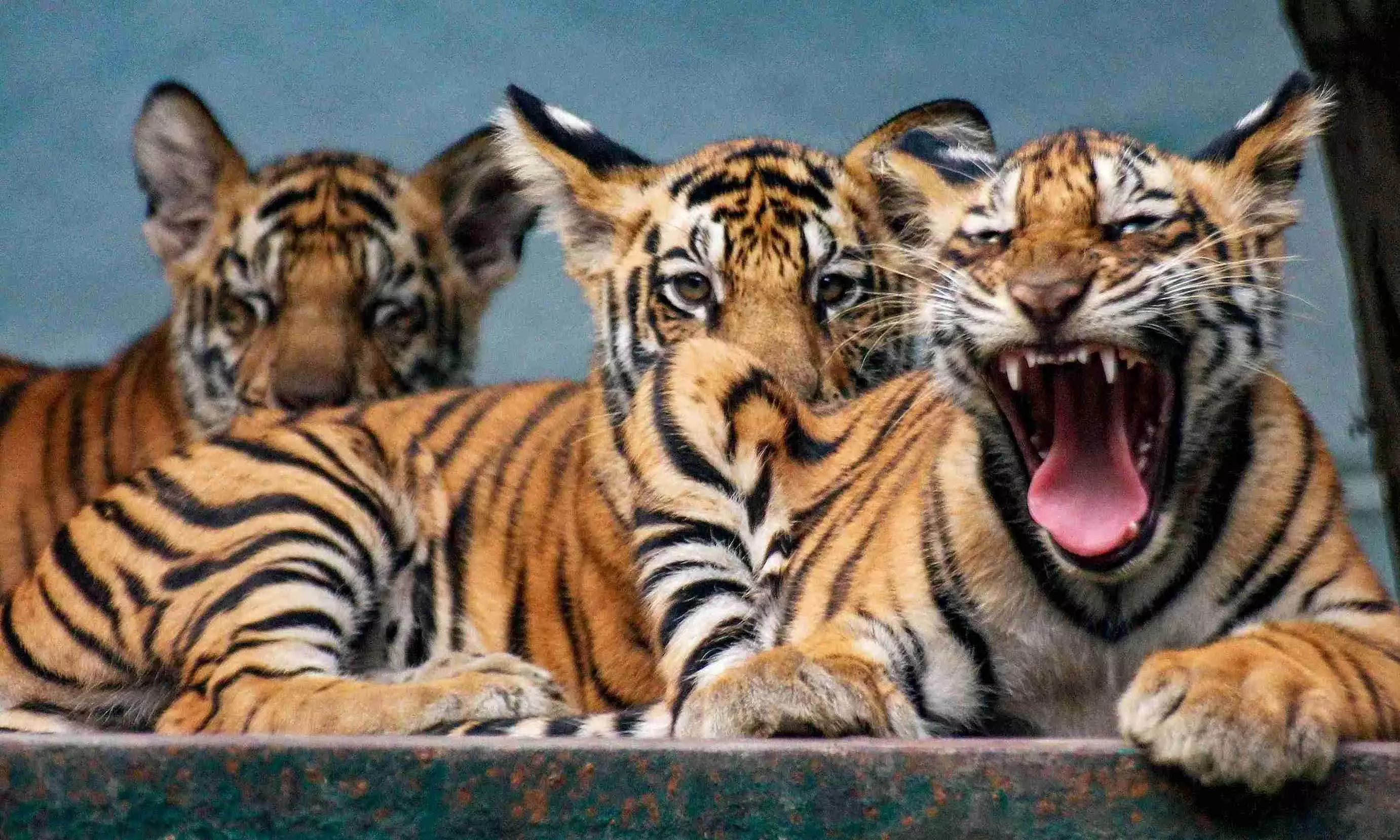
Tiger Day: 5 reasons India remains the global tiger capital
Home to nearly three-fourths of the world's wild tigers, India has emerged as one of the world's greatest conservation success stories

Here are five facts that explain why India continues to lead the global effort to protect tigers.
Also read: From 10 to 42: How a Telangana forest quadrupled its tiger count in 9 years
1. Home to most of the world's wild tigers
India currently has 3,682 wild tigers, according to the 2022 All India Tiger Estimation, accounting for around 70-75 per cent of the global wild tiger population.
The country is now conducting its sixth nationwide tiger census, which began in late 2025 and will continue through 2026. The final report is expected in July 2027, with early indications suggesting another rise in tiger numbers, reinforcing India's position as the global stronghold for the endangered species.
2. A network of 58 tiger reserves
India has 58 tiger reserves spread across 18 states, making it one of the world's largest protected habitat networks for big cats.
Madhya Pradesh has the highest number of tiger reserves, with nine, after the notification of Madhav Tiger Reserve in 2025.
Andhra Pradesh's Nagarjunsagar-Srisailam Tiger Reserve is the country's largest at nearly 3,300 square kilometre, while Maharashtra's Bor Tiger Reserve is the smallest.
Several reserves are also regarded among the world's finest destinations for spotting tigers in the wild. Jim Corbett Tiger Reserve in Uttarakhand, the country's oldest national park, established in 1936, is home to the largest tiger population recorded in a single reserve, with over 260 tigers as per the 2022 All India Tiger Estimation, making it a major stronghold for the species.
Also read: A tiger too many? The big cat in India walks into unchartered territory
Kanha Tiger Reserve in Madhya Pradesh is celebrated for its vast sal forests and rolling meadows, landscapes that are widely believed to have inspired Rudyard Kipling's The Jungle Book.
Bandhavgarh Tiger Reserve, also in Madhya Pradesh, is renowned for having one of the highest densities of Bengal tigers in the world, giving visitors some of the best chances of tiger sightings during safaris.
3. Bengal tigers are among the most powerful
The Bengal tiger is often described as the world's largest wild cat, but that distinction actually belongs to the Siberian (Amur) tiger, which is larger on average.
However, Bengal tigers have produced some of the heaviest individuals ever recorded in the wild. One confirmed wild Bengal tiger weighed 389 kilogram, making it one of the largest wild tigers ever documented. While Siberian tigers generally outweigh Bengal tigers, exceptional Bengal tigers can rival or even surpass them in size.
4. Thrive from mangroves to mountains
Few large predators are as adaptable as India's tigers.
In the unique Sundarbans ecosystem, they regularly swim across tidal creeks and saltwater channels between mangrove islands while hunting deer, wild boar and even aquatic prey.
Also read: Tiger spotted on Hyderabad outskirts, first in 50 years
At the other extreme, camera traps recorded a Bengal tiger at an altitude of 3,015 metre in Uttarakhand's Nanda Devi Biosphere Reserve in 2025, one of the highest confirmed tiger sightings in India.
Across central India, they dominate dry deciduous forests, while in Assam's Kaziranga landscape they stalk prey through vast floodplain grasslands, highlighting their extraordinary ability to survive in vastly different ecosystems.
5. Home to both white and rare black tigers
White tigers no longer exist in the wild. Their distinctive coat is caused by leucism, a rare genetic mutation rather than albinism, and is estimated to occur naturally in only one out of every 10,000 Bengal tiger births.
The last confirmed wild white tiger was killed in 1958. Every white tiger alive today descends from Mohan, a cub captured in Madhya Pradesh in 1951. Through selective breeding, the rare trait was preserved, and today there are an estimated 200 white tigers worldwide, with around half living in India. Madhya Pradesh has also established a dedicated White Tiger Safari at Mukundpur, close to where Mohan was first found.
Also read: Tigress, cub die in Kanha Tiger Reserve; big cat death toll this year in MP climbs to 27
India is also home to the world's only known population of black tigers, found in Similipal Tiger Reserve in Odisha. These are not a separate subspecies but Bengal tigers with a rare genetic condition called pseudomelanism, which causes their black stripes to merge, giving them an unusually dark appearance. The unique population has made Similipal one of the most scientifically significant tiger habitats in the world.
Conservation success story
India's tiger recovery remains one of the world's biggest wildlife conservation achievements. Decades of habitat protection under Project Tiger, stricter anti-poaching measures and improved wildlife management have helped the country's tiger numbers rebound.