NVS-03 to fly with pyro valves open as ISRO seeks to avert repeat failure
After NVS-02 failed due to a pyro-valve malfunction, ISRO’s plan to fly NVS-03 with valves open raises leakage concerns and questions over NavIC’s future

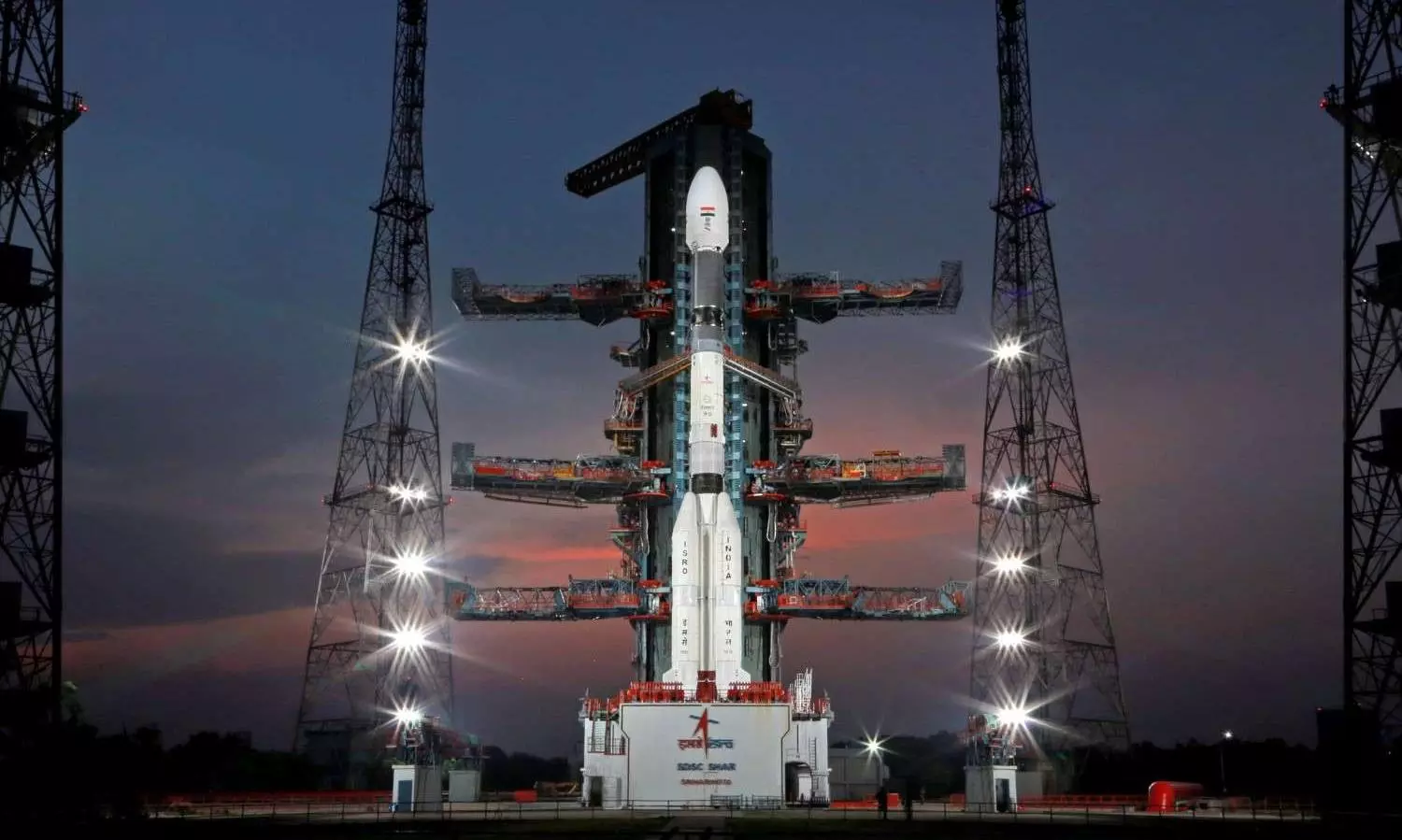
The entire Indian space agency is waiting with bated breath for the upcoming launch of India’s navigation satellite NVS-03 aboard the Geosynchronous Satellite Launch Vehicle (GSLV-F18) at the end of this month.
Not because the satellite is expected to help restore India’s own satellite navigation constellation, the Navigation with Indian Constellation (NavIC).
Then why?
For the first time in its 51-year history of launching satellites, the Indian Space Research Organisation (ISRO) will launch its third second-generation navigation satellite, NVS-03, with its pyro valves in an open state, several senior serving and former officials told The Federal on condition of anonymity.
“All valves are fired and open,” one source said. “Yes, the satellite will be flown with its valves open,” another source confirmed. While some may view the move as a precautionary measure, others consider it a risky proposition.
Also read | ISRO's dilemma: Should NVS-03 satellite go with open or closed pyro valve?
ISRO’s decision appears to follow the failure of NVS-02, which was launched on January 29, 2025, aboard GSLV-F15. Though NVS-02 was successfully placed in Geosynchronous Transfer Orbit (GTO), it could not manoeuvre itself into its designated orbit because oxidiser flow to its liquid apogee motor could not be established. ISRO subsequently stated that the drive signal had failed to reach the pyro valve in the oxidiser line.
An Apex Committee constituted to investigate the failure concluded that the most likely cause was the disengagement of at least one contact in each of the main and redundant paths of a connector.
With the pyro valve remaining closed, oxidiser could not reach the engine, leaving NVS-02 stranded in the transfer orbit.
What is a pyro valve?
In a satellite, a pyrotechnic valve, or pyro valve, is a single-use valve. It contains a small pyrotechnic actuator that, when electrically fired, opens the passage through which fuel or oxidiser flows.
“A pyro valve, by definition, is a closed valve that opens once through a pyrotechnic action and remains open thereafter. So, what they may be looking at is a normal valve with a latch in place of a pyro valve,” another satellite expert had earlier told The Federal on condition of anonymity.
Once opened, propellant or oxidiser can flow through the downstream propulsion system, including any latch valve provided in that flow path.
A pyro valve is commonly used when a spacecraft requires positive isolation of propellant or oxidiser until a particular stage of the mission. Before and during launch, the valve keeps the propellant or gas isolated. At the appropriate command, the pyrotechnic device operates the valve and establishes the flow path. As noted earlier, once a pyro valve is opened, it cannot be closed again.
A latch valve, on the other hand, can be electrically commanded open or close, and can control the flow path during satellite operations.
What happens after NVS-03 reaches GTO?
According to ISRO, the 50-foot-tall, three-stage GSLV-F18, with a lift-off mass of about 420 tonnes, will inject the 2,250-kg NVS-03 into GTO.
From GTO, NVS-03 will be manoeuvred into geostationary orbit at an altitude of about 37,023 km by firing its liquid apogee motors (LAM). For the LAM to fire, fuel and oxidiser must reach its thrusters from their respective tanks.
Under the normal configuration, the flow of fuel and oxidiser from the tanks is sealed to prevent leakage. The respective pyro valves are opened at the appropriate stage of the mission to establish the required flow paths. That is precisely the operation that went wrong on NVS-02.
The drive signal to the pyro valve in the oxidiser line failed to reach the valve, preventing oxidiser from flowing into the propulsion system.
For NVS-03, according to the sources, ISRO has chosen to eliminate that particular operation by launching the satellite with its pyro valves already open.
Why flying with open valves raises concerns
Some space technology experts believe ISRO should adhere to its established practice of launching satellites with their pyro valves closed rather than risk a mission by keeping them open.
They are concerned that an open pyro valve could increase dependence on the downstream Isolation Latch Valve and raise questions about leakage, vibration and pressure conditions during the intense vibrations experienced by the rocket during ascent.
“With an open pyro valve, the leaked gas/fuel will be at the Isolation Latch Valve, which also faces the leak risk,” a space sector expert had told The Federal on condition of anonymity. “If the latch valve doesn't open in space, then the mission will be a failure,” the expert added.
Also read | IN-SPACe overreach threatens ISRO's strategic future: G Madhavan Nair
The concern, therefore, is not simply whether the pyro valve will open. By opening the pyro valve before launch, ISRO eliminates one potential point of failure but could increase reliance on the downstream isolation and latch-valve arrangement.
The spacecraft must also remain in this configuration throughout ground operations and the GSLV's ascent, when it will be subjected to significant vibration and acceleration.
An unusual configuration for ISRO?
Whether an Indian navigation satellite, or another comparable ISRO spacecraft using a unified bipropellant propulsion system, has previously been launched with its fuel and oxidiser pyro valves already open is not publicly known.
If NVS-03 is the first such operational mission, the October 30 flight would also serve as an important engineering test of this alternative configuration.
Its performance could have implications for NVS-04 and NVS-05, the remaining satellites planned under the second-generation NavIC programme.
A successful demonstration could give ISRO another option for future spacecraft in which the reliability of post-launch pyro-valve actuation is a concern.
A failure, however, could raise questions about the decision to depart from a configuration traditionally used to isolate spacecraft propulsion systems during launch.
Why NVS-03 matters for NavIC
The decision comes at a critical juncture for India’s Navigation with Indian Constellation (NavIC), the country’s independent regional satellite navigation system. It is designed to provide accurate Position, Navigation and Timing (PNT) services to users in India and the region extending about 1,500 km beyond the Indian landmass, its primary service area.
NVS-03 is the third satellite in the next-generation navigation system envisaged to ensure continuity of services provided by the Indian Regional Navigation Satellite System (IRNSS).
ISRO has said the satellite carries an indigenous atomic clock alongside procured atomic clocks. It also incorporates the L1 signal in addition to the existing L5 and S signals, with coverage extending across India's landmass and a region extending 1,500 km around the country's geopolitical boundary.
The NVS series is intended to replenish the ageing first-generation constellation while introducing new capabilities, including the L1 navigation signal.
NVS-01 was successfully launched in May 2023, while NVS-02 suffered its orbit-raising setback in January 2025. The failure has made NVS-03 considerably more important than a routine replenishment satellite.
India’s navigation constellation has been operating with reduced satellite availability, affecting its ability to provide independent positioning services with adequate redundancy.
A successful NVS-03 mission would therefore mark an important step towards restoring the NavIC constellation.
Open valves shift, not eliminate, risk
The decision to launch with the pyro valves open can essentially be viewed as an attempt to eliminate a known failure mode.
On NVS-02, the valve failed to open because the electrical drive signal did not reach it. With the valve already open before launch, NVS-03 will not require that particular electrical command and subsequent pyrotechnic operation in space. However, eliminating one failure mechanism does not necessarily eliminate engineering risk.
The question shifts from whether the pyro valve will open successfully after launch to whether the propulsion system, particularly the downstream isolation arrangement, can safely remain in the altered configuration throughout ground operations and the severe vibration and acceleration experienced during launch.
This makes the qualification and testing undertaken before the configuration was approved particularly important.
It also raises a question ISRO may need to answer: what additional tests were conducted to establish that the propulsion system can safely withstand launch with the pyro valves already open?
Also read | 9 ISRO employee bodies write to chairman, seek clarity on space privatisation plans
The NVS-02 failure was traced to the failure of the command path to the oxidiser-line pyro valve. By opting for the open-valve configuration on NVS-03, ISRO appears to have decided that eliminating this particular failure mode outweighs the additional concerns associated with launching the satellite with the valves already open.
However, ISRO Chairman Dr V Narayanan did not respond when asked about the additional safeguards against leakage through the downstream Isolation Latch Valve and whether NVS-03 incorporates the connector and command-path modifications recommended by the Apex Committee following the NVS-02 failure.
He was also asked whether the main and redundant pyro-valve command paths are now routed through physically independent connectors.
With several hundred crore rupees, the restoration of India's indigenous navigation constellation and its strategic applications riding on NVS-3, the October 30 mission has assumed significance well beyond the launch of another navigation satellite.
The outcome of this decision will ultimately be known only after NVS-03 separates from GSLV-F18 and successfully completes the crucial orbit-raising manoeuvres that its predecessor could not.