



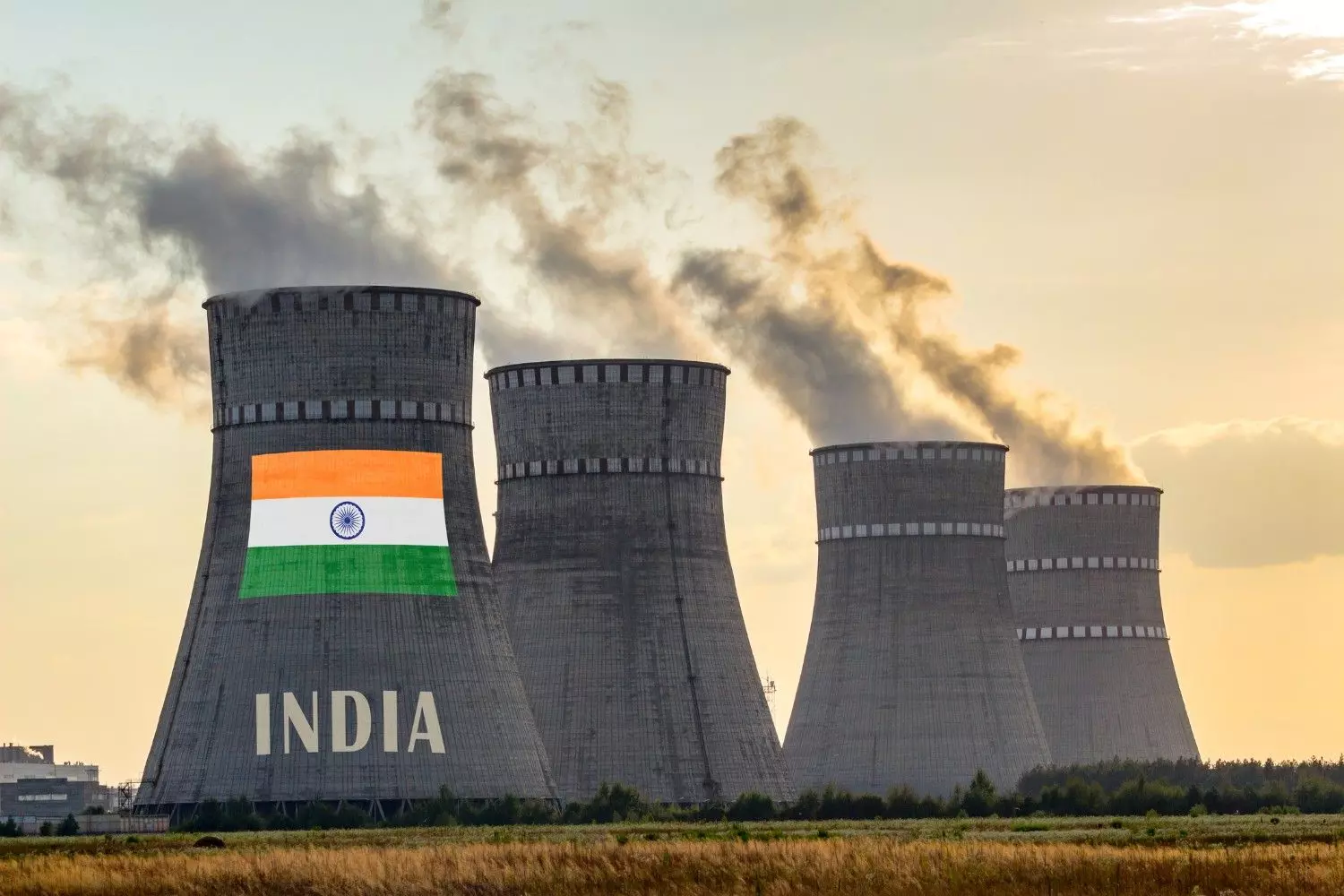
Lok Sabha debates SHANTI Bill as India eyes 100-GW nuclear power by 2047
Union Minister Jitendra Singh calls the bill a milestone for clean energy while Opposition raises concerns over the removal of supplier liability clauses

The Lok Sabha on Wednesday (December 17) took up discussion on the nuclear energy bill, with Union Minister Jitendra Singh asserting that it would help India achieve its target of 100-GW atomic energy generation by 2047, and the Opposition questioning the dilution of certain clauses of the draft legislation.
Singh, the Minister of State in the PMO, moved the Sustainable Harnessing and Advancement of Nuclear Energy for Transforming India (SHANTI) Bill, which seeks to open the tightly-controlled civil nuclear sector for private participation.
Minister calls bill a ‘milestone’
The minister termed the bill a “milestone legislation” that will give a new direction to the country’s developmental journey.
“India’s role in geopolitics is increasing. If we have to be a global player, we have to follow global benchmarks and global strategies. The world is moving towards clean energy. We, too, have set a target of 100 GW of nuclear energy capacity by 2047,” Singh said.
Also read: India’s nuclear push comes with a catch: Absurdly low liability, unlimited public risk
He said the bill was necessary to address India’s growing energy needs and increase the share of nuclear power up to 10 per cent of the energy mix.
Singh said nuclear power was also a key segment in achieving the target of Net Zero emissions by 2027 set by Prime Minister Narendra Modi.
What about supplier liability?
Congress member Manish Tewari opposed the bill, contending that the removal of the clause removing the liability on suppliers of nuclear equipment would prove to be harmful for India in case of a nuclear incident.
He opposed the provisions in the bill for the repeal of the Atomic Energy Act of 1962 and the Civil Liability for Nuclear Damage Act of 2010.
“I did not find a single word about the supplier’s liability. There will be a greater presence of foreign suppliers if the nuclear sector is opened up. How is removing the supplier’s liability clause going to help India?” Tewari argued.
He said the bill grants the Atomic Energy Regulatory Board (AERB) statutory cover, but stops short of granting autonomy to the nuclear sector regulator.
Also read: Atomic Energy Bill 2025: Why India’s 100 GW nuclear mission is a distant dream | Interview
“We need a neutral umpire,” he said, adding that the regulator currently was a part of the Department of Atomic Energy.
India’s nuclear energy history
Tewari recalled that the Department of Atomic Energy was set up by India’s first prime minister, Jawaharlal Nehru, and the first nuclear tests were carried out by former prime minister Indira Gandhi in 1974.
He said former prime minister Atal Bihari Vajpayee ordered the second series of nuclear tests in 1998, and his successor Manmohan Singh brought India out of the nuclear apartheid.
“When the UPA government was trying to break through the nuclear apartheid, the ruling party members (then in the Opposition) brought a no-confidence motion. You tried to derail India’s nuclear programme due to political reasons,” Tewari said, triggering an uproar from BJP members.
Also read: Atomic Energy Bill: What it means to allow private firms into India’s nuclear sector
He said the bill does not provide for a framework for handling radioactive waste and seeks to prioritise uranium-based reactors at the cost of thorium reactors and molten salt reactors, which form the mainstay of India’s three-stage nuclear programme.
The Congress member demanded that the bill be referred to a Joint Committee of Parliament for careful examination before being presented in the House for passage.
(With agency inputs)