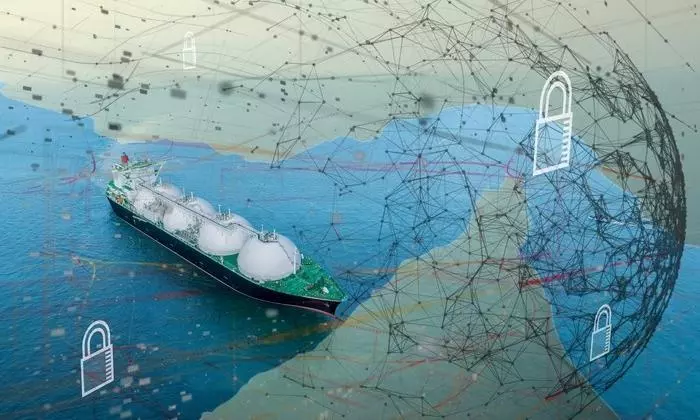
As Iran chokes Strait of Hormuz and Trump's coalition appeal fails, India walks a tightrope — too energy-dependent to stay indifferent, too cautious to join a war
US President Donald Trump has not asked Prime Minister Narendra Modi to deploy India's navy to help secure the Strait of Hormuz. That omission is telling. Modi has repeatedly described the Navy as "the guardian of the Indian Ocean" — a force capable of stabilising critical maritime routes. If ever there were a moment to test that claim, it would be now.
The Strait of Hormuz is no ordinary shipping lane. Barely 50 km wide at its narrowest, it carries the energy, commerce and fragile stability of an entire region. Nearly a fifth of the world's oil and significant natural gas pass through it daily. If Iran closes the Strait, the consequences will reach far beyond the Gulf, affecting every country dependent on energy imports.
Also read: If US has the strongest Navy, why can’t it secure Strait of Hormuz alone?
Those consequences are already visible. Iran has signalled that ships may be targeted as part of its confrontation with the US and its allies. The near-closure has sent shockwaves through global markets. India, one of the world's largest energy importers, is among the most exposed.
India-Iran tensions
For Tehran, the threat is existential. Iranian leaders argue their country — home to nearly 90 million people — has been devastated by two rogue hegemons determined to impose their will through military force. In that context, closing the Strait is framed not as aggression but as deterrence.
India appears to have secured a temporary reprieve. According to reports, Iran's foreign minister said two or three Indian oil and gas tankers might be allowed through; subsequently, two Indian oil tankers reached domestic shores safely. Yet there is no guarantee future shipments will be spared, even after Modi reportedly held a belated conversation with Iran's president last week.
Also read: Iran weighs 'China-only' terms for limited reopening of Strait of Hormuz
According to Reuters, Iran has asked India to release three tankers seized in February as part of talks seeking safe passage for Indian vessels out of the Gulf. Indian authorities reportedly seized the Iran-linked tankers near Indian waters, alleging they had concealed their identities and were involved in illegal ship-to-ship transfers. The Indian foreign office has dismissed the Reuters report, denying any link between detained ships and negotiations.
Modi's highly publicised embrace of leaders criticised over the war in Gaza has complicated New Delhi's ability to position itself as a neutral actor.
All this unfolded last month, before New Delhi could have anticipated that a war launched by two rogue hegemons against Iran would force Tehran to close the Strait for its survival in an asymmetrical conflict.
Embarrassing moment for Trump
Even as Trump claimed the endgame is to destroy Iran's enriched uranium, he faced an embarrassing moment when a reporter asked whether Israel might use its nuclear weapons. "No, Israel would never use nuclear weapons," Trump replied.
To trust a country with some 90 nuclear bombs—which could deploy its Samson option as a last-resort deterrent—while systematically destroying Iran, which has no offensive nuclear strategy nor bombs, would be tantamount to double standards and hypocrisy.
India has also claimed the tankers are not Iranian but rather related to trade with Iran. The ships remain detained as investigations continue, the Modi government reportedly said.
Diplomatically, India now walks a tightrope. Modi's highly publicised embrace of leaders criticised over the war in Gaza has complicated New Delhi's ability to position itself as a neutral actor.
Limits of Washington’s strategy
Meanwhile, the crisis has exposed the limits of Washington's strategy. Despite claims that Iranian military facilities have been heavily degraded, the Trump administration is urging countries, including France, Germany, Italy, the UK, Japan, South Korea and China, to send naval forces to protect shipping.
So far, the response has been cautious. None appear eager to enter a war they did not start.
Also read: India rejects Iran tanker swap claim, calls reports ‘baseless’ amid Hormuz tensions
European governments have offered diplomatic explanations, but the deeper concern is obvious: joining such a mission risks entanglement in a conflict with unpredictable consequences.
Beijing has been more direct. China's state-run Global Times wrote, "The security of Hormuz doesn't depend on the number of warships patrolling it." While acknowledging that countries reliant on Gulf energy share a stake in protecting shipping lanes, the paper posed a blunt question: "Who ignited the crisis in the Strait of Hormuz in the first place? Who is still bombing Iran?"
China's top diplomat, Wang Yi, asserted, "Without the UN's authorisation, the US and Israel attacked Iran in the process of the ongoing US-Iran negotiation, which clearly violates international law."
Who started the war?
The argument is simple: someone set the fire. Now they're asking the world to help put it out — and split the bill.
Filling the Strait with warships from multiple nations would not necessarily enhance security. It could multiply flashpoints in one of the world's most volatile regions.
Historical memory also shapes global reluctance. US interventions in Vietnam, Afghanistan, Iraq, Libya and Syria are widely seen as wars launched on hegemonic grounds, with principles of international law seemingly upended.
Also read: This is the real Gulf War, and the world is paying the price
For governments now asked to join a naval coalition, the lesson is clear: entering such conflicts rarely ends quickly and often leaves lasting geopolitical scars. The sharpest refusal came Monday from Germany. Defence Minister Boris Pistorius said flatly, "This is not our war; we did not start it."
Wars and mirages
Flustered by rejection, Trump insisted Washington doesn't need anyone. "We're the strongest nation in the world. I'm almost doing it (asking for a coalition) in some cases not because we need them but because I want to find out how they react," he said.
The broader economic danger is stagflation: a toxic combination of rising prices and slowing growth. With energy costs climbing and trade routes under threat, the world economy could soon face precisely that scenario.
Referring to countries that rebuffed his appeal, Trump said he had long believed that "if we ever needed help, they won't be there for us", and that they were proving his point. He added, "You mean for 40 years we're protecting you and you don't want to get involved in something that's very minor?" noting that Europe, Japan and others depend on Gulf oil far more than the US.
This is not a statesmanlike response to a war he was drawn into by his closest ally. An off-ramp increasingly appears a mirage. Even the "might is right" doctrine that upended international legal architecture now seems difficult to sustain.
Economic nightmare
The economic consequences are already emerging. Oil prices have surged, with Brent crude crossing $100 a barrel. Higher energy costs feed directly into inflation, raising transportation, manufacturing and food prices worldwide.
But the disruption extends beyond oil. The Gulf is also a crucial supplier of LNG and petrochemical inputs. Nitrogen fertilisers, sulphur, sulphuric acid and even helium could face supply disruptions if the conflict escalates.
Tourism across parts of the Middle East is weakening as security fears grow. Drone strikes have targeted infrastructure, including facilities linked to US military operations. Airports, hotels and logistical hubs used by American personnel increasingly risk becoming collateral targets.
Also read: Europe’s snub to Trump is a moral victory for Iran
The broader economic danger is stagflation: a toxic combination of rising prices and slowing growth. With energy costs climbing and trade routes under threat, the world economy could soon face precisely that scenario.
Long, costly story
Against this backdrop, India may count itself fortunate not to have been drawn into a military coalition.
A personal memory illustrates the dilemma. At a press dinner in Davos in 2009, I asked the late Sen John McCain whether he, having survived Vietnam, felt any remorse over the deaths of more than 500,000 Iraqi civilians during the Iraq war. He reacted angrily. "What did your country do and why did it not help the US?" he shot back.
The exchange captured a recurring pattern. Wars are launched in the name of security or principle. When they spiral into chaos, the countries that suffer the consequences are often asked to help restore order.
The Strait of Hormuz crisis now risks becoming another chapter in that long and costly story. At the moment, Iran is holding ground, demonstrating enormous patience and pain tolerance. It seems to retain "several advantages: geography, time and asymmetry," writes Emile Hoayem, director of regional security at the International Institute for Strategic Studies, in the Financial Times. "When survival is the goal, anything goes."(The Federal seeks to present views and opinions from all sides of the spectrum. The information, ideas or opinions in the articles are of the author and do not necessarily reflect the views of The Federal.)