The rise of the influencer represents yet another claimant to the advertising budget, increasingly diverting revenue away from traditional media to their detriment
The Italian competition regulator is investigating cosmetics brands Sephora and Benefit over marketing skincare to young children. This spells bad news for the media industry. Not that the media industry is complicit in inducing 10-year-olds to lather anti-ageing serum onto their face. Rather, the media and children are both victims of the same growing menace, the influencer.
Also read | Lip injections, snail mucins on face et al: A glimpse into Gen Z’s obsession with beauty
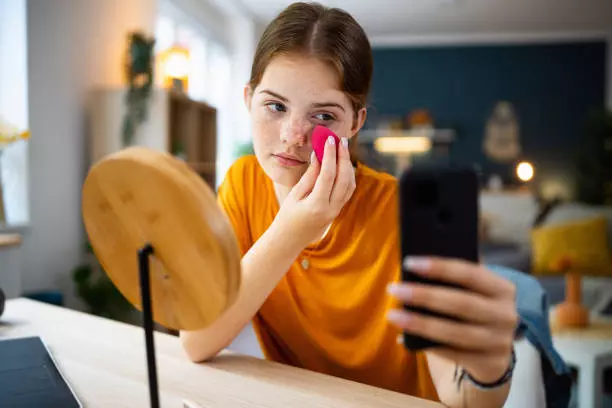
The Italian authorities are investigating the use of teenage social media influencers by these cosmetic brands, belonging to luxury major LVMH, to target very young children for marketing cosmetics. Sephora Kids is a social media trend, in which young children show off their hauls of Sephora products: face masks, serums and creams.
Influencers exploit young minds
Sephora deployed a range of micro-influencers, each with a following of a few thousand, rather than hundreds of thousands or millions, to inculcate an obsession with cosmetics in young people, which has gained a name for itself, cosmeticorexia.
This is part of a social malaise cultivated by the attention economy, or to use its less charitable term, limbic capitalism, in which people make money manipulating people’s primal emotions: fear, love, sexual desire. The limbic system is the part of the brain that regulates emotions and long-term memories, the flight or fight response, lust and horror.
Social media platforms use algorithms to keep people hooked to content that evokes emotions, serving advertising alongside that makes money for the social media platforms and those who produce the goods and services being advertised, but lock the audience into long bouts of passive consumption of content that seeks to manipulate their emotions.
Insecurity drives digital conformity
This gives rise to assorted problems. Instead of with one another, young people spend more time with their screens. This leads to social isolation and reduces chances of pair bonding. Prolonged passive consumption of content erodes the faculty of critical thinking. This sets the stage for the influencer. The big ones are populist political leaders, stars of the entertainment industry, and cult chieftains. The smaller ones peddle stuff, products and services for consumption by people whose self-esteem has been damaged by long exposure on their screens to the idyllic existence of seemingly perfect types, compared to which their own lives seem meaningless, and to influencer harangues on why and how the viewers should strive to attain those perfect characteristics.
Also read | How Pamela Anderson’s makeup-free look is challenging beauty standards
Reinforcement of extant social stereotypes, the craze among young men scared of turning into involuntary celibates (incels) for looksmaxxing (improving one’s features by grooming, exercise and, in extreme cases, surgical intervention), to mirror what has long been considered normal behaviour among young women.
Young people primp, preen, pose and post selfies with profligacy, not so much because they are more vain than earlier generations, but because they fear not fitting in with their peers. Influencers tell them how to primp, preen, pose and fit in.
Advertising shifts hurt media
How does this affect the media? Media has traditionally thrived on advertising. Media is a platform business, with revenue being generated on both sides of the platform. The consumer-facing side accumulates an audience by serving them with content. The advertiser-facing side sells access to the audience, which varies in size, age, income group depending on the content offered to the audience.
Traditionally, advertising was large enough to make media access low-cost or free for audiences seeking to consume the content on offer. Fans get to watch cricket matches, whose broadcast rights sell for thousands of crore rupees, at very low cost because advertising revenue paid for the cost of acquiring the broadcast rights and still left a profit.
The digital revolution has fragmented the advertising market, leaving traditional media far behind. In India, traditional TV accessed via cable or DTH satellite dishes, now dubbed linear TV, because their programming changes linearly over time in steady progression over the day, is still important, particularly in rural areas. But in the rich world, and in Indian cities, connected TV, or TV linked to an internet connection, has become more important, joining the digital space where media is consumed and ads are displayed.
Influencers capture ad budgets
The global advertising budget is expected to be around $1 trillion in 2026, growing at over 5%, significantly faster, by any estimate, than the global economy itself, which had been crawling along at 3% before US President Donald Trump started the war on Iran, and can be expected to slow down further as a consequence of the war. The influencer budget, a mere $32.5 billion or 3.4% of the total ad spend in 2025, is estimated to have grown 35% between 2024 and 2025, and the growth is only accelerating.
Also read | Centre proposes bringing users posting news content on social media under IT Rules: Report
About 60% of the ad spend goes to digital advertising, with print declining alongside linear television. And almost 60% of digital advertising is channelled through the big tech companies, Google, Meta and Amazon. Amazon figures here because of the new trend of retail video advertising. Influencers hawk products on videos displayed alongside product categories on the ecommerce platform.
News media is being forced to adapt to this trend in two ways. They increasingly turn to the readers for revenue by way of subscriptions or voluntary contributions. And they run video advertising alongside their news offering, or news videos on online video spaces with space for ad videos at the beginning of the news video (pre-roll), midway through the news video (midroll) and after the news video (post-roll).
Fast-growing spend on influencers further fragments the marketing expenditure of companies, and, more often than not, starves news media further of advertising revenue.
This is why the Italian investigation into Sephora spells bad news for the media industry.
(The Federal seeks to present views and opinions from all sides of the spectrum. The information, ideas or opinions in the articles are of the author and do not necessarily reflect the views of The Federal.)