India struggles to recalibrate ties with Nepal’s assertive Balen Shah government, as nationalist policies and territorial disputes strain traditional influence
India is facing a formidable diplomatic challenge in its relations with Nepal’s new government. Just two months into its tenure, the Balendra ‘Balen’ Shah-led government has given New Delhi little cause for cheer. Instead, it has heightened anxieties on the future trajectory of bilateral ties under the Rastriya Swatantra Party (RSP), which swept to power in March.
With a traditional, business-as-usual diplomatic approach proving ineffective, New Delhi is attempting to recalibrate its diplomatic outreach. Seeking to engage the new leadership, India is reportedly set to host RSP chairman Rabi Lamichhane for a visit beginning June 1. However, to truly demonstrate how much it values this relationship, India needs high-level political outreach, such as a visit to Kathmandu by External Affairs Minister S Jaishankar.
It’s unlikely that the new government in Singha Durbar will bend easily to New Delhi’s demands, carrying, as it is, on its shoulders the hopes, aspirations and expectations of Nepal’s Gen Z, who played a crucial role in the ouster of the Oli-led government last year.
Strategic imperatives and rivalries
The need to keep Nepal within its strategic embrace is an imperative for India, sharing as it does a long and porous border with its immediate landlocked neighbour. China’s ever-growing inroads into Nepal add a worrying dimension to India’s security concerns. Simultaneously, New Delhi has to be watchful of the ‘Great Game’ underway between the US and China in the Himalayan nation while struggling to retain its own strategic space there.
Also read: Nepal’s Balen Shah govt, not even a month in office, faces citizens’ protests
Long accustomed to enjoying tremendous sway in Nepal, India has seen the gradual erosion of its influence in the country despite its much-touted ‘Neighbourhood First’ policy.
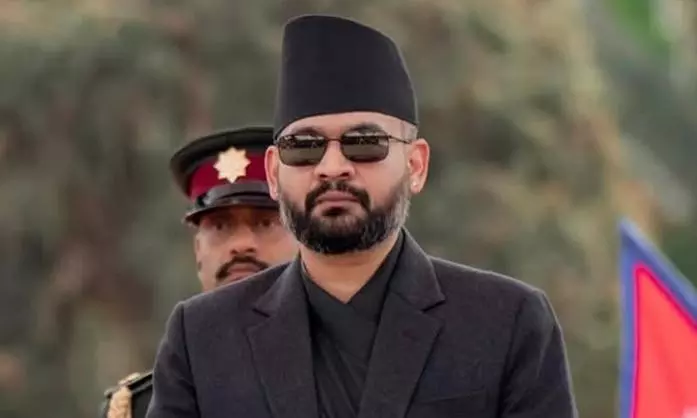
Thus far, Balendra Shah—the rapper-turned-politician who served as mayor of Kathmandu before becoming Nepal’s youngest ever PM at 35—has cold-shouldered New Delhi’s efforts for closer engagement. There was no appointment forthcoming for Indian Foreign Secretary Vikram Misri who was to have visited Kathmandu earlier this month to deliver an invite from PM Narendra Modi for Shah to visit India. Consequently, the visit, though not formally announced, was called off.
Cold-shouldering New Delhi
The Nepalese PM has also refrained from holding a separate meeting with the Indian envoy in Kathmandu—a courtesy New Delhi traditionally got whenever a new government took charge. Instead, Shah has chosen to meet foreign envoys collectively, signalling that New Delhi no longer enjoys its traditionally pre-eminent status in Nepal.
While Shah’s decision aligns with his policy of refusing to meet lower-ranked diplomatic officials or politicians, it was nevertheless a setback for New Delhi. Notably, the new PM also declined to meet two US diplomats visiting Kathmandu in April, including Sergio Gor, the ambassador to India and Nepal who is also President Donald Trump’s special envoy for South and Central Asia.
Also read: Modi’s Nordic outreach: Reactive foreign policy than bold strategy? | Interview
Furthermore, Shah’s declaration that he will not undertake foreign visits during his first year in office has put paid to New Delhi’s hopes that it would be the first country to host him. Traditionally, Nepalese PMs have visited India first upon taking office, though the communist PM Pushpa Kamal Dahal ‘Prachanda’ broke convention by choosing China in 2008.
Testing India’s diplomacy
By hosting Lamichhane, New Delhi will be hoping to retrieve some ground and build a robust relationship with the new government in order to protect its own strategic interests in the Himalayan nation. This engagement is vital as the RSP-led government commands a nearly two-thirds majority in Parliament and is expected to last its full term of five years, unlike the fragile coalitions that have dominated Nepal’s political landscape since the mid-1990s.
India, of course, is treading on uncharted territory. The RSP is a mere four-year-old outfit, in power for the first time, and driven by an assertive nationalist fervour. While former PM KP Sharma Oli also played the nationalistic card against India, he was eventually undone by his own internal political machinations and a desperation to remain in power.
The Balen government will not be an easy ride for New Delhi. The long-festering territorial dispute over the Lipulekh Pass has already reared its head. Nepal pushed back with diplomatic notes to both India and China after the two announced the resumption of the Kailash-Mansarovar Yatra via the pass, which Nepal claims is its territory.
Territorial disputes
India’s territorial dispute with Nepal involves Kalapani, Lipulekh and Limpiyadhura, with both countries staking claim to the 335-sq-km area located at the tri-junction of India, Nepal and Tibet. It has been the cause for much bilateral friction, with Nepal even updating its official map some years ago to show these disputed territories as part of Nepal under Oli’s premiership.
Also read: Testing time for India's foreign policy: Can Modi govt rise to the challenge?
Coupled with the RSP’s nationalistic stance, this territorial dispute could well upend New Delhi’s overtures towards Kathmandu or remain a constant irritant. To mitigate this, India should at least agree to discuss the matter at the foreign secretary-level, which Nepal has been demanding for long.
It’s unlikely that the new government in Singha Durbar will bend easily to New Delhi’s demands, carrying, as it is, on its shoulders the hopes, aspirations and expectations of Nepal’s Gen Z, who played a crucial role in the ouster of the Oli-led government last year.
The road ahead for India
Shah’s reluctance to appear close to India is driven by his government’s firmly stated policy of “non-alignment”. His government wants Nepal to be a “vibrant bridge” between regional giants India and China, rather than a geopolitical “buffer zone”, while emphasising “development diplomacy” and a balanced foreign policy approach.
Also read: Modi’s ‘Melody moment': Is foreign policy being reduced to viral moments?
Moving forward, India must redouble its efforts towards Nepal, while taking utmost care not to appear to be overbearing and meddlesome in Nepal’s affairs or impinging on its sovereignty. Delivering promised development projects in Nepal on time, for one, will be crucial to winning the goodwill of both the Nepal government and the people. For, the new government wants to deliver development and economic growth to Nepal after decades of neglect.
Overall, India must become a more proactive partner in Nepal to avoid ceding space to China or even the US, while firmly conveying to Kathmandu that New Delhi’s strategic interests must not be compromised.
(The Federal seeks to present views and opinions from all sides of the spectrum. The information, ideas or opinions in the articles are of the author and do not necessarily reflect the views of The Federal.)