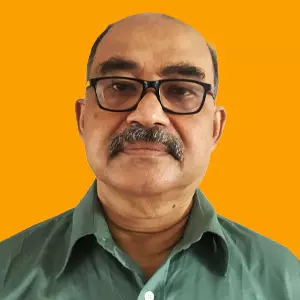
As Dinesh Trivedi takes charge in Dhaka, border tensions over migrant deportations risk derailing economic opportunities and efforts to reset ties with Bangladesh
India’s new High Commissioner to Bangladesh, Dinesh Trivedi, struck the right note ahead of taking charge when he said the two neighbours can and should grow together into vibrant democracies. This emphasis on complementarity is timely. Bangladesh needs India as much as India needs Bangladesh.
Bangladesh’s emergence as a strong economy has the potential to create a positive spillover effect on the relatively less developed eastern and northeastern Indian states. The loss of Bangladeshi customers for Kolkata’s retail, hotel and healthcare sectors due to visa restrictions imposed after attacks on Indian diplomatic establishments during the Yunus-led interim regime cannot be wished away.
Also read | From Basu’s warning to Bengal ballot: How Bangladesh turmoil fuelled BJP’s eastern rise
On the other hand, Bangladesh’s growing industries would need access to India’s rapidly expanding port infrastructure to handle rising export volumes – something it lost out on when India reacted to the unexplained hostility of the Yunus-led interim regime. But smooth economic and trade relations cannot flourish if political ties verge on hostility.
Ties enter a turbulent phase
If political temperatures nosedived after Sheikh Hasina’s ouster in August 2024, with systematic attacks on religious minorities such as Hindus and Buddhists in Bangladesh, they are now threatening to spin out of control over Indian attempts to push back identified illegal migrants from Bangladesh.
Over the last few days, Indian and Bangladeshi border guards have been seen adopting visibly conflicting postures, with social media flooded with videos showing families stranded in no man’s land and caught between the two sides. Angry locals have lined up behind the border guards, adding to the tensions.
This unease cast its shadow over the recent annual meeting of the Indian and Bangladeshi border forces. The customary joint press conference, usually addressed by both delegations at the end of the meeting, was cancelled, somewhat indicative of the less-than-friendly exchanges across the table. A senior Border Guards Bangladesh (BGB) official told this writer that while they are not opposed to taking back illegal migrants, the repatriation should follow established procedures involving the exchange of details and enough time for verification. The official said forcible pushbacks (sometimes called push-ins) across the border were unacceptable.
Pushbacks gather pace
At least 2,980 “illegal” Bangladeshi immigrants have been sent back since March through several outposts in West Bengal.
The data, provided by sources in the BSF, show that at least 1,930 “illegal” Bangladeshi immigrants were sent back after May 19, when West Bengal Chief Minister Suvendu Adhikari first announced the “detect, delete and deport” policy. “Between May 19 and June 10, at least 1,930 Bangladeshi nationals illegally living in India were sent over from outposts in West Bengal,” a senior BSF official was quoted as saying by a leading Indian news website.
But Chief Minister Suvendu Adhikari claimed on June 7 that 4,800 “illegal infiltrators” from Bangladesh, who do not fall under the ambit of the Citizenship (Amendment) Act, had been deported to Bangladesh over the past month. Several hundred were being held at multiple “holding centres” created in border districts after the BJP came to power in West Bengal.
That indicates that the pushbacks are set to continue because the West Bengal government has no intention of keeping illegal migrants in these centres, something senior West Bengal minister Dilip Ghosh made clear in his media interactions. Ghosh said his government, in a bid to expedite the process, intended to hand over the illegal migrants to the BSF from the “holding centres” as quickly as possible.
Border politics intensify
One of the central planks of the BJP’s recent election campaign in West Bengal and Assam was its commitment to identify and deport illegal migrants from Bangladesh. That pitch helped the BJP reap rich electoral dividends, especially in the 120-odd constituencies on or close to the Bangladesh border. The BJP’s argument about steady demographic change resonated with voters.
Also read | Several nationality verification requests pending with Bangladesh, says MEA amid BGB-BSF row
No wonder one of Chief Minister Suvendu Adhikari’s first decisions was to hand over land for completing border fencing and setting up new border outposts in areas where the BSF felt such a need. Land acquisition in these areas had been stalled by what the BJP blamed on the “lackadaisical attitude to border management” of previous TMC government headed by Mamata Banerjee.
The haste involved could lead to obvious mistakes in identification. In December last year, Indian authorities had to bring back housewife Sonali Khatun and her minor child on the orders of the Supreme Court after she had spent three months in a Bangladesh prison. Within a month of her return, she delivered a baby boy. But Sonali’s husband remains in a Bangladesh prison, and it is not yet clear how soon he can be brought back.
Border tensions carry risks
The new government in Bangladesh headed by the Bangladesh Nationalist Party (BNP) has so far signalled its intent to normalise relations with India. But though the BNP enjoys a clear majority in Parliament, it faces a much-strengthened Jamaat-e-Islami in the Opposition, which won 68 seats in the February polls. Considering that this represented a quantum jump from its previous best of 18 seats, there is no way Prime Minister Tarique Rahman's BNP government can take it lightly.
During the nearly two years it held power, the interim government of Muhammad Yunus pandered to Jamaat-e-Islami and other Islamist radical forces. Of the 68 seats won by Jamaat-e-Islami, 51 are in constituencies bordering West Bengal. It is therefore obvious that if India continues its pushbacks, Tarique Rahman’s government will come under increasing domestic pressure to oppose them. That could lead to heightened border tensions that may derail bilateral ties.
So Dinesh Trivedi, an astute businessman-turned-politician, will have his task clearly cut out as India’s envoy in Dhaka at a time when relations are far from their best. His affable personality and command over Bengali are surely more than enough to compensate for his lack of diplomatic experience, but he can only hope that his task is not complicated by border tensions.
Hope amid strained ties
Not that there are no silver linings on the horizon. Bangladesh-born Australian billionaire Robin Khuda has announced plans to invest more than ₹3 lakh crore (US$30 billion) in India by 2030. Backed by Blackstone, Khuda's hyperscale data centre company AirTrunk says it will develop 5 gigawatts (GW) of capacity across the country to meet the booming demand for AI and cloud computing.
Also read | Ganges Treaty talks: What Bangladesh demands from India
Many expatriates of Bangladeshi origin, uncertain about the investment climate back home, may follow in Khuda’s footsteps. If the new BJP government in West Bengal is smart enough, it could attract the likes of Khuda to set up shop in a state that desperately needs big-ticket investments.
Chief Minister Suvendu Adhikari and Industries Minister Tapas Roy, once close associates of Mamata Banerjee during her anti-industry agitation at Singur and Nandigram, would do well to recognise the need of the hour. Roy clearly hinted at that when he said after taking charge that he would have rushed to meet Ratan Tata if he had been alive.
(The Federal seeks to present views and opinions from all sides of the spectrum. The information, ideas or opinions in the articles are of the author and do not necessarily reflect the views of The Federal.)