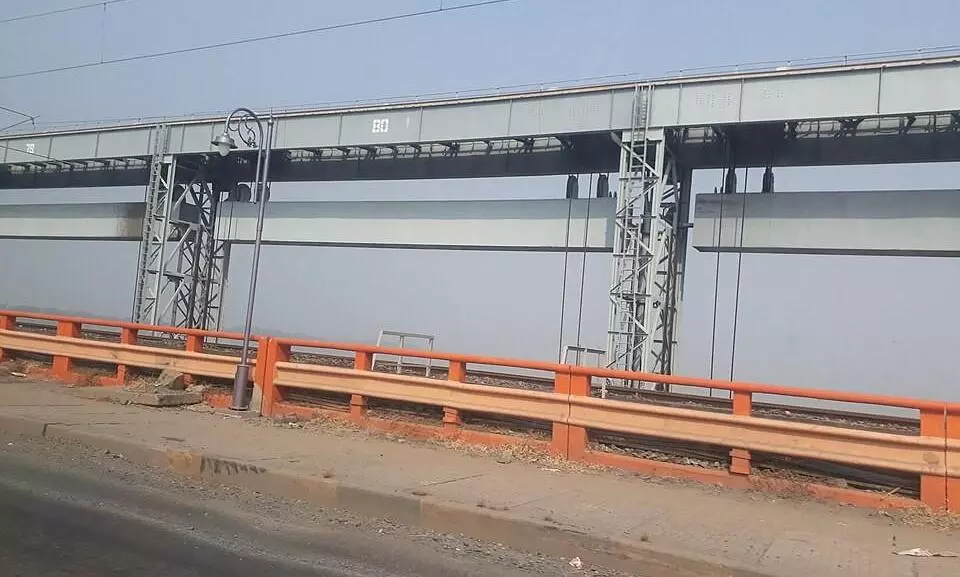
The Farakka barrage is at the centre of decades of tension over dry-season sharing of Ganges waters. Representational image: Wikimedia Commons
Ganges Treaty talks: What Bangladesh demands from India
Discussions focus on renewal of 1996 Ganges Water Sharing Treaty, with Dhaka seeking revised flow calculations and India raising concerns over Bangladesh’s proposed Padma barrage

India and Bangladesh on Friday (May 22) concluded a fresh round of technical talks in Kolkata over renewal of the 1996 Ganges Water Sharing Treaty, amid growing differences over how future Ganga flows should be measured after the treaty expires in December 2026. The four-day meeting under the Joint Rivers Commission framework involved joint inspections and hydrological measurements at the Farakka Barrage in West Bengal.
The Farakka Barrage is at the centre of decades of tension over dry-season sharing of Ganges waters.
The existing treaty, signed in 1996, laid down a formula based on water availability at the Farakka point during the lean season between January and May. Under the agreement, when flows at Farakka fall below 70,000 cusecs, both countries share water equally. When flows range between 70,000 and 75,000 cusecs, Bangladesh is guaranteed 35,000 cusecs, while India receives the remainder. If flows exceed 75,000 cusecs, India receives 40,000 cusecs and Bangladesh gets the balance.
Bangladesh seeks changes
However, officials familiar with the negotiations said Bangladesh has sought changes to the framework while discussing renewal of the treaty.
Dhaka has proposed that future water-sharing calculations should not rely solely on flows measured at Farakka, but should also take into account upstream withdrawals across the Ganga basin before the river reaches West Bengal. Such a calculation would bring into consideration water usage by Uttar Pradesh, Bihar, Jharkhand, and Uttarakhand through canals and irrigation systems upstream of Farakka.
Also Read: BJP govt in Bengal sparks Teesta hope and immigrant ‘push back’ concern in Dhaka
Indian officials and river experts argue that such demands ignore major demographic and ecological changes that have taken place over the last three decades.
“Population, irrigation demand, and river behaviour have changed significantly since the treaty was signed,” said an official familiar with past water-sharing discussions. “India’s position is that present-day flow realities at Farakka itself cannot be ignored.”
Indian concerns about proposed Padma barrage
The talks were held amid growing strategic anxieties linked to Bangladesh’s recently-approved Padma barrage project in Rajbari district, around 30-35 kms from the Indian border. Bangladesh says the project is intended to improve dry-season irrigation and water storage capacity by retaining more water inside the country during lean-flow months.
The proposal has gained political significance in Dhaka, where officials increasingly see renewal of the Ganges treaty as central to shaping future ties with India. But Indian officials have privately expressed concerns that the proposed barrage could worsen erosion patterns in West Bengal’s Malda and Murshidabad districts, areas already vulnerable to severe riverbank collapse along the Ganga system.
Also Read: BNP blames Mamata for Teesta Treaty delay, hopes for progress under BJP govt
Hydrologists in Bengal have long argued that major hydraulic interventions such as barrages alter sediment movement, reduce water velocity, and intensify channel instability across large stretches of the river basin.
“These are interconnected river systems,” said Kalyan Rudra, a noted Bengal river expert and former chairman of the West Bengal Pollution Control Board. “If another large retention structure comes up downstream, its geomorphological impact cannot be viewed in isolation.”
The erosion issue carries major political sensitivity in Bengal, particularly in Malda and Murshidabad districts where thousands of families have been displaced over decades because of shifting river channels and recurring embankment collapse.
New BJP govt unlikely to change stance
The political backdrop of the negotiations has also changed sharply after the BJP came to power in West Bengal under Chief Minister Suvendu Adhikari.
For years, Bangladesh viewed opposition from former chief minister Mamata Banerjee as one of the principal obstacles to unresolved river agreements such as the Teesta accord. Officials in Dhaka initially hoped that political alignment between Kolkata and New Delhi under the BJP would make future water negotiations easier.
Also Read: Mamata livid after Centre excludes Bengal govt in talks with Bangladesh
However, officials in Bengal say the new state government is also unlikely to support any arrangement perceived as harming the interests of the Syama Prasad Mookerjee Port, formerly known as Kolkata Port, which depends heavily on river flows and dredging stability for navigability.
BJP leaders in the state view the port as central to broader economic plans for Bengal, making river management an issue that extends beyond diplomacy into trade, shipping, and regional development.
Officials familiar with the discussions said New Delhi is therefore unlikely to impose a settlement on Kolkata without consulting the state government, despite political alignment between the Centre and Bengal.