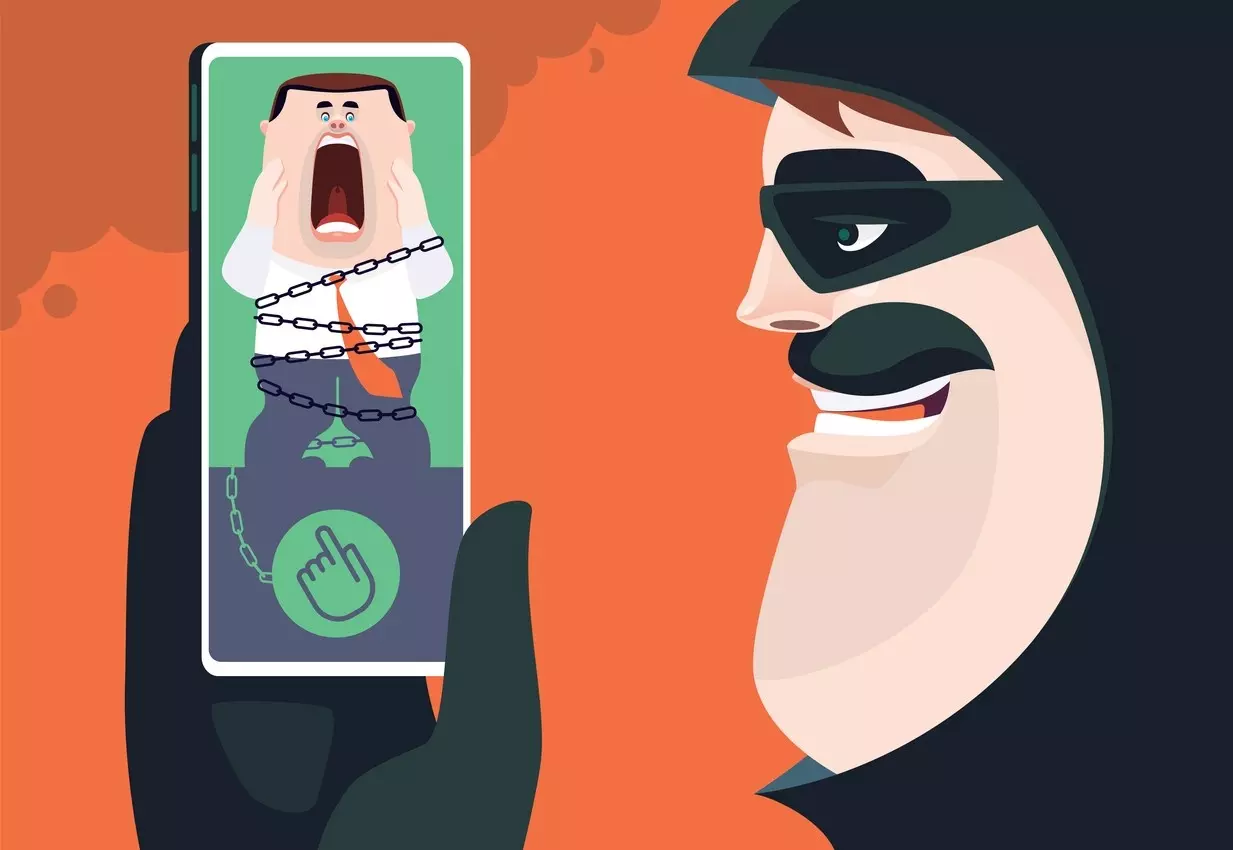
Several factors, from lack of faith in the criminal justice system to gullibility of the targeted victims, have helped digital arrest snowball into a menace in India in a short time. Representative Photo: iStock
Despite the government advising people not to fall prey to scammers digital arrests continue, and in fact, rising exponentially
Almost not a single day passes without a story in the morning newspapers about someone or the other being “digitally arrested” and coughing up several lakhs, if not a few crores, to be “freed”. In all cases that have been published, sense appears to have dawned on the victims only after being deprived of their valuable savings.
Digital arrest, for those who still haven’t woken up to it, is a fake arrest conducted by a group of highly trained, efficient scammers who scare their victims into believing they have committed fraud. The scammers, who claim to be the police, CBI, ED or any other enforcement agency, then pin down their victims, promising to help them but proceed to fleece them of their money under duress.
Also read: What is 'digital arrest'? The scam that PM Modi warned about in Mann Ki Baat
The latest is the digital arrest of a Bengaluru lecturer who, according to reports, was under digital arrest for six months during which time she sold two plots of land and an apartment, plus took a loan to pay the scammers. She paid them around Rs 2 crore. When they suddenly stopped taking calls the lecturer realised she had been duped, and went to the local police station to file a complaint.
Some 39,925 incidents of digital arrest were reported in 2022, with a total defrauded amount of Rs 91.14 crore. In 2024, the number of such cases almost tripled to 1,23,672, with the total defrauded amount increasing by a staggering 21 times to Rs 1935.51 crore, data revealed.
In this case, as with several others, the scammer called the lecturer to inform her that a courier package in her name contained drugs and the police would soon be arriving to arrest her.
A senior female IT professional in Bengaluru under digital arrest recently lost a record amount of Rs 31.83 crore in 187 transactions over a period of six months to scammers.
Also read: Noida logs first ‘digital arrest’ case: What is it and how can you stay safe?
Despite the police warning people against scammers and advising them not to fall prey to their tricks, digital arrests continue, and merrily — in fact rising exponentially.
Digital arrests in India almost tripled in 2 years
The government informed Parliament earlier this year that digital arrests in India tripled between 2022 and 2024.
Some 39,925 such incidents were reported in 2022, with a total defrauded amount of Rs 91.14 crore. In 2024, the number of such cases almost tripled to 1,23,672, with the total defrauded amount increasing by a staggering 21 times to Rs 1935.51 crore, the data revealed. Why is it that an individual who is aware that s/he has not committed any crime panics when someone claiming to be the police calls and threatens her/him with arrest?
The logical step would be for the individual to walk up to the nearest police station to figure out what’s happening, talk to the station inspector or anyone in authority, and soon figure out that the call was fake.
Yet, this almost never happens.
Ironically, those digitally arrested are mostly well-read, highly literate members of the intelligentsia — teachers, businessmen/women, retired officials from the private sector and even journalists. So, it is difficult to imagine they are not up to speed on the latest news.
Also read: Why Sanchar Saathi mandate sparked privacy, surveillance concerns
It is easy for someone not yet scammed to imagine or declare they will never be scammed. But then, anecdotal evidence points to a high success rate of such digital arrests.
Two reasons why people get tricked
There are at least two reasons why it is easy to trick unsuspecting individuals. Either they are not reading newspapers, or have given up the habit, in which case they are ill-informed, or the word “police” sends shivers up their spine.
In India, none would like to get involved with the police for any reason. Historically, the police come across as people who appear intimidating, and/or in many cases, actually are.
There are instances where people even hesitate to help the victim of a road accident, as they don’t want to get involved with the police when questioned. In such a scenario, when someone is accused of trafficking drugs, it is natural for the individual to get into a panic. A typical victim would dread the thought of being arrested and sent to jail.
Lack of trust in criminal justice system
What this implies is a woeful lack of trust in the criminal justice system. There have been umpteen cases where the police have allegedly demanded money to help an individual who approaches them for relief.
Also read: Bengaluru techie sells property, loses Rs 2 crore in 'digital arrest' scam
As MP Karti Chidambaram wrote in The Print news website earlier this year, besides hospitals and courts, the police stand out for their potential to turn protectors into tormentors.
“In light of this, being spared the ordeal of interacting with these institutions can feel like a divine blessing,” he stated.
There are reports that appear regularly accusing the police of extorting money from a victim and misusing the helplessness of the individual to make a fast buck. Two months back, in Bengaluru, an assistant sub-inspector and a patrol van driver confessed to having extorted Rs 75,000 from a migrant worker and his family.
Despite the weakness in the criminal justice system, the banking sector and an ineffectual administration, it should be remembered that digital arrests can only work if the intended victim cooperates with the scammers. Huge amounts of money cannot be transferred by anyone else other than the account holder, in most cases.
Given that such incidents fit into the popular perception of the police force, it is but natural that people want to keep it at arm’s length. On top of this, there are frequent instances of criminal suspects dying in custody. Though never acknowledged, it is an open secret that most custodial deaths are due to third-degree torture during questioning.
The reputation of the Indian police was made clear in a London court in February this year during the extradition proceedings of one Sanjay Bhandari, who was accused of money laundering and evading tax. The court reportedly refused to extradite him as it was of the opinion that custodial torture was ‘commonplace and endemic’ in India and thus, Bhandari’s extradition would be a breach of his human rights.
Also read: 'Digital arrest' | Police won't arrest you on video calls: I4C advisory
The Status of Police Reporting in India, 2025, published by a group of public spirited organisations quotes a 2020 report by the National Campaign Against Torture which stated that in 13 years from 2005 to 2018, not a single police personnel was convicted in 500 cases of deaths in police custody, even though 281 cases were registered and 54 charge-sheets were filed. The fear of the police is clearly based on concrete data, and it is this perception that cyber scammers utilise to the hilt.
Moreover, in recent years, it has become common for FIRs to be filed against journalists for publishing “inconvenient” stories. So when a fellow journalist received a call threatening digital arrest, he was spooked. This individual, highly reputed for the top-class work he has done in the area of politics, fell flat to the scam. He escaped any loss, thanks to the timely intervention of another colleague.
The journalist, a near-victim, later said that since journalists were being arrested in recent times on flimsy grounds, he concluded he too was a target. The essential point is that he was, like many other victims, fearful of the police and their questionable processes employed in arresting any citizen.
Indian police yet to become citizens' friend
In India, by all accounts, the police and the common people have, historically positioned themselves on either side of a perceptible divide. Despite half-hearted measures to make the police force appear more citizen-friendly and the police station a welcoming place, none have worked.
Also read: Is AI psychosis worth it? Experts flag rising dependence on AI
According to analysts, that is because the police, since colonial times, under the 1861 Act, was told to control and “oppress” people rather than being accountable and answerable to the common citizen. This was convenient for rulers in post-Independent India, so the practice continues.
A Supreme Court order dictating the police to install CCTVs in all police stations, to make them accountable, has been found to be ineffectual. Either CCTVs were not installed, or even if they were, few were in working condition.
In September, the apex court registered a suo motu case to enforce its order. This was in the context of a media report that 11 people had died in police custody in Rajasthan in the first eight months of 2025. The police did not provide the CCTV footage.
Also read: ‘What happens if everything is allowed?’ SC flags risks of unregulated online content
Whether the court order to install CCTVs will be adhered to remains to be seen. No surprises if the order is not implemented.
In some cases, the police have succeeded in recovering the money lost in scams, but that is an exception rather than a rule. Despite the RBI’s strict rules regarding opening of bank accounts, KYC and others, scammers are able to open the so-called mule accounts easily. Rules and laws remain on paper. In practice, it is quite a jungle out there.
Earlier this year, the CBI raided 42 locations across north Indian states and 8.5 lakh mule accounts in 700 branches of various banks were detected. These mule accounts are so called as they are used by scammers to transfer cyber-fraud money from victims.
Victims' 'cooperation' also a concern
Despite the weakness in the criminal justice system, the banking sector and an ineffectual administration, it should be remembered that digital arrests can only work if the intended victim cooperates with the scammers. Huge amounts of money cannot be transferred by anyone else other than the account holder, in most cases.
Also read: DPDP Rules ‘cripple RTI, endanger press freedom’: Editors Guild, DigiPub
In spite of the fact that the victim is being told to hand over lakhs, if not crores of rupees, that no alarm bells ring in the head is the biggest takeaway of a mindset that would require a detailed psychological study.
For now, it will not be presumptuous to conclude that any amount of information regarding digital arrests on television, mobile phone networks or any other media will not work.
Unless there is reform in the area of policing, and the police undergo a genuinely citizen-friendly makeover, the scams will continue, and more individuals are bound to get conned.