After a sweeping comeback in Maharashtra, Fadnavis’s growing clout, Hindutva turn, and RSS backing are fuelling speculation about his ambitions beyond the state
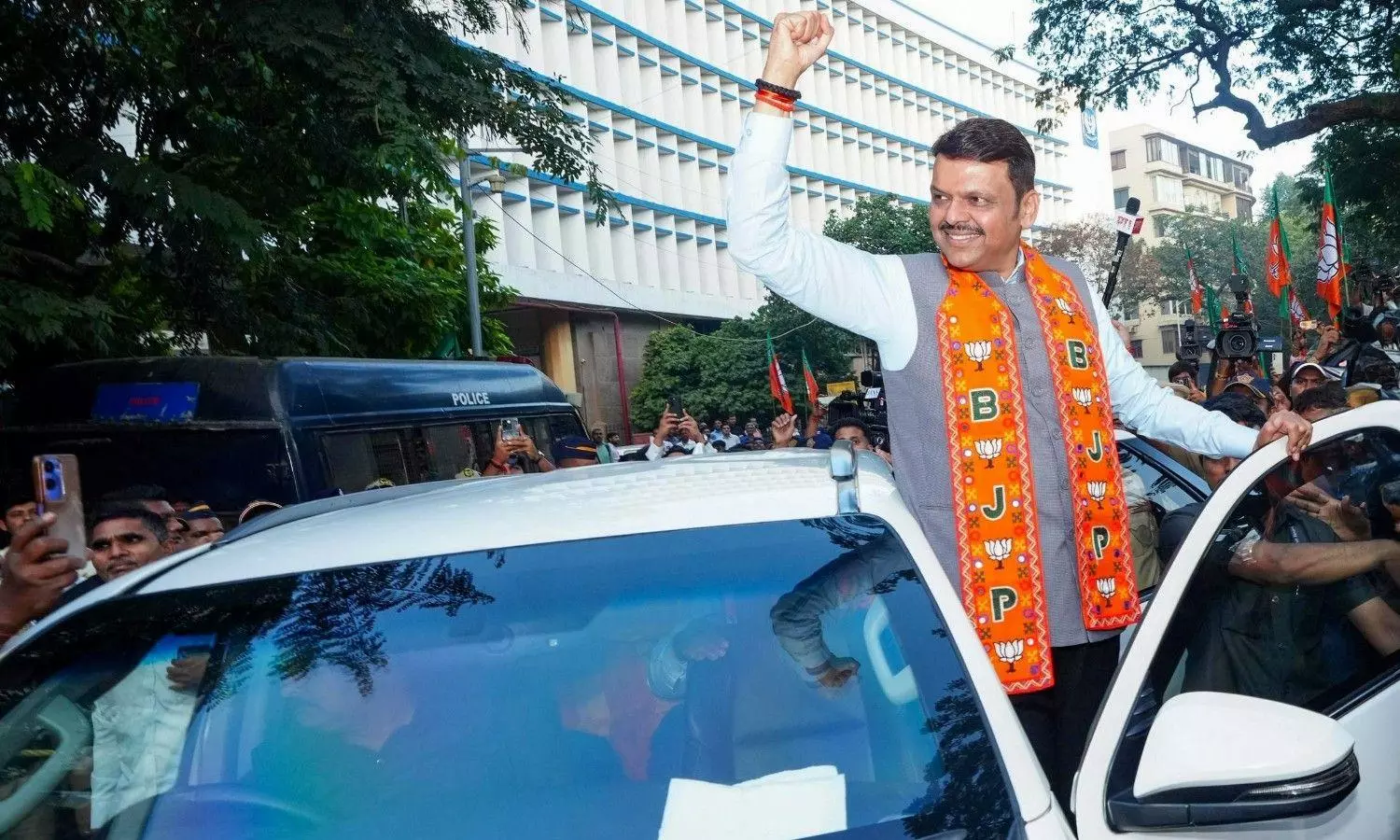
The massive victory of the BJP and its allies in Maharashtra’s recent Municipal Corporation elections has put the spotlight on Chief Minister Devendra Fadnavis. After leading the party to victory single-handedly in 25 of the 29 corporations that went to the polls on January 15, Fadnavis has strengthened his image as a shrewd strategist with a consistent record of electoral success.
This performance under his leadership followed the Assembly elections victory of 2024, when the party and its alliance partners, mainly the Shiv Sena led by Eknath Shinde, secured a record mandate of 236 seats in the 288-member House. Of these, 131 were won by the BJP and 57 by the Shiv Sena.
Also read | Maharashtra civic polls not a saffron-wash; BJP has reasons to worry, rivals have hope
The party-led alliance had also outperformed the Opposition in the subsequent gram panchayat, municipal council and nagar panchayat elections. The latest in this series of wins was the Municipal Corporation polls, where the BJP won 1,425 out of the total 2,869 seats up for grabs. Significantly, this success came without any star campaigners of the party, including Prime Minister Narendra Modi and Home Minister Amit Shah, holding election rallies.
The rise of Fadnavis
The results, in a state where Hindutva influence had traditionally been limited by politics rooted in a progressive social and ideological foundation shaped by leaders such as Mahatma Jyotiba Phule, Shahu Maharaj, and Babasaheb Ambedkar, have elevated Fadnavis’s standing within the BJP. He is now increasingly seen as a key national leader, next only to Prime Minister Narendra Modi and Amit Shah, noted for his work ethic, political skills and a blend of flexibility and firmness in leadership.
Fadnavis’s rise from a local Nagpur MLA to a central figure in the BJP’s Maharashtra strategy has unfolded in a relatively short span of 11 years. His political career took a major turn in 2014 when he was appointed the chief minister of Maharashtra, a move that surprised many observers, as he had not previously served as a minister.
One of the notable additions to Fadnavis’s political toolkit during this period was his embrace of a more assertive Hindutva
Moreover, the choice of a Brahmin as the chief minister in a state long dominated by Maratha politics was unusual; the only other exception was Shiv Sena leader Manohar Joshi in 1995. However, the way Fadnavis handled the responsibility over the next five years drew attention, as he appeared to manage the role with confidence and administrative steadiness. He was also the first Maharashtra chief minister in decades to complete a full five-year term in office.
During this period, however, he came across as an urbane and composed politician, a contrast to the increasingly combative style associated with the BJP leadership under Narendra Modi and Amit Shah. In his five-year stint, Fadnavis did not have to practise an overtly aggressive Hindutva politics, which was becoming the norm elsewhere in the country, in Maharashtra.
Engineering a comeback
Fadnavis was presented with a real test of his political skills only during the last six years, after the stormy break-up of the BJP’s alliance with the undivided Shiv Sena led by Uddhav Thackeray over the sharing of the chief minister’s post following the alliance’s victory in the 2019 Assembly elections. He proved equal to the task by taking steps that were unprecedented not only in Maharashtra’s politics but in Indian politics more broadly.
To counter Thackeray’s stand, Fadnavis took oath as the chief minister in the early hours of November 23, 2019, claiming to have the support of the NCP. The move, however, proved short-lived, and he had to resign within three days after Sharad Pawar distanced himself from the arrangement.
Over the next two and a half years, Maharashtra witnessed yet another unusual political realignment, this time from the opposite side. It was Uddhav Thackeray’s turn to surprise the BJP by joining hands with arch-rivals the Congress and the NCP to form the Maha Vikas Aghadi (MVA) and take over as the chief minister himself.
Cornered, the BJP, led by Fadnavis, was left searching for ways to recover. What followed was a series of calculated moves by Fadnavis to stage a comeback. He gradually worked at weakening the Shiv Sena and the NCP without revealing his hand. First, he split the Shiv Sena by drawing a large section of over 40 MLAs led by Eknath Shinde and later joined hands with the breakaway faction to unseat the Thackeray government.
Patience rewarded at last
Despite criticism over this episode and allegations of inducements to the Shinde faction, the political objective of regaining power appeared to be paramount for him. All this marked a departure from Maharashtra’s tradition of maintaining a certain threshold of decorum in political conduct. Fadnavis moved away from his earlier gentle and polished image towards a more hard-nosed and assertive political posture.
Also read | Fadnavis emerges as key strategist; BJP will have 17 Mayors
Difficult moments followed in the immediate aftermath when the Modi–Shah leadership decided to make Shinde the chief minister. A disappointed Fadnavis had to accept the decision, only to face another setback when Amit Shah asked him to serve as Shinde’s deputy.
Over the next two and a half years, Fadnavis had to settle for the post of deputy chief minister under Shinde, a demotion that could have dented the confidence of many in his place. Determined and patient, however, Fadnavis appeared willing to wait for another opportunity to return to the top job.
The patience and perseverance paid off when Delhi reinstated him as the chief minister after a comprehensive victory in the 2024 Assembly elections. The tide had turned, and Shinde was now his deputy.
From setback to dominance
In the intervening period, however, Fadnavis had triggered another major realignment in state politics, this time by splitting the NCP led by its veteran leader, Sharad Pawar, and persuading his nephew, Ajit Pawar, to align with the BJP. No other politician in Maharashtra had been able to deal such a severe blow to Sharad Pawar over his entire career spanning more than six decades.
All this while, Fadnavis continued to weaken Opposition strongholds at all levels, from Gram Panchayats and Zilla Parishads to Municipal Corporations, with hundreds of corporators and councillors, MLAs and MPs switching sides to join the BJP. A largely depleted Opposition was left with limited resources and manpower to take on the BJP’s organisational strength, resulting in a massive defeat in the 2024 Assembly elections, where they together managed only 52 seats in the 288-member House.
Just before the Assembly elections, however, a setback in the 2024 Lok Sabha elections in the state had potentially put the clock back for the BJP and Fadnavis. The party won only 17 seats out of 48, a drop of 27 seats from its 2019 tally. While many felt that the BJP and Fadnavis had paid a political price for their recent moves, the Assembly elections a few months later proved otherwise when the BJP-led Mahayuti alliance secured an unprecedented 236 seats.
Victories in a string of subsequent civic body elections, from the Gram Panchayat to the Municipal Corporation levels, suggested that the 2024 Lok Sabha result was an exception rather than a trend.
A sharper Hindutva turn
One of the notable additions to Fadnavis’s political toolkit during this period was his embrace of a more assertive Hindutva. From allowing groups such as the Sakal Hindu Samaj to hold rallies to openly articulating a stronger Hindu identity pitch, Fadnavis presided over a shift that sought to expand the BJP’s ideological appeal in the state.
Given a choice, Fadnavis might have preferred a softer version of Hindutva to stay the course, but the political compulsions of operating in the Modi–Shah era of the BJP pushed him towards a harder ideological line. Thus, within about 20 months of the 2024 Lok Sabha setback, Fadnavis was able to turn the BJP into a formidable electoral machine.
Also read | Maharashtra polls: BJP wave across state; topples Thackerays' Mumbai bastion
During this time, he weathered several storms, the biggest being the Maratha quota agitation led by community activist Manoj Jarange Patil. Jarange’s frequent fasts were aimed at pressuring the government and often targeted Fadnavis personally. His Brahmin background was repeatedly invoked by protesters, but Fadnavis held his ground and navigated the political and administrative challenges of the agitation.
Throughout this period, Fadnavis criss-crossed the state, continued to expand the party base by bringing opponents into the party fold, and managed to keep his alliance partners on board and in check, depending on the political needs of the moment. All this had effectively transformed the local leader from Nagpur, once associated with the cause of a separate Vidarbha state, into a mass leader with state-wide appeal. It is no surprise that BJP supporters now fondly call him “Deva Bhau” instead of Devendra.
A sulking Shinde, who has continued to nurse chief ministerial ambitions, presented Fadnavis with some difficult moments, but he did not allow himself to be weighed down. So far, he has managed to keep Shinde under check. His latest rough patch in the uneasy relationship with Shinde is unfolding over the latter’s demand for the mayor’s post in the Brihanmumbai Municipal Corporation (BMC), where the BJP depends on his party for a majority. It remains to be seen how Fadnavis tackles the issue.
The road to Delhi
So, where is Fadnavis headed over the next few years? Is he the BJP’s next best bet after Modi, particularly after the 2029 general elections, irrespective of whether the party retains or loses power?
Going by how he has measured up to the task within such a short time, and that too in a state that has traditionally resisted communal politics, unlike Gujarat, Madhya Pradesh, Uttar Pradesh and Assam, which had long provided more fertile ground for Hindutva, Fadnavis could be a figure to watch in the BJP in the post-2029 political landscape.
Most importantly, Fadnavis is widely seen as having the confidence of the RSS, an organisation that plays a decisive role in the BJP’s power calculations
Apart from establishing himself as a proponent of a more assertive Hindutva and as an able administrator, Fadnavis has several other advantages over potential competitors within the BJP for the top job in Delhi. He is well-educated and conversant with a wide range of subjects, and he speaks good English, a skill that carries weight in international engagements. He also possesses the political acumen to outmanoeuvre opponents. Like Modi and Shah, he is a 24x7 politician, constantly on the move and focused on organisational work. He also has the advantage of age — he will be only 59 in 2029.
Most importantly, he is widely seen as having the confidence of the RSS, an organisation that plays a decisive role in the BJP’s power calculations. Seen in that light, Fadnavis also emerges relatively unscathed from the 2024 Lok Sabha setback, which was largely attributed to the RSS holding itself back from active participation rather than to any failure on his part. That also helps explain the turnaround in the next six months, when the party returned to power with a sweeping victory in the Assembly elections as the RSS and Fadnavis worked in tandem.
Fadnavis was also speculated to have been suggested by the RSS, along with Nitin Gadkari, as a possible next BJP president. Needless to say, the Modi–Shah duo would not have agreed. Clearly, no one else in the current BJP leadership embodies such a combination of political advantages. Fadnavis himself has indicated that he will not leave Maharashtra until 2029. The obvious corollary could be that he is positioning himself for a move to Delhi post-2029.
The post-Modi gamble
While many have been wondering what happens to the BJP after Modi, the RSS may be quietly working on a Plan B — or, as some might say, Plan D (for Devendra). It may not want to forgo the chance to anoint a leader of its choice for Delhi’s top post this time around, after having failed to place another of its favourites, Nitin Gadkari, there in 2014.
The obvious question in that case would be where Amit Shah stands in this race. Would he accept Fadnavis getting that pride of place? Unlikely. That, in turn, could potentially sow the seeds of tension between the Sangh and the BJP.
Also read | Why Thackeray and Pawar strongholds crumbled in Maharashtra local body polls
All in all, a possible foray by Fadnavis into national politics has the potential to significantly reshape the future of Hindutva’s influence in Indian politics. The question, therefore, is: Will the RSS take that gamble?
But what would happen to the effort to reclaim India’s secular polity if Fadnavis were to become prime minister after Modi?
The answer may be more unsettling than many expect, because Fadnavis is seen as competent not only in political management but also in governance. He understands the economy better than most others in the BJP and could potentially deliver outcomes that surpass those achieved under the Modi regime.
If a strong Hindutva orientation were to be coupled with improved governance, it would become that much more difficult for opponents to dislodge such a leadership. Fadnavis as the prime minister, therefore, could pose a greater challenge to the restoration of secularism and democratic norms than Modi himself.
(The Federal seeks to present views and opinions from all sides of the spectrum. The information, ideas or opinions in the articles are of the author and do not necessarily reflect the views of The Federal.)