The Opposition is a net loser at the national level, despite the Congress victory in Kerala — it has lost Tamil Nadu and West Bengal, and the INDIA Alliance has crumbled, and will stand demolished, if the Congress joins hands with film star Vijay for his TVK to form a government in Tamil Nadu.
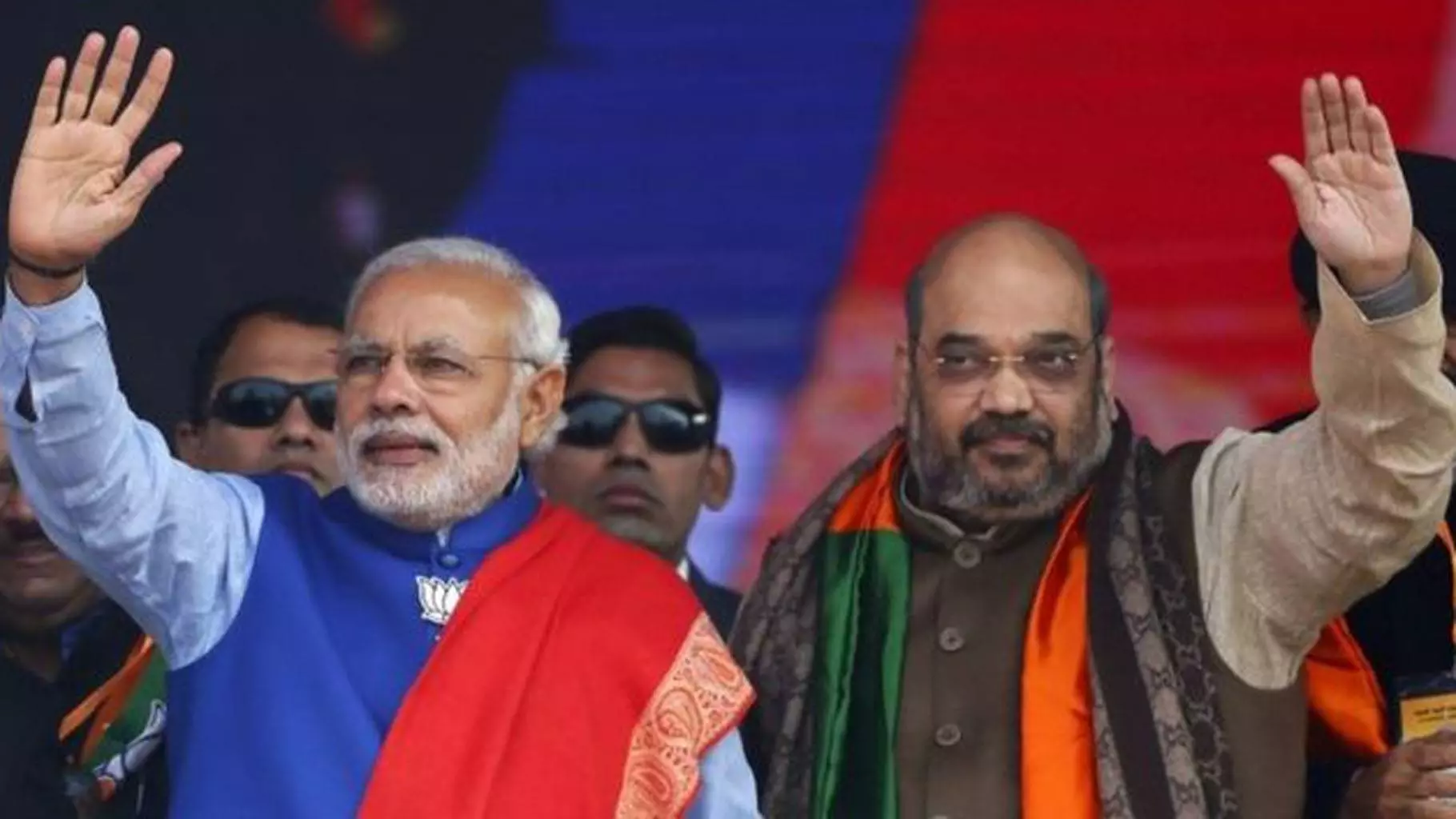
Some claim, led by Prime Minister Narendra Modi, that the election results mark a triumph for the Modi-Shah brand of politics. But is it, really?
Anti-incumbency and roll revisions
In Tamil Nadu and Kerala, intense anti-incumbency is in full display, with outgoing chief minister MK Stalin losing his own seat. The people could have chosen the BJP and its allies as the vehicle to for their ire. In both states, where a non-BJP alternative was available, the people chose that alternative, rather than the party of Modi and Shah.
No, there is no modern-day Ashvamedha at work, in which an unchallenged BJP stallion charges on to new realms, whose rulers have to choose either to accept the suzerainty of the horse’s royal owner or defeat the soldiers trailing the horse.
To what extent did incomplete and possibly biased electoral roll revisions play a role in the electoral outcome in West Bengal? No one can say for sure. But there is little dispute over the openly communal campaign by the BJP and its leadership in Assam. Do Modi and Shah want to present Assam chief minister Himanta Biswa Sarma’s style of politics as their Chanakya strategy?
Mamata Banerjee ruled West Bengal for 15 years, with little to show by way of relative improvement in living standards as compared to other poor states. Her politics excelled in taking over the non-core cadre and support base of the Communists and of the Congress, marginalising these parties in West Bengal. This gave space for the BJP to grow into the principal Opposition.
To what extent did incomplete and possibly biased electoral roll revisions play a role in the electoral outcome in West Bengal? No one can say for sure
The other area where Trinamool politics excelled was in patronising the religious minorities, and claiming to defend the Bengali identity against the outsiders, the BJP. Ordinary Bengalis find it hard to stomach the thesis that the Bengali identity is in danger from the BJP. And the politics of appeasement creates, even as it consolidates the minorities, a counter consolidation of the majority against the appeaser.
Larger lesson
In Kerala, the Congress’s victory postpones the break-up of the coalition of Muslims and Christians with the Congress. And that is good for the state and for India as a whole. If Muslims find their alliance with the Congress not opening a path to sharing in political power, that would weaken the Indian Union Muslim League. The League, in Kerala, is a community-based party that dreads communal politics for the good reason that it would put an end to its cosy sharing of political power with other communities with minimal conflict.
If the League were to weaken, leave alone disintegrate, the political forces that are waiting in the wings to claim the mantle of Muslim representation tend to Islamism, inspired more by the churn in Arab lands than by happenings in Kerala.
Does this mean the end of the Left in Kerala? Far from it. The Left in Kerala has played the role of a democratising force. Most other parties of the state mould themselves in the image of the Left, contributing to the democratisation of Kerala. The Left lives on, in spirit, in the victory of the Congress in the state, and will be waiting to capitalise on the Congress-led government’s failures, come 2031.
The larger lesson for the national Opposition is that it must present the people with a positive vision centred on growth and democratisation, instead of merely trying to take advantage of the BJP’s many failures and failings.
Seeking alternative to BJP
No such coherent vision of national redemption exists for the Congress, led as it is by a dynast who accepts no accountability for his repeated failures and is content to make excuses.
The Left finds itself with an opportunity to renew itself, focusing on building democracy and participatory, enriching growth, instead of chasing illusions of revolution in an authoritarian framework legitimised in the name of Lenin.
The people have voted out corrupt dynasts and would-be dynasts masquerading as lone champions of locally popular ideology. They need a wholesome alternative to the BJP’s politics of schism and degeneration. That, and not any relentless march of Hindutva, is the message of these election results.
(The Federal seeks to present views and opinions from all sides of the spectrum. The information, ideas or opinions in the articles are of the author and do not necessarily reflect the views of The Federal.)