



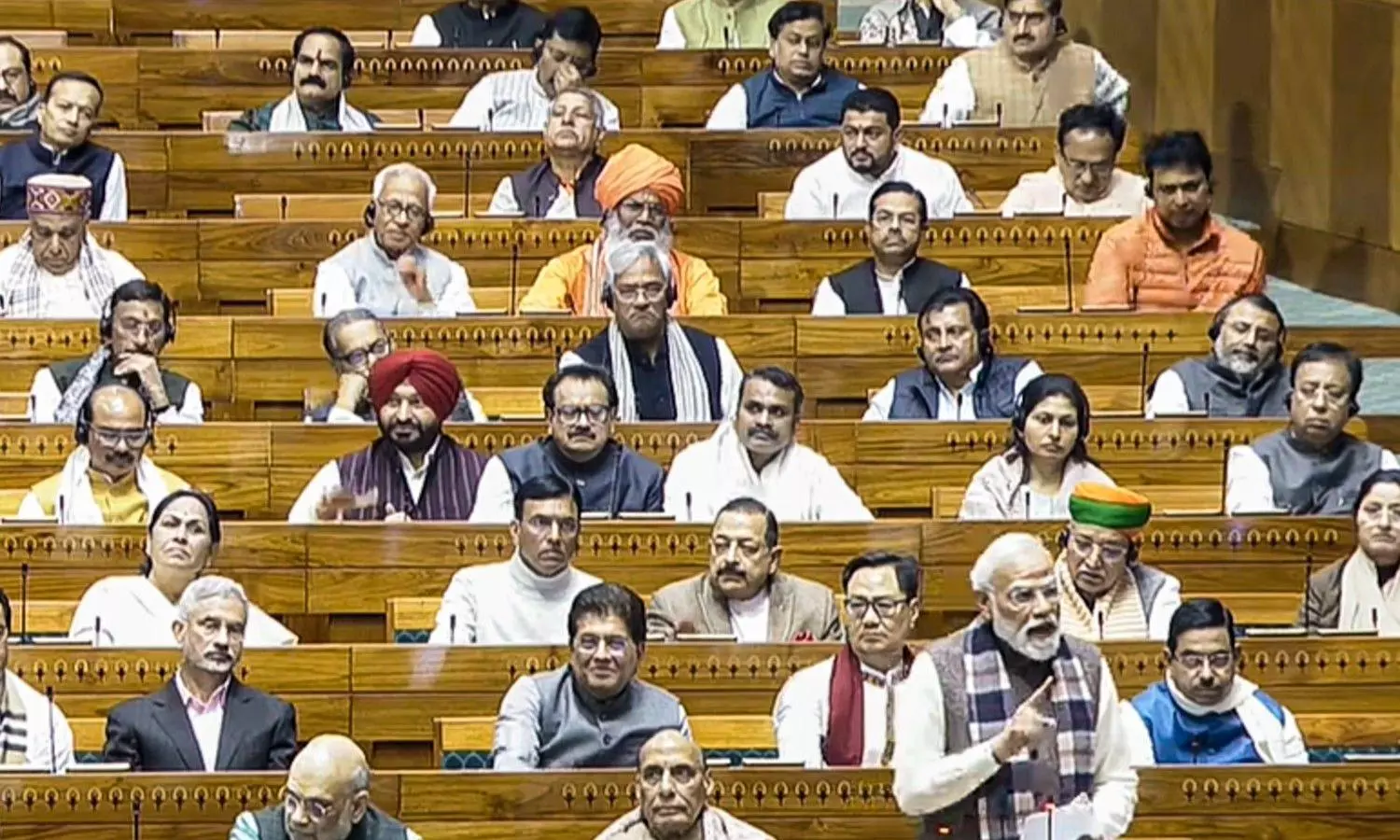
What nation wants to know as govt, Opposition debate electoral reforms
Why does the Opposition want a debate on SIR while the Centre is opposed to it? Will vote chori figure in the debate? Will EC regain some mojo?

The Special Intensive Revision (SIR) of electoral rolls has been a hotly debated topic for the past few months, and the Opposition has been keen to bring the conversation into Parliament, too.
After much resistance, the Narendra Modi government last week agreed to hold a parliamentary debate on December 9 on electoral reforms in general, with no specific mention made of SIR. However, the Opposition is unlikely to not touch upon SIR, currently underway in nine states and three Union Territories.
The nation is expected to closely watch how the debate unfolds, how MPs present the views of their respective states, how people's genuine concerns on disenfranchisement are addressed, and whether or not the Election Commission (EC) regains some lost credibility at the end of the day.
Why is Opposition keen?
The Opposition parties, including West Bengal's ruling TMC, have remained firm in their demand to see a debate over SIR happening in Parliament. As the Winter Session began, Opposition MPs pushed the agenda in Rajya Sabha as soon as its new chairman, Vice President CP Radhakrishnan, was felicitated.
House Member from the TMC, Derek O'Brien, claimed Parliamentary Affairs Minister Kiren Rijiju had promised a debate on the topic, though under the bigger agenda of "electoral reforms". Rajya Sabha's Leader of Opposition Mallikarjun Kharge and the CPI(M)'s John Brittas also backed the demand.
Also read | With Vande Mataram debate, Modi fails to score in history, Bengali culture
While vote chori, the alleged theft of mandate, is one issue that has left the Opposition concerned, particularly after the results of the November 2025 Bihar Assembly elections, suicides by block development officers (BLOs) in many states due to alleged workload related to SIR is another factor that has pushed the demand for a debate.
With stakes high in poll-bound Opposition-ruled states where SIR is currently underway, such as Bengal, Tamil Nadu and Kerala, leaders from the Opposition INDIA bloc would also highlight “mass deletions and mysterious additions” made to electoral rolls in Bihar. Assam, which is also seeing an Assembly election next year, is bracing for a 'Special Revision' of electoral rolls, which again could trigger a debate. In the Lok Sabha, Opposition parties such as the Congress, SP, AAP and TMC will take on the government over the SIR from the perspective of the states where they play an influential role.
SIR as ‘backdoor NRC’?
Many of the Opposition parties, major or minor, have expressed apprehensions that the SIR aims at a covert implementation of the controversial National Register of Citizens (NRC) meant to get rid of “illegal immigrants”. Bengal, which borders Bangladesh and reportedly is home to scores of illegal immigrants from the neighbouring country, could see the maximum disenfranchisement, activists fear, because of the SIR exercise. It has prompted its ruling TMC to reiterate that behind the SIR lies the actual mission of implementing the NRC.
In Tamil Nadu, which is also going to polls, Opposition parties, including the VCK, claimed that the SIR could see disenfranchisement of genuine voters, particularly those from the socially vulnerable and marginalised communities. Party MP Ravikumar said the entire SIR exercise is indirectly connected with the NRC. Similar concerns have been raised in Kerala, another state going to the polls next yea. In the BJP-ruled Assam, too, there is palpable voter anxiety.
Critics have also alleged that certain conditions required for the SIR are functionally similar to those needed for the NRC, adding fuel to the speculation.
Welfare schemes at risk?
The SIR exercise has not only left people concerned over losing their voting rights, but also various benefits they receive under the government’s welfare schemes.
Also read | Parliamentary panel slams NTA's performance, suggests corrective measures
Many of the poor and marginalised are already at a disadvantage in procuring the benefits, thanks to bureaucratic strangleholds and technical hindrances such as flawed paperwork.
Disenfranchisement for them means they would face even bigger challenges of losing access to government welfare schemes. They would even have little or no documentation to get back what could be their life support if their very citizenship comes under scrutiny.
Will Congress push vote chori claims?
The Congress, which fared miserably in the Bihar polls despite being in alliance with major state player RJD, would find an opportunity to regroup itself in Parliament on Tuesday to attack the government over the ‘vote chori’ charges.
Party MP Rahul Gandhi showed a lot of energy during and after the Monsoon Session to take on the government and the EC with his allegations of electoral apparatus manipulation, including those from states such as Karnataka, Maharashtra and Haryana that went to polls in the recent past, and it is unlikely that he would hold his horses this time either.
His sister and MP Priyanka Gandhi Vadra said during Monday's debate on ‘Vande Mataram’ that the Opposition stands for the country while the government wants to win only elections. Her words give an indication that the Congress would show a renewed vigour over its protest on SIR in Parliament this week, even if that leads to more verbal clashes and walkouts.
How will the govt handle the debate?
It has been seen over the past week that the government has used all kinds of strategies to tackle the unfazed Opposition over the SIR debate. From the position that it could not accept a discussion on the SIR alone since it was an administrative exercise by the EC, an autonomous constitutional body, to warning the Opposition that it could not dictate a timeline for the talks, to agreeing to hold the talks, the Modi government has meandered through options.
Also read | Bengal SIR: BJP does volte-face, alleges irregularities, seeks probe
One of the major advantages that the government holds while debating the SIR is the Bihar election results that overwhelmingly favoured the NDA. With the result in a key state already going in favour of the ruling party, which was not the case when the Monsoon Session protests happened, the government would easily take refuge under the spirit of democracy to say that people have given their verdict and nobody complained.
On top of it, Modi has already accused the Opposition of indulging in drama ahead of the session. More theatrics over the SIR, including noise on the floor and walkouts, would validate his claims.
Will EC regain some sheen?
The EC, which has faced the Opposition’s wrath specifically on the SIR issue, has been going through a credibility crisis even otherwise. Repeated vote chori allegations have left a shadow on the autonomous institution, which is accused of toeing the ruling party's line.
While the EC has sought to deny the Opposition's accusations within and outside the courts, Modi’s claims on the first day of the session that the Opposition is using Parliament as a platform to express frustration over electoral defeats also shows how the government subtly defends the EC as just a referee of fair electoral battles.
When the electoral reforms debate ends, will the EC emerge with a better image and greater credibility?