



SC warns Meta, WhatsApp, says 'won’t allow exploitation of user data'
Supreme Court tells Meta, WhatsApp it will not allow misuse of Indians’ personal data, flags monopoly and backs CCI penalty

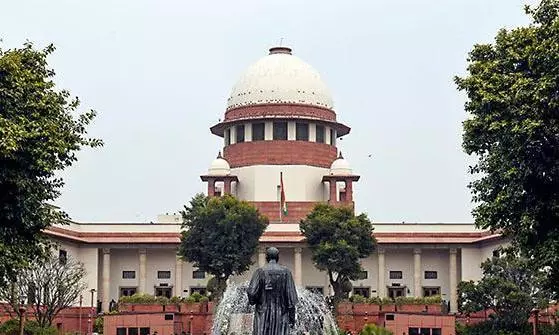
The Supreme Court on Tuesday (February 3) told Meta Platforms and WhatsApp LLC that it will not allow them to exploit the personal data of Indian citizens. A bench comprising Chief Justice of India Surya Kant, Justice Joymalya Bagchi and Justice Vipul Pancholi made the remarks during the hearing of appeals filed by Meta and WhatsApp LLC challenging the order of the National Company Law Appellate Tribunal (NCLAT) which upheld the penalty of Rs 213.14 crore penalty imposed by the Competition Commission of India (CCI) in relation to WhatsApp's 2021 privacy policy.
"We will not allow you to share even a single information, you cannot play with the rights of this country, let a clear message go..." said CJI Surya Kant said.
‘WhatsApp created monopoly’
The CJI further stated that customers don’t have any other option as WhatsApp has created a monopoly.
"You are making a mockery of the constitutionalism of this country. We will dismiss it right away. How can you play with the right of privacy of people like this? Consumer has no choice, you have created monopoly,” he added as quoted by Live Law.
Also Read: WhatsApp's year-end gifts: Innovative notes for missed calls, better Meta AI images
When senior advocate Akhil Sibal, appearing for Meta and WhatsApp, submitted that users have an option to opt out of WhatsApp’s privacy policy, the CJI asked how far an ordinary person will be able to understand it.
"A poor woman selling fruits on the streets, will she understand the terms of your policy? Nobody will be available to understand. Will your domestic help understand this? You might have taken the data of millions of persons. This is a decent way of committing theft of private information. We will not allow you to use it," the CJI said.
“Give undertaking that personal data won’t be used’
He made it clear that the Court will not hear the matter unless WhatsApp and Meta give an undertaking stating that the personal data of users will not be used.
Also Read: Made-in-India messaging app 'Arattai' tops app store charts, overtakes WhatsApp
During the hearing, Solicitor General of India Tushar Mehta stated that "our personal data is not only sold, but also commercially exploited." At this point Justice Bagchi said that the court would look into how data is “rented out” by WhatsApp and how the behavioural trends of people are analysed for targeted ads.
"Every silo of data, irrespective of privacy, has a value, we would like to examine, what is the rent sharing of data...we are concerned about how our behaviour is utlitsed and monetised for trends..You are using the data for the purpose of targeted online advertising," said Justice Bagchi.
The backdrop
The case has its origins in a November 2024 order passed by the Competition Commission of India examining WhatsApp’s 2021 update to its privacy policy.
The regulator had concluded that WhatsApp, which holds a dominant position in India’s over-the-top messaging market, forced users into a “take-it-or-leave-it” arrangement, leaving them with no effective choice but to accept the revised terms.
Also Read: WhatsApp launches new calling features for group calls
According to the CCI, continued access to WhatsApp’s messaging services was made conditional on users agreeing to wider data sharing with other entities within the Meta Platforms group.
The regulator held that such conduct amounted to an abuse of dominant position under the provisions of the Competition Act, 2002.
Based on these findings, the CCI imposed a penalty of Rs 213.14 crore on Meta Platforms and issued multiple directions aimed at restoring user autonomy. These included barring WhatsApp from linking service access to data sharing, requiring clear opt-in and opt-out options for users, and mandating greater transparency on how data is shared and used across Meta’s platforms.