From Char Dham to deodar trees, RSS turns focus on crumbling Himalayas
RSS veterans such as Murli Manohar Joshi, Govindacharya and Krishna Gopal question Centre's 'unchecked developmental' activities for tourism

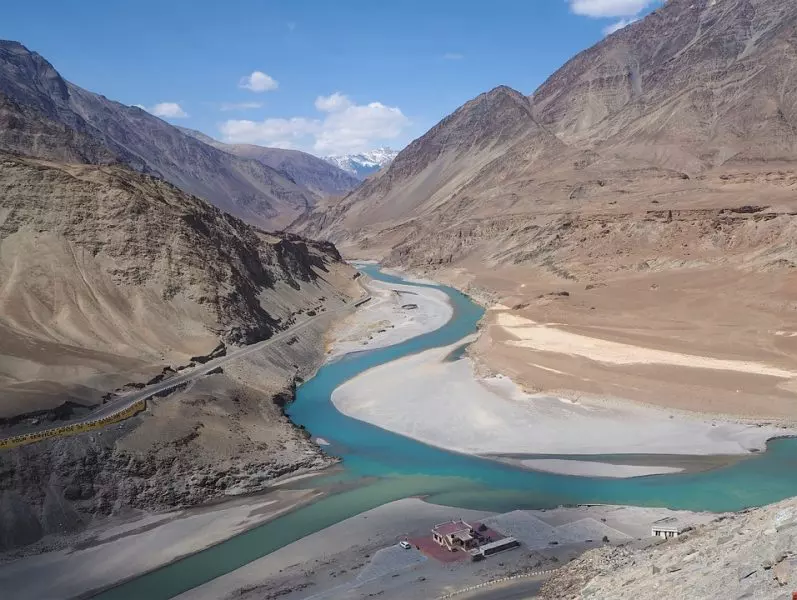
The Himalayas, already under severe ecological stress from rapid climate change, deforestation, and unchecked development driven by dams and tourism, have found a strong advocate for environmental protection in the Rashtriya Swayamsevak Sangh (RSS) and the extended Sangh family. The move comes amid questions and concerns about the controversial Char Dham Highway Project.
The latter half of 2025 has witnessed hectic activism by leading lights of the larger RSS fraternity, demanding adequate safeguards for an endangered ecosystem, which has, in many ways, proved to be a lifeline for the country.
Also read | Char Dham project pushing Himalayas to catastrophe, warns its ex-chairman
The RSS has established a dedicated “Paryavaran Vibhag” or environment wing to coordinate ecological efforts, with initiatives focused on water management, tree planting drives, and reducing plastic use.
Joshi backs Himalayan conservation
Leading the charge is former Union minister Murli Manohar Joshi, a lifelong member of the RSS, who extended his support to the Raksha Sutra programme organised to protest the felling of more than 6,000 Deodar trees for the widening of the Gangotri National Highway in Uttarkashi district of Uttarakhand. In his view, protecting the Himalayas is as important as securing the country’s borders.
In a video message earlier this month, Joshi, 91, said that any injustice to the Himalayas would also be an injustice to the environment. “If the Bhagirathi (river) disappears, then the benchmark of our culture will disappear,” he said.
Citing the Bhagavad Gita, he said that Lord Krishna has described himself as the Himalayas among the mountains and the Bhagirathi or Ganga among the rivers, and therefore, the Himalayas must be protected.
Joshi, one of the founding members of the BJP, said he has submitted a petition signed by 100 people to the Supreme Court to save the Deodar trees, and if needed, another petition will be submitted in the future.
Char Dham project questioned
At the heart of the controversy is the Char Dham Highway Project — about a 900-km all-weather road that has required large-scale hill cutting across the Himalayas. The construction has led to extensive deforestation and the dumping of debris, which has washed into farmlands and damaged fragile ecosystems.
The project has triggered serious concerns over ecological destruction, including landslides and loss of wildlife habitats, while also disrupting local livelihoods as farms are buried or rendered unusable. There are also growing worries about pilgrim safety, with reports of high fatalities linked to altitude sickness along the route.
Unchecked construction has been linked to increased ground subsidence and frequent landslides, endangering pilgrims and locals. Frequent deaths during the Char Dham Yatra, often linked to altitude sickness, heart/respiratory issues, or COVID complications, raise questions about inadequate health checks and management.
Some of this project’s recent debates have touched upon religious inclusivity (calls to bar non-Hindus). Environmentalists, residents, and citizens' groups question the unchecked construction and its impact on sinking towns like Joshimath, contrasting with government efforts to boost pilgrimage infrastructure.
Among the most significant voices in this ecological conundrum has been Krishna Gopal, who serves as a bridge between the RSS and the government, often pushing for a development model that balances economic growth with ecological preservation.
A joint general secretary or sah-sarkaryavah of the RSS, Gopal has repeatedly flagged environmental concerns, emphasising a need for sustainable development rooted in traditional Indian values.
RSS voice on environment
In recent statements, he has emerged as a key voice flagging environmental concerns as central to India's national mission. His focus aligns with the RSS's "Panch Parivartan" (five changes) framework, which prioritises environmental protection alongside social harmony and national self-reliance.
Some of Krishna Gopal’s key concerns, raised amid growing fears of an environmental disaster, include:
Himalayan preservation: He recently issued a stern warning about the degradation of the Himalayas. He stated that “mankind will be saved only if the Himalayas are saved” and slammed current development models for their lack of disaster resilience.
Also read | Himalayas in high quake-risk zone as India unveils new seismic zonation map
Alternative infrastructure models: Gopal has advocated for a shift away from “blanket widening” of roads in eco-sensitive zones like the Char Dham route, supporting expert proposals for sustainable, disaster-resilient infrastructure instead. This prominent RSS official has specifically voiced support for initiatives to protect the ecologically sensitive Himalayan regions, arguing that if they are not safeguarded, the entire country and humanity will face a major crisis. He supported a yatra (march) advocating for alternative, disaster-resilient road-building models instead of blanket widening that requires extensive tree felling in reference to the Char Dham Yatra project.
Resource depletion: He has consistently flagged the “excessive consumption of resources” as a primary driver of the global environmental crisis.
Natural farming and soil health: Gopal emphasises returning to organic and natural farming to protect soil health and ensure “healthy produce” for the nation.
The RSS line is that environmental protection requires individual and collective societal responsibility, encouraging small efforts to save the planet from the crisis caused by excessive consumption of resources.
Dissenting views on RSS stance
While Krishna Gopal reflects the RSS’s culturally rooted approach to environmental protection, critics point to contrasting viewpoints.
Certain environmental activists like Gopal Krishna (not Krishna Gopal, as mentioned above) have exposed “doublespeak” by the government on environmental protection, pointing out contradictions between stated goals and actions on the ground, such as the approval of large-scale deforestation in eco-sensitive zones for development projects.
Some other critiques mention that the bureaucracy is trained in Western economic models, which might conflict with the indigenous, sustainable models advocated by the RSS leadership.
Critics of the RSS also focus on its political and social ideologies, suggesting that environmental initiatives might be part of a broader strategy for national transformation rather than purely ecological concerns.
Prominent RSS ideologue, social and environmental activist, KN Govindacharya, known for advocating “eco-centric development”, is another arrow in the RSS quiver. He has frequently cautioned that the country cannot achieve true progress by ignoring environmental balance.
Govindacharya’s eco-centric advocacy
He is among the signatories of appeals urging judicial and government intervention to protect the fragile Himalayan ecosystem. Concerns raised include the increasing frequency of environmental disasters (like the Kedarnath tragedy and Himachal Pradesh floods) aggravated by unscientific development and climate change, which some experts suggest could lead to parts of the region “vanishing from the map”.
Also read | Landslides in Himalayan states: SC raises alarm over illegal tree felling
Govindacharya’s key environmental concerns and initiatives are wide-ranging. He founded the Forum for Ecocentric Development (Prakriti Kendrit Vikas Manch) to promote an economic model that prioritises nature and sustainability over unlimited resource exploitation and human greed. This approach emphasises using resources only for genuine needs and not for luxury or excessive consumption.
This former RSS pracharak has been a vocal advocate for the health of India's rivers, particularly the Ganga. In 2022, he undertook the “Ganga Samvad Yatra” (River Dialogue Walk) along the riverbanks to interact with local communities and investigate issues related to its pollution and ecological balance. He argues against excessive hydropower projects on the Ganga, suggesting that the drive for power production often leads to the rivers' devastation.
Govindacharya’s environmental philosophy is intertwined with the Swadeshi Jagran Manch, an RSS affiliate, which focuses on local production and consumption, which inherently encourages sustainable practices and reduces large-scale environmental impact.