Char Dham project pushing Himalayas to catastrophe, warns its ex-chairman
Environmentalist flags severe ecological damage from unscientific hill cutting and muck dumping while urging the Oversight Committee to resume field visits

Environmentalist Ravi Chopra, who resigned from a Supreme Court-appointed committee in 2022 because the government ignored its recommendations, says the Char Dham Yatra project is causing severe ecological damage in the fragile Himalayan region, including massive landslides, deforestation, and river damage due to unscientific hill cutting and muck dumping.
When he quit, Chopra warned that these actions were pushing the mountains towards a “catastrophic tipping point”.
Asked about the status of the project since he left more than three years ago, the veteran environmentalist said: “As far as the Supreme Court-appointed high-powered committee (HPC) headed by Justice AK Sikri is concerned, they hardly do field visits any longer. During my time, we used to visit the Char Dham Yatra project at least once a month and hold discussions with engineers and local people. It had its impact,” Chopra told this writer.
A prohibited project
An engineer by profession, Chopra was appointed chairperson of the HPC in 2019. He was succeeded by Sikri, who the Supreme Court appointed in March 2022. Justice Sikri has been tasked with overseeing the environmental and implementation aspects of the project, including the widening of strategic highways.
Also read: Char Dham pilgrimage sees over 50 lakh visitors for the first time
Now a research scientist with the People’s Science Institute, a nonprofit public interest research organization that serves the needs of rural populations, Chopra quit because the government ignored its recommendations, particularly regarding the environmentally destructive 10-metre road width and failed to conduct proper environmental impact assessments (EIA).
When the Bhagirathi Eco-Sensitive Zone (ESZ) was declared in 2012, “a project like Char Dham, along with several aspects, was prohibited”, he said, and yet the government has gone along regardless of the destruction it has caused.
The Bhagirathi ESZ is a 4,179.59-sqkm area in Uttarakhand declared in 2012 to protect the fragile Himalayan ecosystem from Gaumukh to Uttarkashi. It prohibits polluting industries, hydropower projects over 2 MW, and unregulated development, while allowing certain developmental activities and land-use changes for local needs through an approved zonal master plan. It is on one of the feeder routes of the Char Dham project.
Rishikesh-Badrinath highway worst affected
According to Chopra, the most severe and significant ecological damage has taken place along the Rishikesh-Badrinath highway (NH-58) and other sections of the Char Dham project due to unscientific construction.
Also read: Himalayas in high quake-risk zone as India unveils new seismic zonation map
During his tenure as chairperson, Chopra had raised key environmental concerns. These included:
Escalated landslides: Unscientific hill cutting and the dumping of muck have destabilized the fragile slopes, creating new landslide-prone areas.
River degradation: Muck and debris from construction are dumped directly into rivers, polluting the water and harming aquatic life.
Deforestation and forest loss: The project led to the loss of forests, which exacerbates the risk of human-wildlife conflict.
Glacial melt: The project’s construction is linked to an increase in black carbon and soot on glaciers, which accelerates their melting.
Ignoring scientific advice: Chopra’s committee recommended a narrower, 5.5-metre road width for the Himalayas, but the government insisted on a 10-metre width, which is geologically and ecologically unsound.
Weakened regulations: The project was initiated by bypassing proper environmental impact assessments, which were a mandatory starting point.
Disregard for rules: Chopra noted that existing rules regarding construction near rivers were often violated with impunity, according to media reports.
No estimate of trees felled
According to Chopra, the Char Dham road project was projected to involve the felling of over 55,000 trees across the ecologically fragile Himalayan region. Various reports and court documents show different figures for the actual number of trees cut at different stages of the project.
Also read: How climate chaos is rewriting India’s water future
Initial reports indicated that over 25,000 trees had been felled in the early stages of the project without proper authorization. By January 2021, around 36,000 trees had been felled, with the remainder still awaiting clearance.
A high-powered committee report in August 2020 mentioned that 47,043 trees had been felled at that point, with another 8,888 trees facing the axe. The overall estimates for the project ranged from 50,000 to over 55,000 trees.
“This indiscriminate felling of trees has led to large scale destruction of animal cover, leading to inevitable human-wildlife conflict,” Chopra, a veteran conservationist renowned for his efforts to preserve natural resources within the Himalayan region, pointed out.
Slope cutting a big concern
Environmental experts and residents have expressed significant concern over the extensive deforestation and associated slope cutting, attributing these actions to an increase in landslides and environmental damage in the region. The project has been the subject of several court hearings and environmental litigation.
Chopra said there has been no control over the muck dumped into the rivers, resulting in riverbeds rising, leading to floods. “We are talking of millions of tonnes of large rocks and boulders, which have been dumped into the rivers, raising the riverbeds, making them prone to flooding,” he said.
Also read: Religious overtourism and the unmaking of the sacred Himalayas
The central government’s ambitious Char Dham road project is an Uttarakhand government initiative to construct a 900-km, all-weather highway connecting the four holy Hindu shrines of Badrinath, Kedarnath, Gangotri, and Yamunotri.
This strategic project aims to improve connectivity for religious tourism and facilitate troop movement near the China border. The project has faced opposition due to environmental concerns in the sensitive Himalayan ecosystem, leading to court-mandated oversight to mitigate ecological damage.
Damage done
Environmental damage, which has been documented across the Char Dham project area, include:
Increased landslides: Road widening, particularly near-vertical cutting of mountain slopes, has destabilised the terrain and led to a dramatic increase in landslides. Over 300 landslides were recorded along the 250 km stretch between Rishikesh and Joshimath after heavy rains in late 2022, a density of more than one per km.
Improper debris dumping: Massive amounts of muck and debris from construction have been carelessly dumped into riverbeds and on to slopes, narrowing river courses, damaging farmland, and destroying aquatic and riparian ecosystems.
Deforestation: Thousands of trees have been felled, and hundreds of hectares of forest land diverted, without adequate environmental impact assessments, contributing to soil erosion and habitat loss in a highly sensitive ecological region.
Ground subsidence: Unplanned development and construction activities have been linked to ground subsidence, notably in areas like Joshimath, which has suffered significant land sinking and structural damage to buildings and temples.
Also read: Uttarkashi cloudburst: Are policy failures fuelling Himalayan disasters? | Anoop Nautiyal interview
Impact on water sources: The project has damaged natural springs and water courses, leading to water scarcity in some local communities.
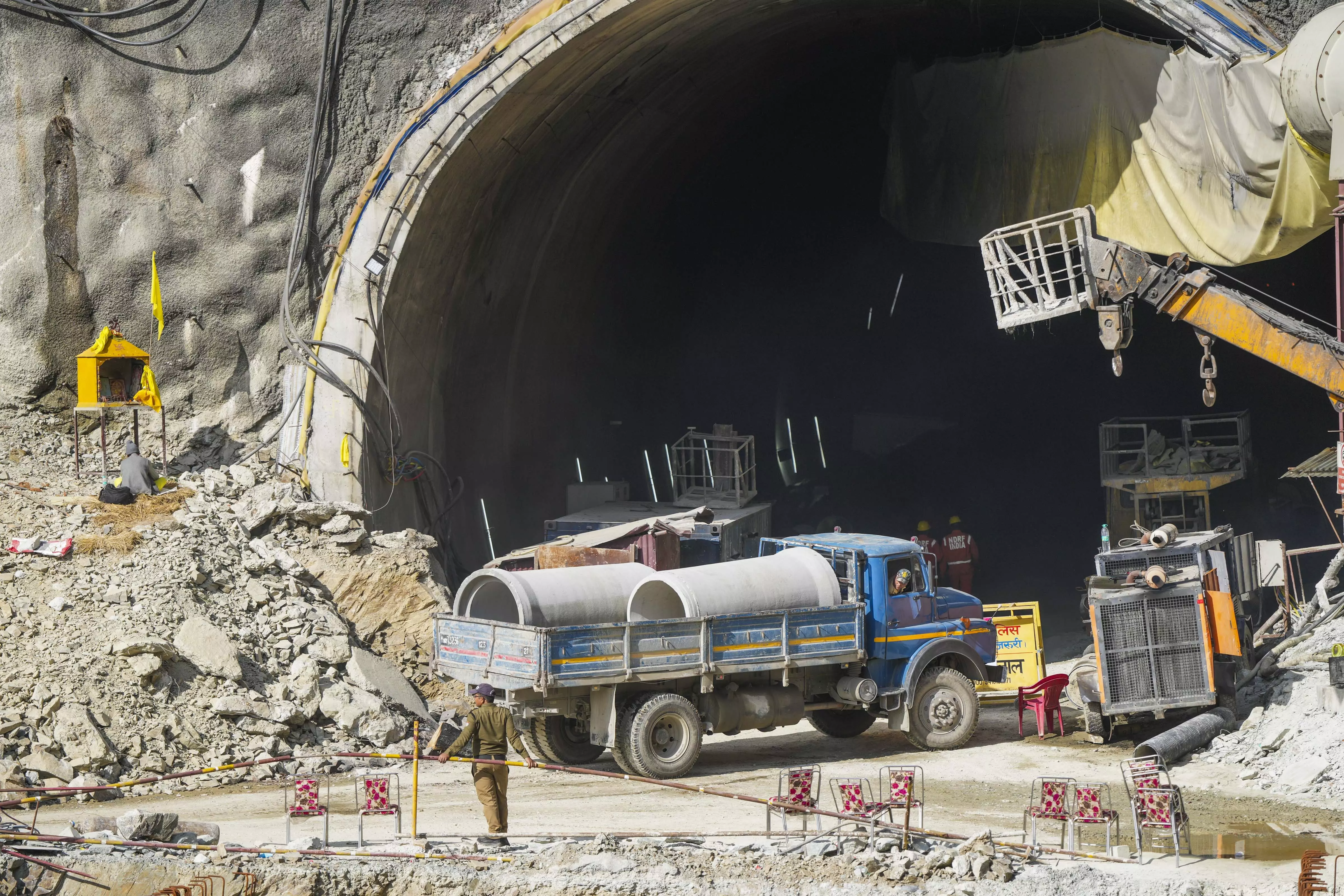
The ecological concerns Chopra had been voicing for years were proven correct when the Silkyara tunnel, part of the Char Dham project, collapsed in 2023, endangering the lives of 40 labourers.
While the Char Dham Yatra project is not yet complete, a significant portion of the highway component is finished. By late 2024, about 75 per cent of the road construction was completed, with the total highway project aiming for full completion by 2026. Challenges like land acquisition, forest clearances, and contractual issues have caused delays, and separate rail projects for the region are still in various stages of planning and construction.