



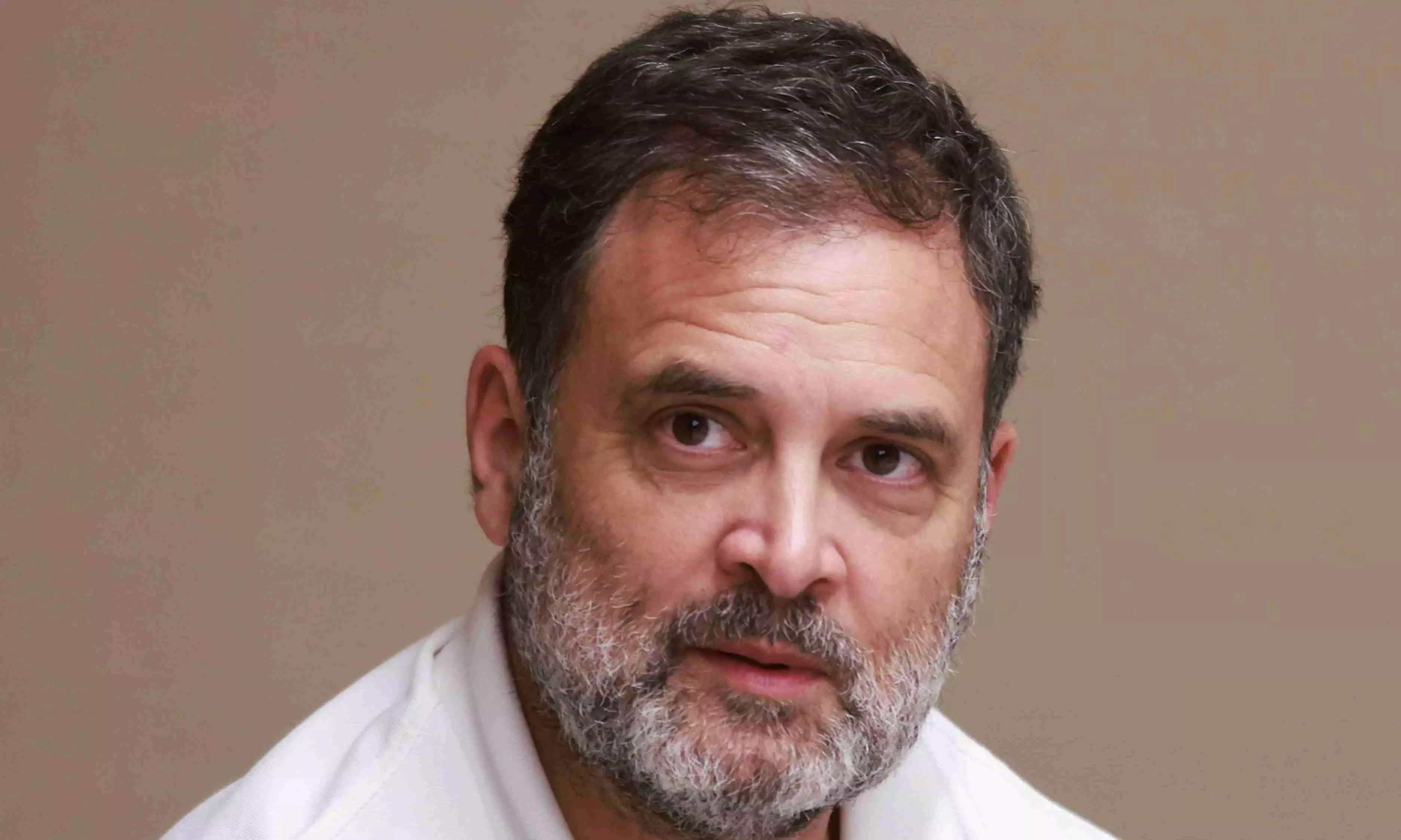
The Leader of Opposition Rahul Gandhi lists four direct impacts of the weakening rupee amid the Iran war. Photo: PTI
Rahul Gandhi warns of inflation amid falling rupee, rising fuel costs
The Leader of Opposition highlights the impact on production, MSMEs, household expenses, and market volatility

The rupee heading towards 100 and the rising fuel prices are clear signals of inflation, warned Leader of Opposition Rahul Gandhi on Saturday (March 21).
“The rupee weakening against the dollar and heading towards 100, along with a sharp rise in industrial fuel prices — these aren't just numbers; they're clear signals of the inflation to come,” he wrote on X.
Also read: How India’s unorganised workforce has been impacted by the war in Iran
Breaching the 93-mark for the first time, the rupee fell 19 paise to its record intra-day low of 93.08 against the US dollar on Friday (March 20) as the greenback strengthened further and FII outflows continued unabated amid the ongoing West Asia conflict.
Cascading effects
In his X post, Rahul listed the four direct impacts of the weakening rupee amid the Iran war, saying the government may call it “normal” but this is not the “reality". He argued that:
• Production and transport will become more expensive
• MSMEs will be hit the hardest
• Prices of everyday items will go up
• FII money will flow out even faster, putting more pressure on the stock market.
He also warned that after the assembly elections in West Bengal, Assam, Kerala, Tamil Nadu and Puducherry, the prices of petrol, diesel and LPG will also spike.
“In other words, it's certain to have a direct and deep impact on every family's pocket. And it's just a matter of time—after the elections, prices of petrol, diesel, and LPG will be hiked too,” he wrote.
Also read: What happens to India’s fuel supply if the Iran conflict worsens? | AI With Sanket
Economic crisis
Shashi Tharoor warns
Congress leader Shashi Tharoor too sounded a note of caution over the impact of the ongoing West Asia conflict on India’s energy security, stating that if the war involving Iran, Israel and the US drags on longer, then New Delhi would not be left with many options regarding energy imports.
Also read: Shashi Tharoor backs Centre’s Iran war stance, calls it ‘responsible statecraft’
"There have been tremendous disruptions, particularly of the economy, because if you look at the fact that so many oil and gas supplies have been affected. Oil, petrol, and diesel are coming from the oil-producing countries of the Gulf. Gas, something like 80 per cent, I think about it around 60 to 80 per cent of our LNG, LPG is coming from Qatar, and the other countries in that region, and we are not able to receive it anymore, except in very small instalments,” said Tharoor.
The Congress MP called for a more proactive Indian role in addressing the crisis, suggesting that New Delhi should step forward diplomatically to help de-escalate tensions in West Asia.