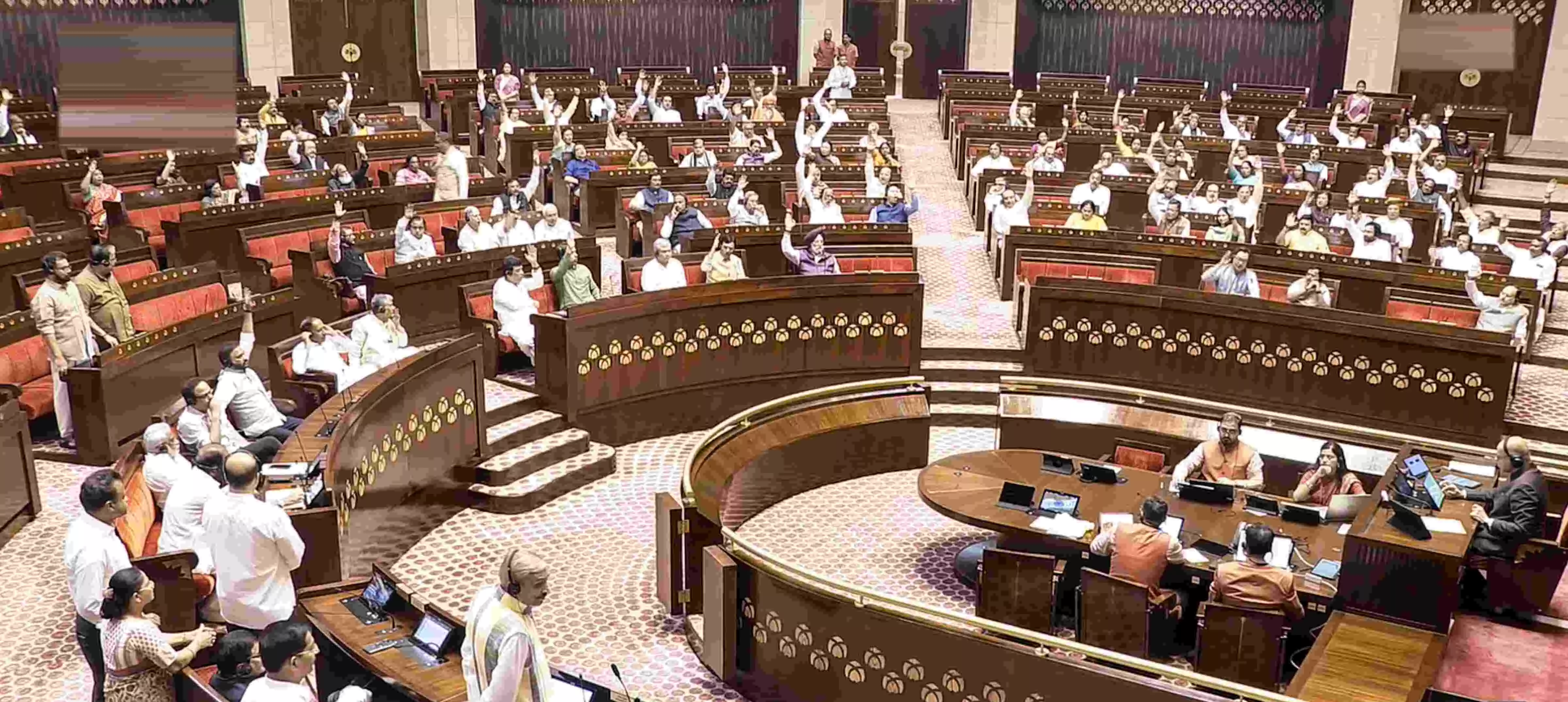
'Monsoon Session chaos was part of govt's script'
Questions raised over last-minute appearances by PM Modi and Amit Shah, with political observers arguing engagement should have happened much earlier

As the blame game over Parliament's near-washed-out Monsoon Session intensifies, senior journalist TK Rajalakshmi has suggested that the disruptions were not a result of confusion or mismanagement on the government's part, but rather the outcome of a deliberate, calculated plan.
‘Session worked to a plan’
Speaking on The Federal's Capital Beat show, Rajalakshmi was asked whether the government appeared confused during the session. She disagreed, arguing instead that events had unfolded according to design.
Also Read: Capital Beat | TMC rebels merge with NCPI: What is the plot and script?
"I think all along it has worked according to a plan," she said, adding that she did not believe the government intended to have a serious discussion about the events that triggered the parliamentary confrontation.
According to Rajalakshmi, the government's conduct throughout the session appeared calculated rather than reactive. She said the BJP had consistently avoided engaging directly with the Opposition's demands, and suggested that the government may have been waiting for a more favourable political context before responding publicly to criticism.
Questions over government strategy
Journalist Sunil Prabhu, who argued that the responsibility for Parliament's functioning ultimately rests with the government of the day, regardless of the Opposition's conduct.
Also Read: What explains govt’s late U-turn on student protest debate?
"The job for the government of the day is to run Parliament. They can't find excuses for not running Parliament. They have convened the session," Prabhu said. He pointed out that several bills were passed amid disruptions without substantial discussion, and that courts could eventually be called upon to examine laws that never received detailed parliamentary debate.
Last-minute outreach criticised
Prabhu also questioned the significance of the last-minute appearance by Prime Minister Narendra Modi and Union Home Minister Amit Shah, arguing that the government should have engaged with the Opposition’s demands much earlier rather than waiting until the session's final days.
Also Read: What high voter turnouts in Kerala, Assam, Puducherry mean | Capital Beat
Looking at the aftermath, Prabhu suggested the BJP would now focus on reconnecting with voters ahead of upcoming electoral battles, and floated the possibility of a long-pending Cabinet reshuffle as part of the government's response to the crisis.
Concerns beyond the session
Rajalakshmi, however, was less convinced that the controversy would fade quickly. She said public memory of the events that sparked the confrontation would persist, and that Opposition parties and student organisations would continue to raise the issue in the months ahead. She also flagged broader concerns about major legislation being passed without detailed debate, calling it a worrying sign for parliamentary functioning and federalism.
Also Read: 'Wangchuk's health matters, but movement needs to go national' | Capital Beat
Prabhu said that the larger issue extended beyond one parliamentary session. He said there was a growing pattern in which major controversies were not being discussed fully on the floor of Parliament, raising questions about democratic accountability and legislative oversight.
He also highlighted the role of presiding officers in facilitating debate and stressed that Parliament itself had become the biggest casualty of the prolonged confrontation between the government and the Opposition.