What explains govt’s late U-turn on student protest debate?
With only 3 sittings left, Centre’s sudden offer of full discussion raises a question: Genuine debate or divide-and-rule over students' stir and Ram temple row?

The government’s sudden decision to allow a full-fledged discussion on the student protests has raised a larger political question: Is it opening the door to a parliamentary debate or attempting to split the Opposition over two contentious issues?
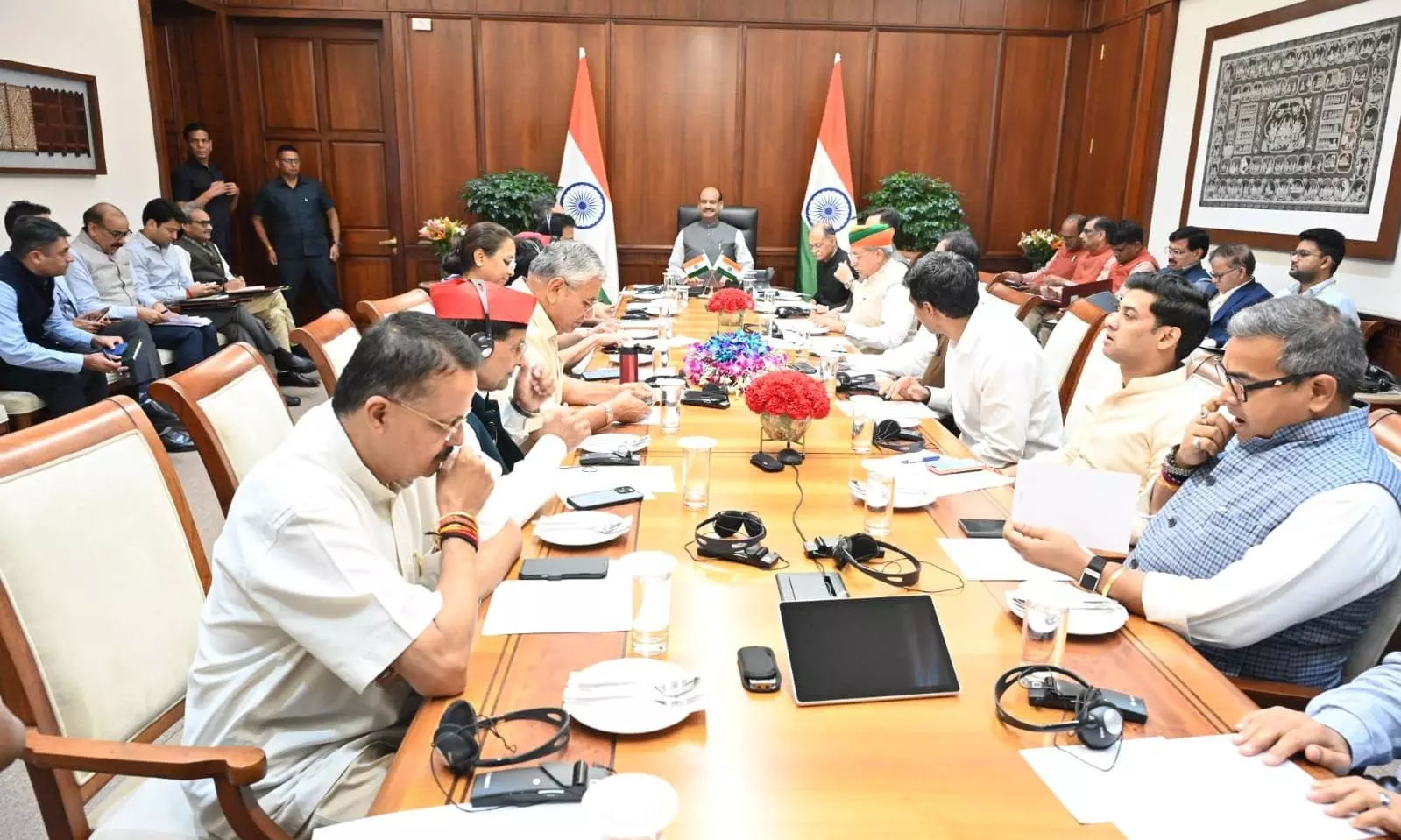
The announcement on the decision came at the Business Advisory Committee (BAC) meeting on Monday (August 10), with Parliamentary Affairs Minister Kiren Rijiju telling reporters later that the government was prepared not merely for a statement but for a full-fledged discussion on the student protests. He also said Home Minister Amit Shah would respond to the debate.
Students or temple?
Rijiju, however, put the onus on the Congress and the Samajwadi Party to resolve their differences over which issue should be discussed. The Opposition has been demanding discussions on both the student protests and the controversy surrounding alleged theft and irregularities at the Ram Mandir in Ayodhya.
Also read: Jharkhand protest: Students lathi-charged, teargassed; ex-JPSC chairperson arrested
While the student protests have been a major flashpoint since the beginning of the Monsoon Session, particularly following the police action during protests in Delhi on July 20, the Ayodhya Ram temple controversy has remained a political issue particularly for the Samajwadi Party, which insists that this topic, too, should be debated in Parliament. Samajwadi Party president Akhilesh Yadav has made it clear that his party wants both matters discussed.
Divide and rule?
During a panel discussion on Capital Beat, The Federal’s political editor Puneet Nicholas Yadav said the timing of the government’s announcement was significant. According to him, Parliament has witnessed repeated disruptions for around three weeks, with the government steadfastly resisting demands for a discussion. With the Monsoon Session scheduled to conclude on August 13, only three sittings remain now.
Yadav argued that the government’s offer could be seen as an attempt to project a divide between the Congress and the Samajwadi Party. He pointed out that both parties had made their position clear in the BAC meeting: If there was to be a discussion, they wanted both the student protests and the Ram Mandir controversy included.
Also read: ‘Amit Shah’s presence in Parliament is a constitutional obligation, not optional’
Yadav pointed out that the government could have made the offer earlier, rather than waiting until the final days of the session. In his view, the delay raised questions about whether the government wanted to create the impression of differences between Opposition parties over which issue deserved priority.
Two separate but equally important issues
Senior journalist and political commentator Shahira Naim said the student protests and the Ram Mandir controversy represented two separate issues that both required public scrutiny. In her view, the scale of student mobilisation, including the gathering around Rahul Gandhi in Prayagraj, demonstrated that student anger had become an important political story.
She said the Ram Mandir issue may no longer dominate the headlines in Uttar Pradesh, but it has not disappeared politically. The controversy had been raised during the Uttar Pradesh Assembly session by the Samajwadi Party, but other developments, including the student protests and events in Prayagraj, had pushed it out of the immediate news cycle.
Naim argued that the matter remained significant because investigations had been ordered and arrests had taken place. She questioned why the issue was being described as political when the government itself had initiated an investigation. She also maintained that the controversy could have implications beyond Uttar Pradesh and become a national political issue.
Also read: Rahul Gandhi to youth at Chhatron Ki Goonj: Your potential is India’s biggest strength
Naim also rejected the idea that the Samajwadi Party would easily let the Ram Mandir issue disappear. She said the party had kept raising it both inside and outside legislative forums, while arguing that the government appeared keen to push the controversy into the background.
Jharkhand protests a factor?
Yadav pointed to the student protests in Ranchi as another factor that could have influenced the timing. The Jharkhand protests, he said, had parallels with the Delhi agitation but also important differences in the manner in which the police responded.
Jharkhand State News editor Manoj Prasad observed that the police response in Ranchi appeared less aggressive than what was witnessed in Delhi. But he also stressed that most of the students participating in the protests did not appear to be affiliated with political parties. He cited instances where representatives of both AISA and ABVP were not allowed to take over the student platform, saying the protesters were largely focused on their own grievances.
According to Yadav, the BJP could potentially use the Ranchi developments to argue that the use of force against protesters was part of a broader administrative protocol rather than something unique to the Centre’s handling of the Delhi protests. He nevertheless maintained that there was a significant difference between the two situations.
An exit route?
Yadav also wondered whether the government’s offer of a discussion could provide it with a political exit route after weeks of disruption in Parliament.
Also read: Ayodhya Ram Temple donation case: Probe complete, chargesheet by Sept-end, say police
He argued that the government might find it difficult to convince students that it had adequately addressed their concerns simply by agreeing to a discussion at the end of the session. He also questioned how meaningful a discussion could be if only two hours were allocated to the student protests.
At the same time, he said, the Opposition would also face questions if it rejected the government’s offer. The political challenge, therefore, cuts both ways: The government must explain the delay in agreeing to a discussion, while the Opposition must decide whether to participate if the Ram Mandir issue is excluded.