



Jaishankar speaks to Iran FM after India condoles Khamenei's death
Foreign Secretary Vikram Misri signed the condolence book at Iran's embassy in New Delhi as EAM Jaishankar held talks with his Iranian counterpart Araghchi

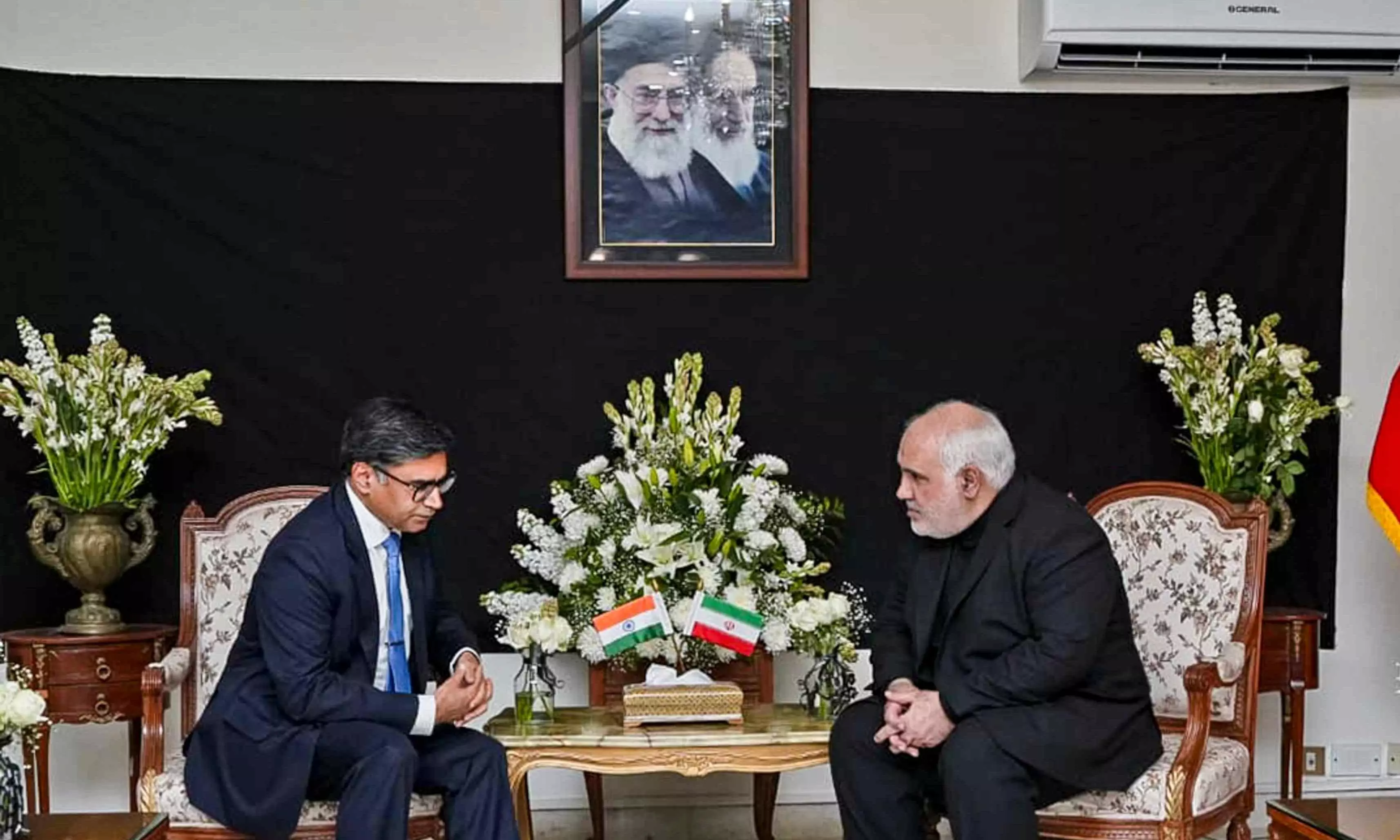
After five days of stoic silence, India on Thursday (March 5) moved to formally condole the death of Iranian Supreme Leader Ayatollah Ali Khamenei, with Foreign Secretary Vikram Misri visiting the Iranian embassy in New Delhi and signing the condolence book on behalf of the government.
Misri also met with Iranian Ambassador to India Mohammad Fathali, with the Ministry of External Affairs releasing photographs of the conversation.
Also Read: Live! Iran makes big announcement on Hormuz; India offers condolences over Khamenei death
The move carried particular weight. Khamenei was killed in a joint US-Israeli airstrike on February 28, and India has drawn bitter criticism from opposition parties for its initial silence on his death. The March 5 visit was seen as New Delhi's clearest signal yet that it was ready to formally acknowledge the loss.
Jaishankar speaks to Iran's FM
Separately, External Affairs Minister S Jaishankar held a telephonic conversation with Iranian Foreign Minister Seyed Abbas Araghchi. "Had a telecon with Iranian FM Seyed Abbas Araghchi this afternoon," Jaishankar said in a post on X.
The details of what was discussed have not been made public.
PM Modi opens up
Prime Minister Narendra Modi has also been engaged directly on the crisis. In a post on X, Modi said he spoke with French President Emmanuel Macron, describing him as a friend.
"We discussed our shared concerns over the evolving situation in West Asia and the need for a return to dialogue and diplomacy. We will continue to engage closely and coordinate efforts towards the early restoration of peace and stability in the region," Modi wrote.
Earlier in the day, Modi echoed the same message at a joint press statement with Finnish President Alexander Stubb. "Both India and Finland believe in the rule of law, dialogue, and diplomacy. We are unanimous that military conflict alone cannot resolve any issue. Whether in Ukraine or West Asia, we will continue to support every effort for a speedy end to the conflict and peace," he said.
What India has said so far
India has consistently called for dialogue and diplomacy to resolve the conflict, stopping short of directly assigning blame. The Ministry of External Affairs has flagged the stakes clearly: nearly 10 million Indian citizens live and work across the Gulf region, and India meets around 85 percent of its crude oil needs through imports. The closure of the Strait of Hormuz and disruptions to LNG supply from Qatar have only sharpened those concerns.
Also Read: ‘Martyr’ or ‘tyrant’: How world’s major media outlets see Khamenei’s killing
"India strongly reiterates its call for dialogue and diplomacy. We raise our voice clearly in favour of an early end to the conflict. Already, many lives have been regrettably lost, and we express our grief in that regard," the MEA said in a statement earlier this week.
(With agency inputs)