



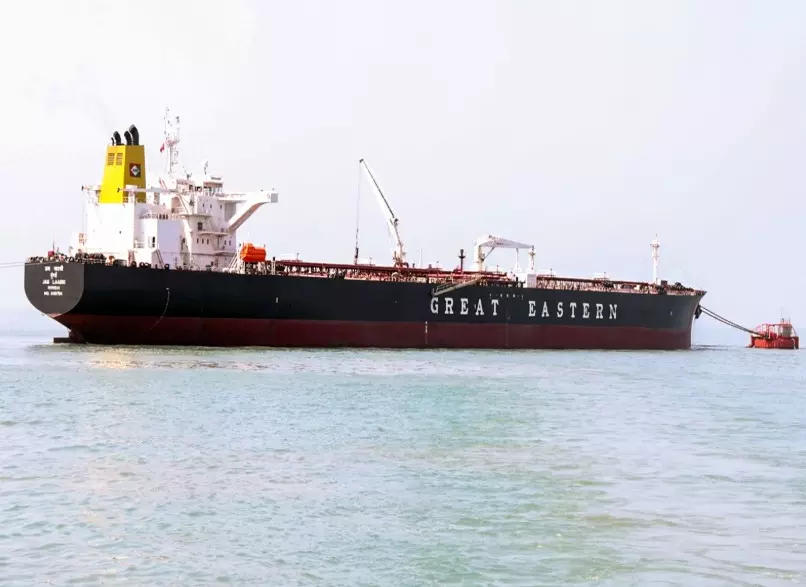
The statement was issued by the Iranian consulate in Mumbai on Saturday (March 21). Screengrab: ANI
Iran denies surplus oil supply after US eases sanctions on stranded crude
Iran says it has no surplus crude despite US easing sanctions on stranded oil, raising fresh uncertainty in already volatile global markets.

Following the US move to ease sanctions on Iranian crude, which was loaded on vessels as of March, Tehran contradicted Washington, stating that it currently has no surplus crude available for the global market. The statement was issued by the Iranian consulate in Mumbai on Saturday (March 21).
"At present, Iran essentially has no floating crude or surplus available for international markets. The U.S. Treasury Secretary's remarks appear aimed at reassuring buyers and managing market sentiment,” stated the Iranian consulate in a post on X.
The pushback from Tehran is likely to add another layer of uncertainty to an already jittery oil market, where prices have climbed steadily as the West Asia conflict edges toward its fourth week.
US opens temporary sanctions window
Earlier, the US had moved to temporarily relax sanctions on Iranian-origin crude and petroleum products, with the window extending until April 19. The decision, announced on Friday, included provisions allowing the sale of Iranian crude and refined products into the US under specific conditions.
Also Read: Six Indians dead, one missing in Gulf incidents amid West Asia conflict: MEA
Details were outlined in a statement issued by the U.S. Department of the Treasury’s Office of Foreign Assets Control (OFAC), which authorised transactions involving Iranian-origin oil already loaded onto vessels as of March 20. The exemption, time-bound in nature, applies through April 19, 2026.
The Treasury clarified the scope in explicit terms, noting that, with limited exceptions, “All transactions prohibited by the above-listed authorities that are ordinarily incident and necessary to the sale, delivery, or offloading of crude oil or petroleum products of Iranian origin loaded on any vessel… on or before 12:01 am eastern daylight time, March 20, 2026 are authorized through 12:01 a.m. eastern daylight time, April 19, 2026.” The authorisation also covers the import of such cargo into the United States.
Bessent outlines rationale and limits
US Treasury Secretary Scott Bessent had framed the move as a targeted intervention. In a post on X, he described it as a “narrowly tailored, short-term authorisation permitting the sale of Iranian oil currently stranded at sea.”
Also Read: Prolonged Iran war will limit India's energy import options, says Shashi Tharoor
He argued the measure would ease immediate supply tightness, adding, “At present, sanctioned Iranian oil is being hoarded by China on the cheap. By temporarily unlocking this existing supply for the world, the United States will quickly bring approximately 140 million barrels of oil to global markets... helping to relieve the temporary pressures on supply caused by Iran.”
‘Short-term authorisation’
Bessent stressed the limits of the policy, reiterating that it applies only to oil already in transit. “This temporary, short-term authorisation is strictly limited to oil that is already in transit and does not allow new purchases or production,” he said, adding that Washington would continue its broader pressure campaign.
He also pointed to wider supply efforts, stating the administration had worked to bring “around 440 million additional barrels of oil to the global market,” even as disruptions around the Strait of Hormuz continue to weigh on shipping and energy flows.