



Prolonged Iran war will limit India's energy import options, says Shashi Tharoor
Shashi Tharoor warns that prolonged West Asia conflict could disrupt India’s energy supply, raise fuel prices, and impact economic activity.

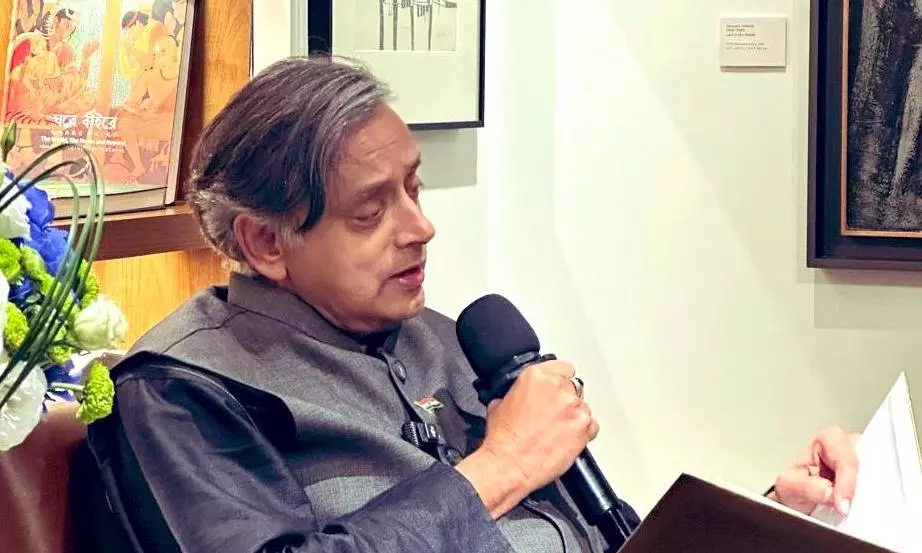
Congress leader Shashi Tharoor has sounded a note of caution over the impact of the ongoing West Asia conflict on India’s energy security, stating that if the war involving Iran, Israel and the US drags on longer, then New Delhi would not be left with many options regarding energy imports.
Speaking to ANI, Tharoor further stated that it was crucial for India to diversify its energy imports and have more Free Trade Agreements with other countries, as he warned that the ongoing Iran war and consequent rise in crude oil prices in the global market would have a “knock-on effect” on the country’s economy.
"I think what we need to do is we can diversify sources of supply as long as the war lasts, as long as there is a shortage in the world markets. We can also, in the broader sense, have more free trade agreements with other countries, so we can have our exports going to a wider variety of countries on better terms than has been the case so far,” said Tharoor.
“For this particular crisis, we are, as the expression goes, caught over a barrel, as are many other countries. We don't have a whole lot of options to cope with this if it drags on much longer," he added.
Disruptions in fuel supplies
Elaborating further, the Congress MP, who is also the Chairman of the Parliamentary Standing Committee on External Affairs, said that oil, petrol, diesel, LNG, and LPG from the Gulf countries, which account for 60-80 per cent of India's gas needs, were now reaching the country in limited quantities and therefore disrupting domestic consumption.
Also Read: Centre invokes Essential Commodities Act to secure LPG, LNG amid West Asia crisis
"There have been tremendous disruptions, particularly of the economy, because if you look at the fact that so many oil and gas supplies have been affected. Oil, petrol, and diesel are coming from the oil-producing countries of the Gulf. Gas, something like 80 per cent, I think about it around 60 to 80 per cent of our LNG, LPG is coming from Qatar, and the other countries in that region, and we are not able to receive it anymore, except in very small instalments,” said Tharoor.
“A couple of ships come, that's one and a half days' supply. So we are not able, as a result, to be able to fuel our kitchens, our dhabas, our restaurants. You're seeing stories from all over the country now. So there is a genuine problem...it's affecting all of us. Secondly, there is a knock-on effect for all economic activity. If factories start slowing down, that affects employment, that affects purchases," he added.
Rising prices and ‘limited alternatives’
Tharoor said that crude oil prices have risen steeply since the conflict began, increasing pressure on energy-importing countries like India. “You find that oil prices have shot up. It was USD 64 a barrel for crude oil when the war began. Today, it's been alternating between USD 100 and USD 120. We're looking at a very serious situation of petrol inflation, which in turn has a knock-on effect on everything that is transported by petrol,” he said.
Also Read: India calls West Asia crisis ‘testing time’, PM Modi speaks to Kuwait Prince
He pointed out that while India has benefited from eased restrictions on purchasing Russian crude, that avenue offers only partial relief. “We've been allowed, in terms of the sanctions being lifted on those Indian companies that are buying Russian oil. That means we can buy more Russian oil. And we are buying a lot of Russian oil. But that is not a solution yet on the gas front,” Tharoor said.
Earlier, the Congress MP had called for a more proactive Indian role in addressing the crisis, suggesting that New Delhi should step forward diplomatically to help de-escalate tensions in West Asia. He cautioned that a prolonged conflict risks triggering supply disruptions and shortages, and urged major global powers to act with urgency to bring hostilities to an end.
India flags Gulf attacks
Meanwhile, India on Thursday expressed concern over recent strikes targeting energy infrastructure across the Gulf region, describing the developments as deeply troubling in an already strained global energy environment.
Also Read: Over 2 million tonne of Indian LPG, LNG cargo stranded in Persian Gulf
Responding to media queries, Ministry of External Affairs spokesperson Randhir Jaiswal said that such attacks only worsen instability in energy markets.
He added that targeting civilian infrastructure, including critical energy facilities, is unacceptable and must stop.