Exclusive | Gig workers not robots, exploitation should stop: MP Raghav Chadha
AAP MP Raghav Chadha highlights the plight of delivery riders and welcomes the central government's move to regulate platform work and end 10-minute delivery

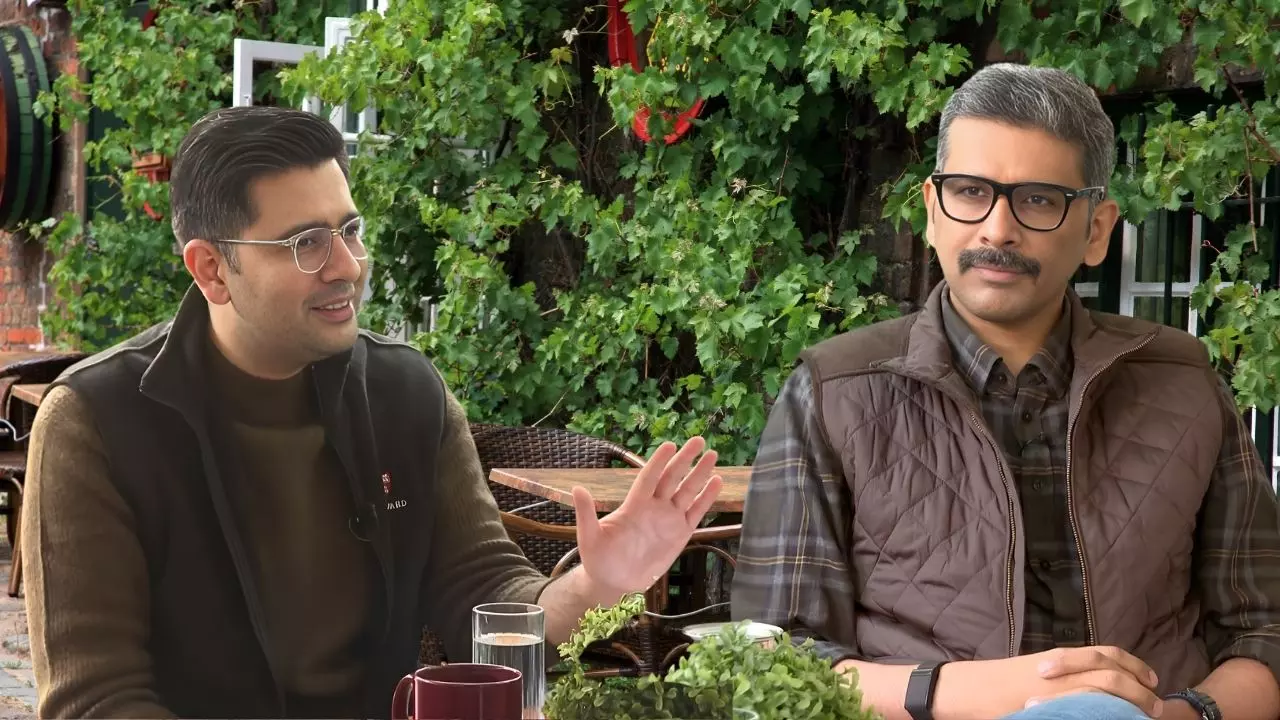
The Federal spoke to Aam Aadmi Party MP Raghav Chadda about the harsh realities faced by India’s gig workers, the controversy around 10-minute delivery models, and the government’s recent steps to regulate platform work.
Drawing from personal experience of working as a delivery rider, Chadda explains why dignity, safety, and social security for gig workers are non-negotiable in a modern economy.
You have been interacting regularly with gig workers. What made you decide that you had to raise their issues, and why did you feel the need to do this?
Look, first of all, whatever issues I raise are usually those that I encounter in my day-to-day life. As an elected representative and as a politician, we live among people and meet people — from farmers to gig workers to industrialists. We meet everyone, and we see and feel the challenges that common people of this country face every day. So I try to raise those issues.
The plight of the Indian gig worker was one such issue. I kept their point of view in mind. The sum and substance of my argument in the Rajya Sabha was very simple: these people are not robots. Their exploitation should stop.
I am all for business. I am by training a chartered accountant. I have studied at the London School of Economics. I have actively participated in the start-up ecosystem. I have probably been one of the most pro-innovation, pro-startup, and pro-business people in Parliament. I have also been part of the World Economic Forum and spoken about opening up the economy and liberalisation.
Also read: Swiggy agent falls off train: Are gig workers treated like machines? AI with Sanket
So, we are not anti-business. We are anti-exploitation. There is a huge difference between the two. These people are humans. They are someone’s brothers, sons, fathers, and husbands. We are not asking for the sun, the moon, and the stars. We are asking for very elementary things — fair pay, better working conditions, social security, dignity, and safety. That is it. These are basic rights every person in this country should have.
When you met these gig workers, what did they tell you? You even worked as a delivery rider yourself. What was that experience like?
There is one understanding of the gig worker ecosystem before you become a gig worker yourself, and there is a completely different understanding after you do it.
I experienced how a systematic algorithm and gamification push people to work 15 to 16 hours a day. I delivered parcels along with a gig worker from Blinkit. I spent an entire night — from around 6 pm to about 2 am — doing deliveries. I will probably put that experience out on my social media so people can see it.
When I actually did the shift myself, I understood the physical and mental stress involved. After that experience, I raised my principal demand even more strongly.
I am thankful to the central government. This is the beauty of democracy. I come from an Opposition party and I am an Opposition MP, but all credit goes to the central government. They heard the issue and took a decision in favour of gig workers.
This is a milestone decision because it opens the door to stopping exploitation and reforming the lives of gig workers.
The decision you are referring to effectively ends forced 10-minute deliveries. But when you raised this issue, you faced unprecedented backlash from platform companies. How do you view that response?
It was very sad. When I spoke for delivery boys and riders, these platform companies and their management chose to get personal. They hired PR consultants, attacked me, maligned my reputation, and ran paid social media campaigns against me. They even targeted my family. That was painful.
Also read: Zomato CEO Goyal defends gig model amid protests, safety concerns
But it also shows that when you raise your voice against a powerful system, you will face backlash. I take it in my stride.
Some of the people who attacked me are personally known to me. Some have been friends for 15–20 years. Yet they chose to attack me, call me names, and target my family. I don’t wish them any harm. I wish them well.
The irony is that when you talk about dignity and human rights for gig workers, you are labelled a “champagne socialist” and accused of taking India back to the licence raj. The language used was extremely ugly.
This raises a serious question: is the business model so fragile that even a basic conversation about dignity and safety invites such vicious attacks?
Many argue that these demands will make the business model unviable. Will these companies lose or collapse if they improve conditions for gig workers?
There are three ways to look at this.
First, the attacks on me brought me closer to gig workers. They felt that because of them, I had to bear personal attacks, and that created more empathy and solidarity. Second, if running paid campaigns against me improves the lives of gig workers, then go ahead. I am fine with it. What matters is their lives.
Third, while many speak about gig workers from air-conditioned rooms, I actually went out and lived their life. I hope the management and investors of these companies do the same. Instead of five-hour podcasts and PR stunts, they should become delivery riders for a day and listen to these workers.
As for business viability, spending a fraction of your payout or revenue on the welfare of gig workers will not make your business unviable.
Also read: Centre proposes 90 days’ work for gig workers to qualify for social security
In fact, the government itself has issued draft social security rules. These rules mandate worker registration, creation of a social security welfare fund using a small fraction of payouts or revenue, and the establishment of a social welfare board where workers can raise grievances.
Right now, gig workers are fighting an opaque algorithm. There is no proper grievance redressal system—only AI-generated responses that solve nothing. The government’s sandbox and guardrails are absolutely brilliant and will improve lives.
When people attacked me earlier, I asked them: will you now call the Government of India a “champagne socialist” for doing the same thing?
So you are confident that caring for delivery partners will not harm these companies’ fortunes?
Absolutely not. If you compare India with the US, the UK, or the UAE—where apps like Deliveroo operate—you will see that delivery workers there have social security nets.
By spending a small fraction of revenue on health insurance, accident insurance, and welfare funds, business models will not collapse. The central government has framed these rules after consulting industry players, the law ministry, and the finance ministry.
Why would any government or MP want businesses to shut down? These startups are innovative and generate jobs. I wish them growth, higher valuations, higher profits, and higher salaries.
But we must stop exploitation. There are basic issues—unfair penalties, no social security, no health insurance, unsafe driving pressures due to 10-minute delivery promises, and algorithmic punishment through ratings and incentive cuts.
A report by the Paigam Foundation, led by Justice AP Shah, documented severe exploitation. What stood out to you from those findings and your own experience?
That report is fantastic and deeply disturbing. It shows that 91 per cent of gig workers work full-time. So this is not really “gig” work. Eighty-six percent oppose 10-minute delivery. Over 99 per cent have faced physical health issues, and over 98 per cent have faced mental health issues.
On payouts, I personally experienced the reality. A Blinkit rider told me he works 15–16 hours a day and earns around ₹20,000–22,000 a month. From this, he pays bike EMI, fuel, mobile data, maintenance, and medical expenses. After operational costs, the net take-home is abysmally low.
This is the most pressing concern. Everywhere I go, workers talk about payouts. We can design innovative business models for instant delivery, so why can’t we design innovative financial models to protect workers?
Do you feel the recent steps are only a partial win until full legal guardrails are in place?
Some very good things have happened. Gig workers are now defined under the labour code, which means they come under social security laws. Draft social security rules are out for public consultation. Once finalised, they will create a real safety net.
Above all, the cruelty of forced 10-minute delivery has ended. That will give workers mental and physical relief. They may still deliver fast, but without fear and stress.
Finally, do you think politicians can no longer ignore gig workers given their numbers and electoral significance?
This is the beauty of democracy. If gig workers collectively raise their voice, governments will have to listen—and they should. It makes political sense, social welfare sense, and even business sense.
But I hope governments listen not just because of vote-bank politics, but because of humanitarian reasons. Several state governments, including Telangana, have already taken progressive steps.
If governments, platform companies, worker associations, and policymakers work together, we can create a framework that genuinely improves the lives of gig workers.
The content above has been transcribed using a fine-tuned AI model. To ensure accuracy, quality, and editorial integrity, we employ a Human-In-The-Loop (HITL) process. While AI assists in creating the initial draft, our experienced editorial team carefully reviews, edits, and refines the content before publication. At The Federal, we combine the efficiency of AI with the expertise of human editors to deliver reliable and insightful journalism.