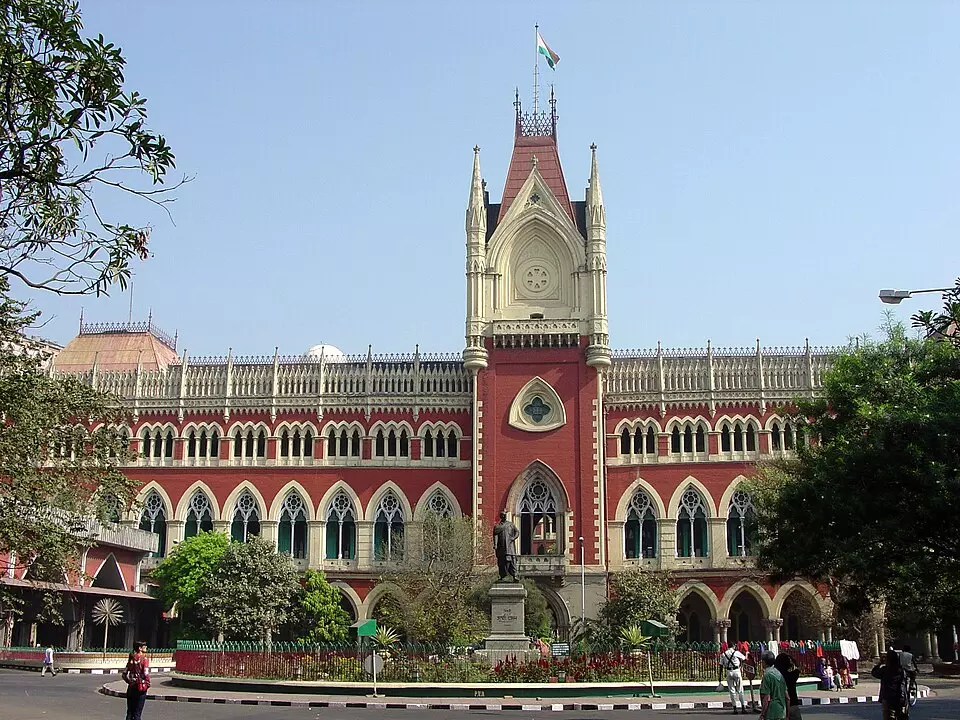
The ruling came from a division bench of Justice Debangsu Basak and Justice Ajay Kumar Gupta while dismissing a habeas corpus petition challenging the detention of a man alleged to be a Bangladeshi national.
The petition
The petition challenged the ongoing state detention of a Murshidabad man, identified as Nasir, who was held at the Lalgola detention center on allegations of being a Bangladeshi national, who had entered India illegally.
Filed by a man named Suman Molla, who claimed to be Nasir's relative, the petition argued that Nasir was being wrongfully detained. To support the claim that Nasir was an Indian citizen by descent, the petitioner presented a suite of standard identity documents on Nasir's behalf, including a voter identity card, an Aadhaar, a Permanent Account Number (PAN) Card, a United Bank of India passbook and land and ancestral records.
Furthermore, the petitioner noted that while Nasir's name had been flagged as "under adjudication" during a Special Intensive Review (SIR) of electoral rolls and subsequently removed, an appeal against that deletion was still pending.
HC finds 'discrepancies'
The High Court dismissed the petition, refusing to interfere with the detention order due to basic discrepancies in the family's testimony and a complete failure to establish lineage.
The court noted that the petitioner Suman Molla had initially told police officers that he was Nasir's cousin, but changed his claim in court, asserting he was Nasir's uncle.
Furthermore, Suman claimed he raised Nasir after Nasir’s father passed away in 1980. However, the court found this highly improbable, as official records showed Nasir was 46 years old making him older than his alleged caretaker, Suman, who was 38.
Moreover, Nasir could not produce a birth certificate, and the court found that the father's name varied significantly from document to document. Crucially, no evidence was provided to verify the exact date or place of birth required to establish citizenship by birth or descent.
DNA testing
In an effort to resolve the lineage dispute, the court indicated that a DNA test could be conducted on the mortal remains of Nasir's parents to verify the biological relationships. However, both Nasir and the petitioner refused to identify the burial locations of the parents. Because they declined to disclose this information, the court drew an adverse inference against the claim that the parents were Indian citizens.
"Since the detainee and the writ petitioner refuse to identify the places where the mortal remains of the parents of the detainee are lying, we draw an adverse inference as against the detainee with regard to his parents being Indian citizens," the court said.
While the state noted that Nasir had previously admitted to being a Bangladeshi national while in custody, the court chose not to debate the legal admissibility of a custodial confession. Instead, the bench emphasised that under Section 9 of the regulatory framework, the statutory burden of proving citizenship remains entirely on the individual claiming it.
If the Act provides that if any question arises as to whether a person is or is not a foreigner, the burden of proving that the person is not a foreigner rests upon that individual.
No single proof of citizenship
Hence, there is no single universally applicable "proof of citizenship" document for all Indians. The documents that may establish citizenship depend on how the person acquired citizenship under the Citizenship Act, 1955.
The court held that under the Immigration and Foreigners Act, 2025, the burden of proving citizenship rests entirely on the individual, not the state. In this case, the detainee failed to establish citizenship by birth, his birthplace and date of birth were inadequately documented, and there were discrepancies in records relating to his parentage and lineage.
The ruling reinforces a broader judicial trend, echoed recently by the Bombay High Court and the Supreme Court in the context of Bihar's electoral roll revision that Aadhaar, PAN, and similar documents serve identification purposes but are not legally sufficient, standalone proof of citizenship. Proof of citizenship must instead be established through evidence of birth, parentage, or ancestry under the Citizenship Act, 1955.
What counts as proof of citizenship?
The Immigration and Foreigners Act, 2025 does not prescribe any specific list of documents as proof of Indian citizenship.
Section 16 of the Act, which deals with the burden of proof, states that when a question arises as to whether a person is or is not a foreigner, the burden of proving that they are not a foreigner rests on that individual.
According to reports, this means there is no single, universally applicable "proof of citizenship" document for all Indians. The documents required to establish citizenship instead depend on how a person acquired it under the Citizenship Act, 1955. The person could have either acquired it as:
Citizens by birth: A birth certificate, along with documents establishing the parent(s)' citizenship, where required under the law applicable on the person's date of birth.
Citizens by descent: Documents establishing the parent's Indian citizenship, along with proof of the applicant's birth.
Citizens by registration or naturalisation: A Certificate of Registration or Certificate of Naturalisation issued by the Central Government.
Persons who have resumed citizenship, or acquired it under other provisions: The relevant certificate issued under the Citizenship Act.