



Explained: What is Operation Epic Fury? Where is Khamenei? What we know so far
Crisis unfolds against backdrop of US-Iran talks on nuclear issues, weeks of heightened rhetoric from Trump, and shadow of a 12-day conflict just 8 months ago

The United States and Israel launched a massive joint military operation against Iran on Saturday (February 28), with US President Donald Trump calling it ‘major combat operations’ targeting key Iranian government and military installations.
Also read: Live! Iran targets US bases in Dubai, Doha, Riyadh, Abu Dhabi; Tehran being evacuated
The development unfolds against the backdrop of renewed US-Iran negotiations on nuclear and missile issues, weeks of heightened rhetoric from Trump, and the shadow of a 12-day US-Israel conflict with Iran just eight months ago.
In retaliation, Iran launched a "crushing" response, targeting US and Israeli military bases throughout the Middle East.
What happened in Iran on Saturday?
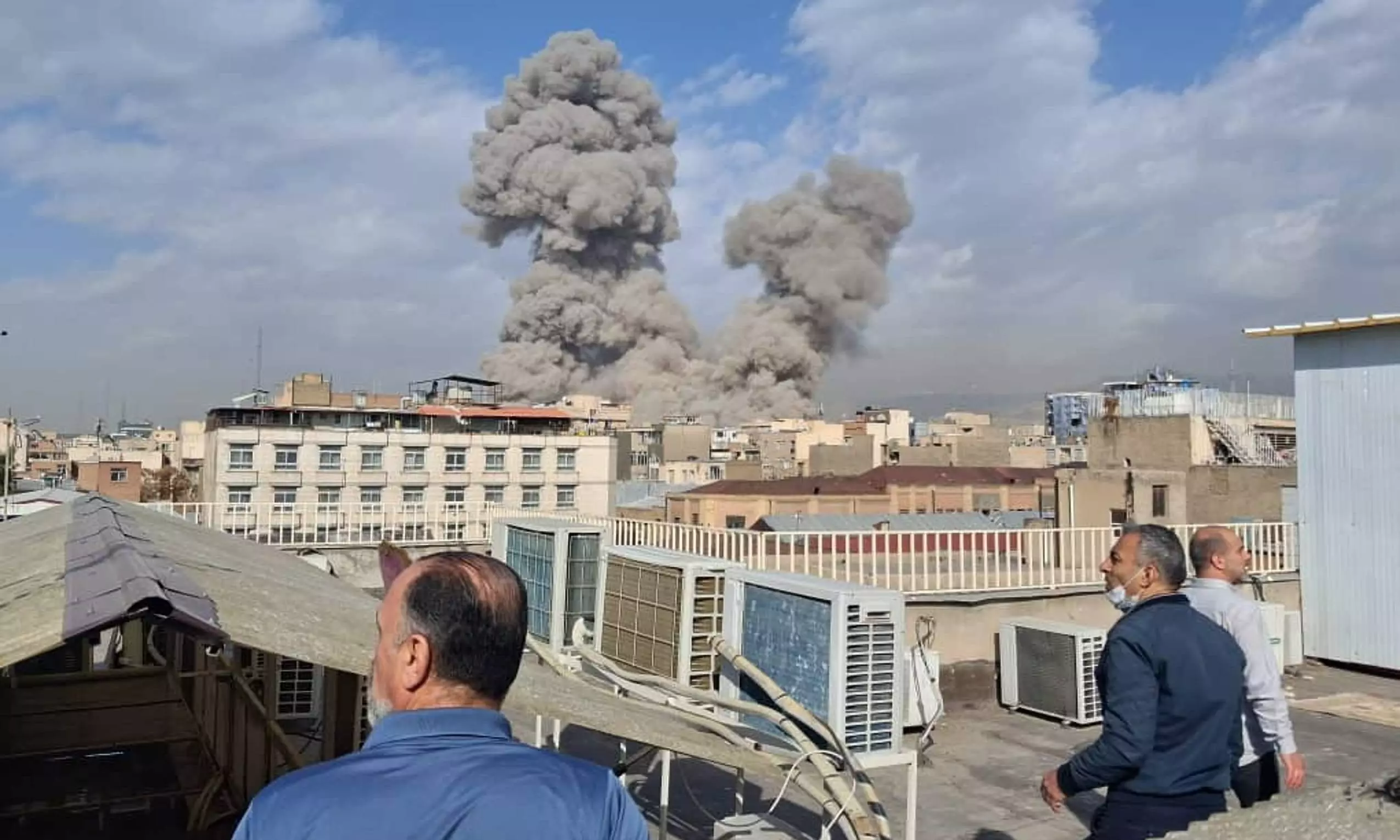
On Saturday morning, Iran reported a series of explosions in Tehran. The attack occurred just day after high-stakes nuclear negotiations between the US and Iran in Geneva ended without a breakthrough.
Israel first announced that it had launched missile strikes on targets inside Iran.
A US official confirmed the strikes were part of a joint operation with Israel. Washington has also deployed a substantial fleet of fighter jets and warships to the region, marking its largest military build-up since the Iraq War.
Also read: US-Iran nuclear talks resume in Geneva amid rising Middle East tensions
The mission was named “Operation Epic Fury”, marking the first public statement from the US military since the start of the joint US-Israeli attack.
Areas affected during attack
Explosions were reported in several major Iranian cities, including Tehran, Isfahan, Qom, Tabriz, Karaj, and Kermanshah.
Reportedly, the strikes targeted the offices of Supreme Leader Ayatollah Ali Khamenei and President Masoud Pezeshkian in Tehran. Khamenei was moved to a secure location before the strikes, while Pezeshkian was reported safe by Iranian state media.
Also read: Trump warns of ‘bad things’ if Iran doesn’t make deal as US carrier nears Middle East
Several missiles also struck University Street and the Jomhouri area in Tehran, and close to Iran’s Islamic Revolutionary Guard Corps headquarters, according to media reports.
Explosions were reported in Tehran’s Seyyed Khandan area, with additional blasts cited in Kermanshah, Qom, Tabriz, Isfahan, Ilam, Karaj and Lorestan province, according to Iranian media.
Causalities
At least 51 students were killed in a strike on a girls’ elementary school in Minab, Iran. Several Islamic Revolutionary Guard Corps (IRGC) personnel, including senior officials, were also reported killed or wounded after multiple military bases were hit.
In Iraq, two fighters from the Popular Mobilization Forces were killed and three injured in a strike on a base in Jurf al-Sakhar, south of Baghdad. In the UAE, one civilian died in Abu Dhabi after falling debris from an intercepted Iranian missile struck the area.
Also read: Why Iran's ballistic missiles could shift power balance in West Asia
US officials said there were no American casualties so far, despite Iranian retaliatory strikes on military facilities in Bahrain, Kuwait, Qatar and Jordan. In Israel, sirens sounded nationwide and northern regions faced incoming missile fire, though there were no immediate reports of casualties.
What did Donald Trump say?
In an eight-minute video released on Saturday, Trump confirmed that the attack was a joint major combat operation against Iran and outlined its military and political objectives.
Framing the action as a response to “imminent threats” from a “wicked, radical dictatorship”, he vowed to “destroy their missiles and raze their missile industry” and “annihilate their navy”. He reiterated that Iran “can never have a nuclear weapon”, accusing Tehran of spurning chances for a fair deal, and said the strikes were intended to prevent its “terrorist proxies” from destabilising the region.
Trump’s direct message to Iranians
Addressing the Iranian public and military, Trump issued a series of stark warnings and ultimatums. He urged Iranians to overthrow their government once the strikes conclude, saying, “When we are finished, take over your government.” He advised civilians to remain sheltered, cautioning that “bombs will be dropping everywhere”.
Also read: India advises citizens to leave Iran as US attack fear grows
Trump offered members of the Islamic Revolutionary Guard Corps (IRGC) and other security forces “complete immunity” if they lay down their arms, but warned of “certain death” if they continued to fight. He concluded by declaring that “no president was willing to do what I am willing to do tonight” and asserted that America stands with the Iranian people with “overwhelming strength and devastating force”.
Iran’s response
Retaliating the attack, Iran immediately launched a response, targeting US and Israeli military bases throughout the Middle East. Air-raid sirens sounded in several parts of the country, and explosions were reported in northern Israel.
Iran’s Islamic Revolutionary Guard Corps (IRGC) fired missiles at several US bases, including Al-Udeid in Qatar's Doha, Dubai's Jebel Ali Port, Al-Dhafra in Abu Dhabi, Al-Salem in Kuwait, and the US Navy 5th Fleet headquarters in Bahrain.
Missiles were fired towards Israel, with interceptions reported over Jerusalem and Tel Aviv.
Where are Iran’s leaders?
The whereabouts of 86-year-old Ayatollah Ali Khamenei remain unclear, as he has not appeared in public for days amid rising tensions with the US. Roads leading to his compound in central Tehran were sealed off as explosions echoed across Tehran.
Also read: Iran-Israel conflict a tough balancing act for India: Michael Kugelman
Meanwhile, state-run media quoted a source in the presidential office as saying that President Masoud Pezeshkian was unharmed.
International reactions
European Union and Switzerland: Voiced serious concern over the “perilous” escalation and urged all sides to ensure civilian protection.
Australia: Indicated support for moves to stop Iran from acquiring a nuclear weapon, with Australia openly endorsing the “struggle against oppression”.
United Kingdom: Said it had no role in the strikes and emphasised the need to prevent a broader regional war.
India: Released an advisory asking its citizens in Israel and Iran to exercise “utmost caution”.