



Lost jet, destroyed planes, daring rescue: How US airman was pulled out of Iran
Second American airman rescued in Iran amid heavy fire after their F-15E Strike Eagle was downed by Iran on Friday; Trump calls 48-hour mission 'historic'

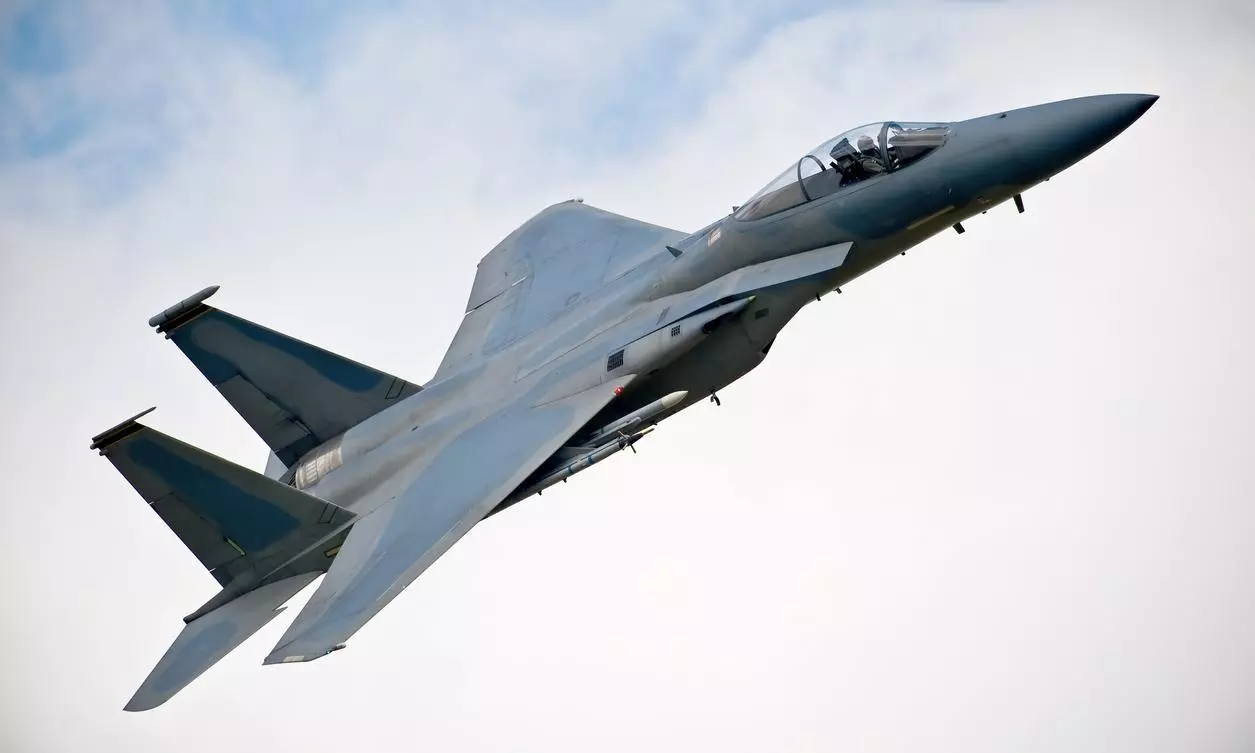
After two nail-biting days, US special forces claimed to have rescued the weapons system officer, a colonel, from deep inside Iran on Sunday (April 5), completing a harrowing operation after his F-15E Strike Eagle was shot down by Iranian air defences on Friday (April 3).
US President Donald Trump confirmed the mission on Truth Social in a triumphant post that opened with three words: "WE GOT HIM!"
He declared it was "one of the most daring search and rescue operations in U.S. history," adding that the brave warrior was "behind enemy lines in the treacherous mountains of Iran, being hunted down by our enemies, who were getting closer and closer by the hour, but was never truly alone."
The jet's pilot had been rescued on Friday itself, though the White House kept the operation quiet to avoid jeopardising the second rescue effort. What unfolded over the next 48 hours could have given any Hollywood movie a run for its money.
How the rescue happened
According to Axios, both the pilot and weapons system officer made contact via their comms systems shortly after ejecting on Friday. The pilot was rescued within hours, but during that operation, Iran struck a US Black Hawk helicopter, wounding crew members on board before it was able to fly on.
Also Read: US readies to deploy its most lethal long-range missiles as Iran holds its ground
Locating the colonel took considerably longer. The CIA, citing unique capabilities, tracked him as he traversed mountainous terrain and evaded locals for more than a day. Meanwhile, Iranian authorities launched a search for the soldier too, reportedly offering a reward of about USD 66,000 to citizens who captured him alive.
To buy time, the CIA launched a deliberate deception campaign, spreading word inside Iran that US forces had already found him and were moving towards a ground exfiltration. Once his precise location was confirmed, it was shared with the White House, the Pentagon, and US military commanders.
Soldier hiked 7000 ft
At some point during his evasion, the colonel reportedly hiked up a ridgeline rising to 7,000 feet. A senior US military official told The New York Times the terrain was a significant factor in making this "one of the most challenging rescues in US special operations history." The mountains gave him cover, but made any extraction far harder to execute.
The officer used his beacon sparingly to avoid detection, relying instead on a secure communications device to coordinate his position without broadcasting openly.
Such devices typically combine GPS positioning, encrypted radio and satellite capability. However, the US chose to not reveal the details about the device.
Team behind Osama mission used
US attack aircraft bombed Iranian convoys closing in on his position as Navy SEAL Team Six, the unit behind the 2011 Osama bin Laden raid, moved in for the extraction, backed by Air Force personnel and layers of combat support.
It is reported that the US commandos closed in on the officer even while firing their weapons to hold the Iranians back. However, reports about such a gunfight are not yet conclusive. Meanwhile, the Iranian media has reported that five people were killed during the operation of the US.
US shot its own planes
While Trump has boasted that no American lives were lost during the mission, the US had to pay a heavy price for the mission as the forces were compelled to destroy two of their own aircraft during the retreat.
Two MC-130J transport planes — covert infiltration and extraction aircraft — became stranded during the mission under unclear circumstances, a US official told The Wall Street Journal. The official told the media house that it was necessary to destroy the two planes to prevent them from falling into Iranian hands.
It was also reported a US helicopter carrying the rescued pilot was struck by small arms fire, wounding crew members on board, though the aircraft landed safely.
According to reports, the A-10 Warthog supporting the mission also took fire and was damaged, with its pilot ejecting over the Persian Gulf before being safely rescued.
A historic milestone, says Trump
Trump was unflinching on the scale of the response. "At my direction, the U.S. military sent dozens of aircraft, armed with the most lethal weapons in the world, to retrieve him," he wrote, adding that his commanders and fellow warfighters had been monitoring the colonel's location "24 hours a day, diligently planning for his rescue."
The downing of the F-15E marks the first time a US fighter jet has been lost in combat in over 20 years. Trump framed both rescues as a defining moment of national unity.
"This is a moment that all Americans — Republican, Democrat, and everyone else — should be proud of and united around," he wrote.
Also Read: India’s nuclear triad goes deep as INS Aridhaman inducted but missiles yet to catch up
"The fact that we were able to pull off both of these operations without a single American killed, or even wounded, just proves once again that we have achieved overwhelming air dominance and superiority over the Iranian skies."
In total, 13 US service members have been killed since the Iran war began five weeks ago. While Trump celebrated the mission as proof of American military supremacy, analysts noted the incident underscored that US forces remain vulnerable despite sustained bombing campaigns against Iranian air defences.
Iran disputes Trump's sky supremacy
Iran's account of the rescue operation stands in sharp contrast to Trump's repeated claims of unchallenged aerial superiority over Iranian skies. The IRGC said several US aircraft were destroyed during the mission, including a C-130 transport plane and two Black Hawk helicopters.
A CNN tally already puts confirmed US aircraft losses at seven since the war began. If Iran's latest claims are verified, the total would cross double digits, a significant blow to the administration's narrative.
The Khatam al-Anbiya Central Headquarters, Iran's unified military command, announced the losses through state media, though independent verification remains unavailable.