



Trump expands US travel ban to 20 countries, Palestinian documents
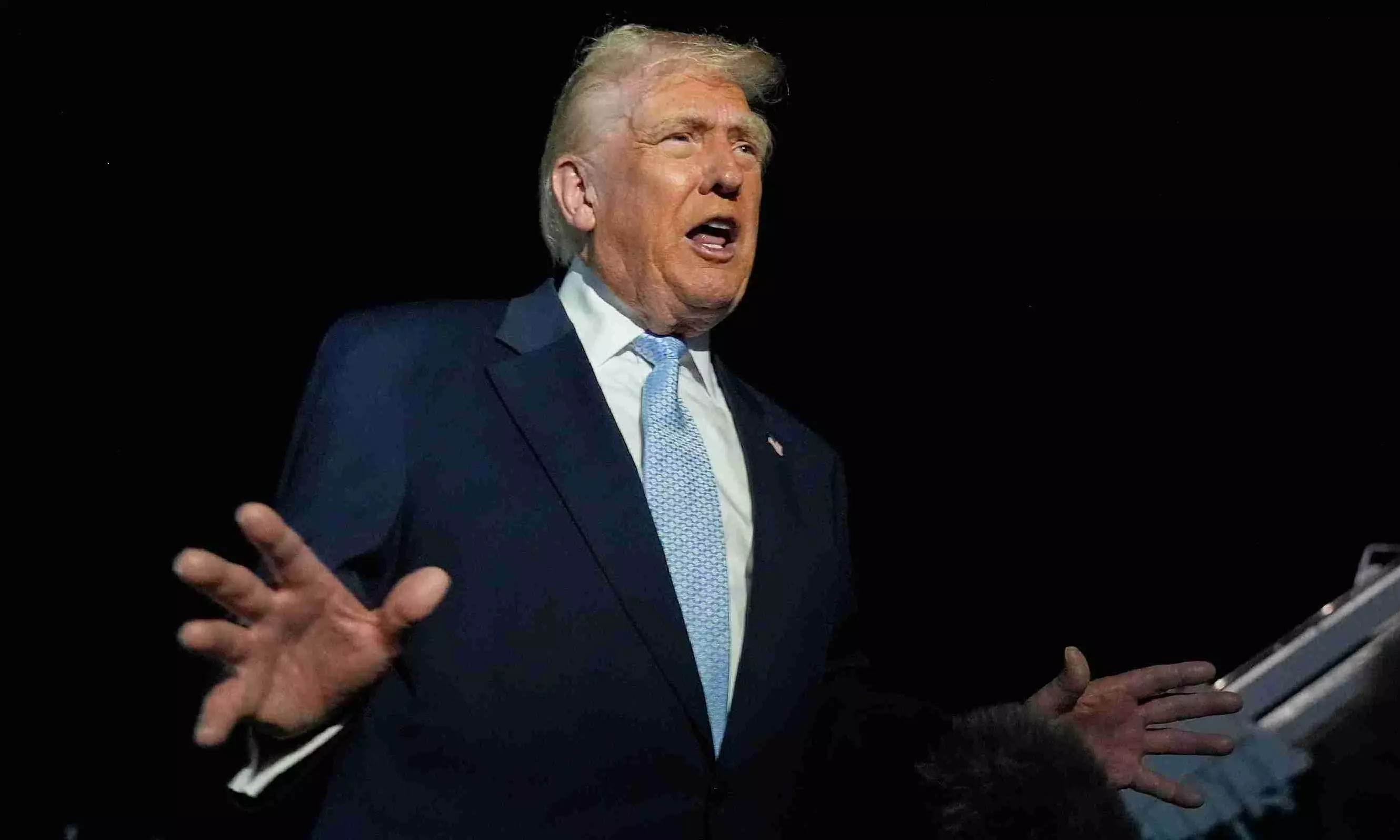
US President Donald Trump announces a new travel ban on 20 countries over terror threats, visa overstays and security concerns

The Trump administration announced Tuesday it was expanding travel restrictions to 20 additional countries, along with individuals travelling on documents issued by the Palestinian Authority, significantly widening the scope of earlier restrictions on who can travel and emigrate to the United States.
The reason behind the travel ban, according to a White House release issued on Tuesday (December 16), is “to protect its citizens from foreign nationals who intend to commit terrorist attacks, threaten our national security and public safety, incite hate crimes, or otherwise exploit the immigration laws for malevolent purposes.”
As per the presidential declaration issued by the White House, entry into the United States of nationals from several countries has been fully suspended due to security threats, visa overstay rates, and failures by some governments to accept back their removable nationals.
‘Burkina Faso plagued with terrorist activities’
For Burkina Faso, the Trump administration pointed to ongoing security concerns, stating that “terrorist organisations continue to plan and conduct terrorist activities throughout Burkina Faso.”
Also Read: H-1B, H-4 visas: US to begin social media vetting of applicants from Dec 15
The declaration also cited immigration compliance issues, noting a B-1/B-2 visa overstay rate of 9.16 per cent and a student, vocational, and exchange visitor overstay rate of 22.95 per cent. In addition, the White House said “Burkina Faso has historically refused to accept back its removable nationals,” leading to a full suspension of entry for both immigrants and non-immigrants.
High overstay rates for Laos
Laos was included in the ban due largely to high visa overstay rates and repatriation issues. According to the declaration, Laos recorded a B-1/B-2 visa overstay rate of 28.34 per cent and an F, M, and J visa overstay rate of 11.41 per cent, with even higher B-1/B-2 figures cited in the 2023 report.
Also Read: US revokes 85,000 visas as Trump tightens immigration rules
The White House further stated that “Laos has historically failed to accept back its removable nationals,” prompting a complete suspension of entry for its nationals.
Instability and terrorist activity in Mali
As for Mali, the administration cited widespread instability and terrorist activity. The declaration stated that “armed conflict between the Malian government and armed groups is common throughout the country,” and that “terrorist organisations operate freely in certain areas of Mali.” Based on those conditions, entry into the United States of Malian nationals has been fully suspended.
Terror concerns over Niger
Niger was named over concerns about terrorism and immigration compliance. The White House said that “terrorists and their supporters are active in planning kidnappings in Niger, and they may attack anywhere in the country.”
Also Read: US halts all visas for Afghan passport holders after DC shooting
It also cited a B-1/B-2 visa overstay rate of 13.41 per cent and an F, M, and J overstay rate of 16.46 per cent, leading to a full suspension of entry for Nigerien nationals.
High visa overstay rates for Sierra Leone
Sierra Leone was included in the list because of persistently high overstay rates and cooperation issues on removals. The declaration noted an F, M, and J visa overstay rate of 35.83 per cent, along with B-1/B-2 overstay rates exceeding 15 per cent in recent reports. It added that “Sierra Leone has historically failed to accept back its removable nationals,” resulting in a complete suspension of entry.
South Sudan’s failure to accept removals
South Sudan was also cited for visa overstay concerns and failure to accept removals. According to the declaration, the country recorded a B-1/B-2 overstay rate of 6.99 per cent and an F, M, and J overstay rate of 26.09 per cent. The White House said “South Sudan has historically failed to accept back its removable nationals,” and ordered a full suspension of entry.
Governance and vetting issues in Syria
Syria was named amid concerns over governance and document integrity following years of conflict. The White House said the country is “emerging from a protracted period of civil unrest and internal strife,” but still “lacks an adequate central authority for issuing passports or civil documents and does not have appropriate screening and vetting measures.”
Also Read: Trump pauses all third-world migration, citing the DC trooper shooting
Visa overstay rates were also cited, and the declaration ordered a full suspension of entry for Syrian nationals.
Compromised screening abilities of Palestinian Authority
The declaration also applies to foreign nationals seeking to enter the United States using travel documents issued or endorsed by the Palestinian Authority. The White House said that “several United States-designated terrorist groups operate actively in the West Bank or Gaza Strip and have murdered American citizens,” adding that “the recent war in these areas likely resulted in compromised vetting and screening abilities.”
Citing the “weak or non-existent control exercised over these areas by the PA,” the administration said individuals travelling on such documents “cannot currently be properly vetted and approved for entry into the United States,” and ordered their entry fully suspended.
Partial travel ban on 15 other countries
In addition to the full suspension imposed on seven countries, the proclamation also places partial travel restrictions on nationals from 15 more countries. These include Angola, Antigua and Barbuda, Benin, Ivory Coast, Dominica, Gabon, Gambia, Malawi, Mauritania, Nigeria, Senegal, Tanzania, Tonga, Zambia and Zimbabwe. The restrictions apply to individuals seeking to enter the United States either as visitors or as immigrants.
Explaining the rationale, the Trump administration said many of the countries facing restrictions suffer from “widespread corruption, fraudulent or unreliable civil documents and criminal records,” which make it difficult for US authorities to adequately vet travellers. The administration also cited high visa overstay rates, the refusal by some governments to accept back their nationals targeted for deportation, and a “general lack of stability and government control” in certain countries, all of which complicate screening and enforcement efforts.
According to the announcement, the decision was driven by a combination of immigration enforcement, foreign policy and national security concerns, forming part of the broader measures outlined in the presidential declaration.