



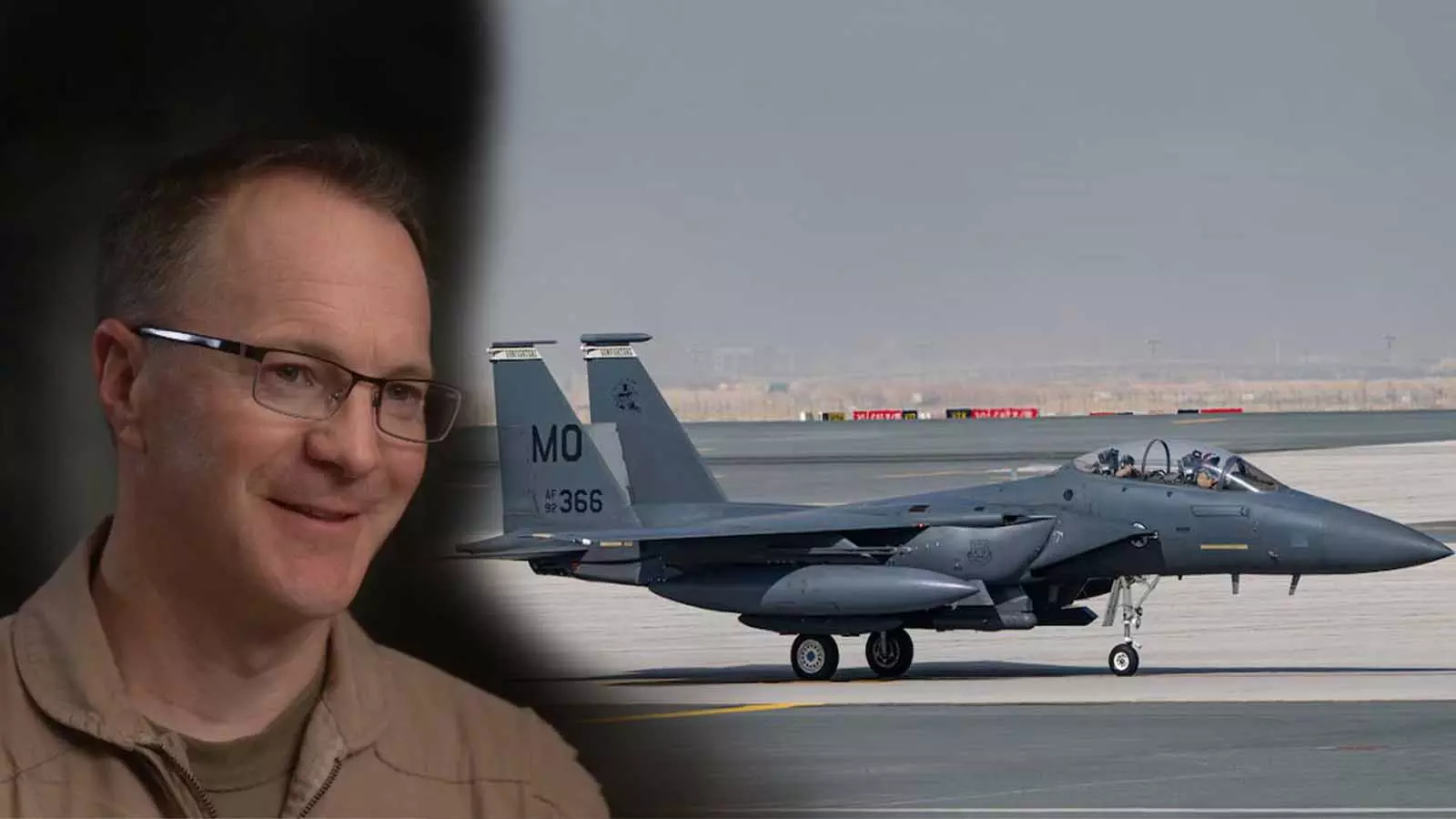
Bravo (left), a weapons-systems officer, has recalled his survival story for the first time in an interview
'There was no parachute': US airman recalls surviving 50 hours in Iran after F-15E crash
After his F-15E was hit by an Iranian missile during Operation Epic Fury, Bravo escaped the crash site and hid in the mountains before a daring US rescue

In a tale that might be turned into a Hollywood thriller some day, a US Air Force officer has recalled his survival for nearly 50 hours in Iran after his F-15E fighter jet was shot down during a US strike mission in April.
Injured and with a damaged parachute, the officer, identified by his call sign “Bravo”, managed to move away from the crash site and hide in the mountains as Iranian forces searched for him.
Bravo, a weapons-systems officer, has recalled his survival story for the first time in an interview with CBS News’ 60 Minutes.
The crash
The F-15E, carrying Bravo and its pilot, “Alpha”, was hit by an Iranian shoulder-fired missile on April 2. Both men were forced to eject.
Also read: Iran’s ‘jellyfish’ drone formation: F-15E pilot’s account could signal new era of warfare
Bravo landed about five miles from Alpha in a rugged mountainous area. His parachute had been damaged, and he fell at an estimated 70 to 100 mph, suffering fractures to his back, arm and shoulder. He also sustained injuries to his ankle, head and face.
“When I looked up and saw no parachute, that was the most terrifying thing I've ever seen,” Bravo said.
Rescue efforts
Despite his injuries, he moved away from where he had landed, fearing that Iranian forces would find him. “I moved as quickly as I could, despite the injuries, away from the place that I landed,” he said.
Bravo eventually climbed to a ridgeline about 7,000 feet high and hid there while Iranian forces searched for the two airmen.
US forces rescued Alpha about six hours after learning of the crash in a risky daytime operation. The rescue helicopters came under fire, with US Defence Secretary Pete Hegseth describing it as “a gun fight all the way in and all the way out”.
Survival in mountains
But Bravo could not be located.
He spent another day alone in the mountains with almost no food or water before managing to establish contact with US forces. His messages confirmed that he was injured but still moving.
Also read: How Iran brought down two US military aircraft and why it is significant
He later sent another message: “God is good.”
CIA operation
The CIA then helped locate him using classified technology and a deception operation aimed at confusing Iranian forces. US bombers and drones also struck Iranian forces near Bravo’s hiding place before the final rescue attempt.
Nearly two days after the crash, more than 90 US service members were deployed to retrieve him.
At dawn on Easter Sunday, two Air Force pararescue operators reached Bravo on the ridgeline. “The moment a PJ showed up to me on that ridgeline was one of the greatest moments of my life,” he said.
Bravo then told his rescuers: “Let’s go.”
Risky extraction
The rescue operation faced another setback when some of the aircraft became stuck in desert sand, leaving more than 90 US personnel stranded temporarily. The US military later destroyed the stranded aircraft to prevent sensitive technology from falling into Iranian hands.
Also read: How US F-15 airman's cryptic radio message nearly thwarted his audacious rescue
About 50 hours after the crash, Bravo was finally safe. “A modern-day miracle,” he said of his survival.
Operation Epic Fury
On April 3, during a combat mission under Operation Epic Fury, their aircraft with serial number 00-3000 of the 494th Fighter Squadron was struck by an Iranian shoulder-fired missile near Isfahan while targeting missile and drone facilities.
Both crew members ejected, but the explosion severely damaged Bravo’s parachute. He fell at an estimated 70 to 100 miles per hour (112 to 160 km/h), suffering a fractured back, a broken arm and a broken shoulder on landing.
The F-15E had been carrying out a strike near Isfahan against industrial facilities linked to Iran’s drone and missile programmes when it was hit. US officials claimed the area was also close to sites where Iran had stored highly enriched nuclear material.