



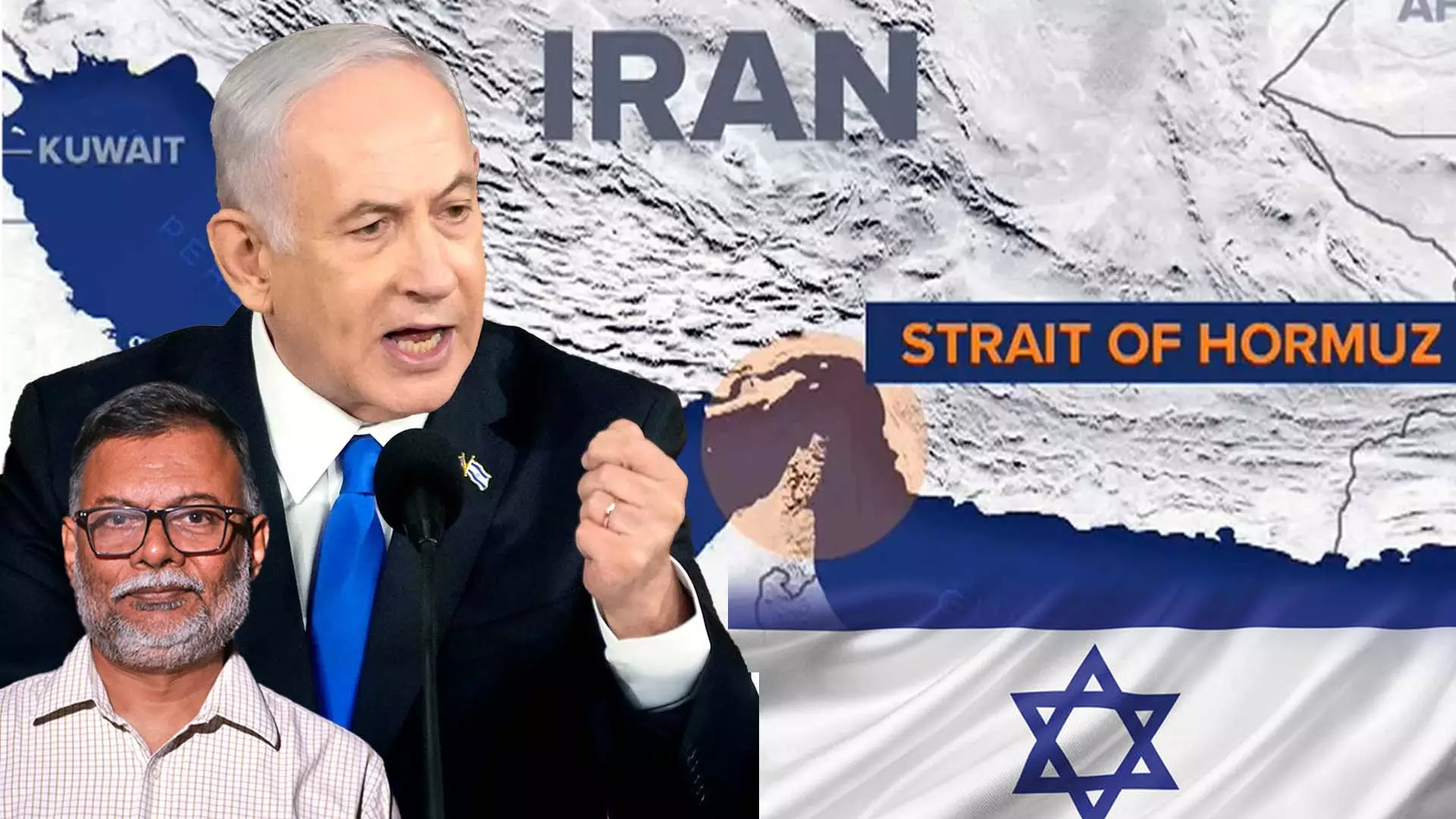
Has Israel benefited from Iran war?
European countries are increasingly critical of Israel’s actions, and in the Gulf region too, nations that once moved closer to Israel are now reassessing those ties

As the Israel–Iran conflict drags into a stalemate, questions are growing over whether Israel has truly gained from the escalation. While the war was expected to be swift and decisive, it has instead opened up wider geopolitical uncertainties with no clear winner in sight.
KS Dakshina Murthy, Consulting Editor at The Federal, discusses Israel’s objectives, whether they have been met, and how the conflict is reshaping global alignments.
To begin with, what is the current status of the war? Where does the situation stand right now?
The war has reached a deadlock, with neither side willing to back down. What was expected to be a short conflict has stretched on, and the situation remains fluid. There are many claims and counterclaims, but on the ground, there is no decisive breakthrough from either side.
Has Israel actually gained anything from this conflict with Iran?
Also Read: Iran war reaches stalemate, prospects of quick solution dim
Israel had clear objectives — primarily to weaken Iran and push for a regime change in the Islamic government. It also wanted to neutralise threats linked to Iran, including Hamas and Hezbollah.
While Israel has managed to weaken Hamas and Hezbollah and disrupt regional networks, it has not succeeded in achieving its core objective of destabilising Iran’s regime. Iran remains intact and continues to retaliate. So, in that sense, the gains are limited and far from decisive.
Throughout this conflict, how has the relationship between Israel and the United States evolved?
The relationship has been tested. The US supported Israel, but not without internal resistance. There were reports of lack of full political backing within the US system, including concerns from top officials.
Also Read: Strait of Hormuz reopens: Iran’s quiet move, America’s loud claims
If the conflict does not deliver results, questions will grow within the US about why it should align so closely with Israel’s strategic decisions, especially when the US itself was not directly under threat.
Who is really benefiting from this conflict right now — Israel, Iran, or no one?
At this stage, no one is clearly benefiting. Israel has demonstrated military capability, but it has not achieved its strategic goals. Iran, despite facing attacks, has managed to resist and even escalate the conflict by targeting US interests in the region.
Also Read: How Iran conflict exposes deep cracks in Western alliance
The war has instead created instability, widened the conflict zone, and increased global uncertainty. It is more a situation of mutual strain than clear advantage.
Will the world, especially Europe, view Israel differently after this conflict?
Yes, there is already a shift. European countries are increasingly critical of Israel’s actions. Some are even reconsidering long-standing agreements and partnerships.
Also Read: Mojtaba Khamenei relies on IRGC generals for decision-making after injury: Report
In the Gulf region too, there is unease. Countries that once moved closer to Israel are now reassessing those ties. The perception of Israel as a stable partner has taken a hit, and this could have long-term diplomatic consequences.
(The content above has been transcribed from video using a fine-tuned AI model. To ensure accuracy, quality, and editorial integrity, we employ a Human-In-The-Loop (HITL) process. While AI assists in creating the initial draft, our experienced editorial team carefully reviews, edits, and refines the content before publication. At The Federal, we combine the efficiency of AI with the expertise of human editors to deliver reliable and insightful journalism.)


