







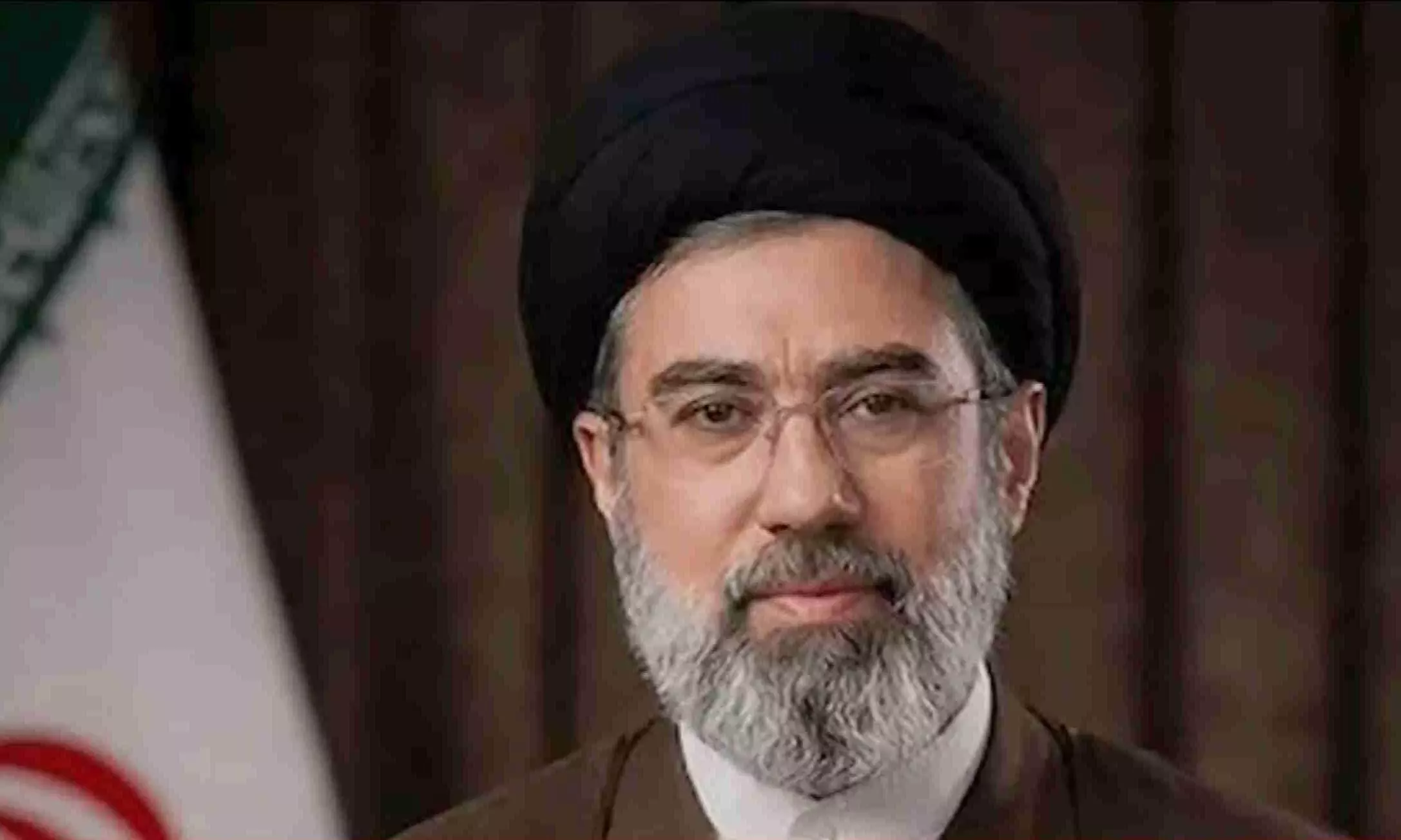
Mojtaba Khamenei relies on IRGC generals for decision-making after injury: Report
Injuries sustained in an airstrike and security concerns have limited Mojtaba's direct control, with senior IRGC commanders shaping decisions

Iran's Supreme Leader, Mojtaba Khamenei, unlike his father, the late Ayatollah Ali Khamenei, is reportedly dependent on the advice of a group of experienced generals for taking crucial decisions regarding peace, war and negotiations with the US.
Following his injury, in the air strike, at the beginning of the war that led to the death of his father, Mojtaba, who suffered severe injuries, has become an elusive figure in the Iranian regime. He has not been heard or seen in person since he was appointed in March as the Supreme Leader.
Reliance on IRGC generals
According to a report in the New York Times, Mojtaba is now dependent on a group of veteran generals of the Islamic Revolutionary Guards Corps (IRGC) who are taking key decisions regarding issues related to war, diplomacy and security.
Also Read: Iran backs India, China after Trump shares 'hellhole' post: 'Cradles of Civilization'
“Mojtaba is managing the country as though he is the director of the board,” said Abdolreza Davari, a politician who served as senior adviser to Mahmoud Ahmadinejad when he was president and knows Mojtaba, as quoted in the report.
“He relies heavily on the advice and guidance of the board members, and they collectively make all the decisions. The generals are the board members,” added Davari.
Inner-circle accounts
The report further states that the information on the current functioning of the Iranian regime has come from interviews with six senior Iranian officials, two former officials, two members of the Revolutionary Guards, a senior cleric familiar with the inner workings of the system and three individuals who are close to Mojtaba.
Also Read: Iran war reaches stalemate, prospects of quick solution dim
Senior Guards commanders and top civilian officials have stayed away, wary that any visit could expose his location to Israeli surveillance. His treatment has instead been handled quietly, with President Masoud Pezeshkian, a trained heart surgeon, and the health minister directly involved.
Extent of injuries and recovery
Despite the extent of his injuries, officials familiar with his condition describe him as alert and mentally engaged. The physical toll, however, is unmistakable. One leg has undergone multiple operations and will require a prosthetic.
His hand is still recovering after surgery. Severe burns to his face and lips have made speech difficult, with further reconstructive procedures expected, stated the report.
Controlled communication strategy
For now, he has chosen not to appear on camera or release audio messages, a decision officials say is deliberate. Any public address, they believe, risks projecting fragility. Instead, written statements, published online and broadcast on state television, have become his primary voice.
Also Read: Why is Pakistan playing mediator in US-Iran conflict? Expert explains
Reaching him is neither simple nor direct. Messages are written by hand, sealed, and passed along a chain of couriers moving discreetly across routes that avoid attention. Replies travel back through the same layered system, each step designed to reduce the risk of interception.
Shift in operational authority
That isolation, coupled with security concerns and the practical limits imposed by his condition, has shifted operational authority. Senior military figures are now handling immediate decisions on conflict, diplomacy and internal stability. Political factions still engage in debate, but those conversations no longer appear to shape outcomes in the same way.
Also Read: As Trump courts Pakistan’s Asim Munir, US report flags Iran links as ‘red flag’
US President Donald Trump has described recent developments, including the deaths within Iran’s leadership, as amounting to “regime change,” adding that those now in charge are “much more reasonable.”
Limited command and external assessment
“Mojtaba is not yet in full command or control,” said Sanam Vakil, the director of the Middle East and North Africa for Chatham House who has contact with people in Iran.
“There is, perhaps, deference to him. He signs off or he is part of the decision-making structure in a formal way. But he is presented with fait accompli presentations right now,” he added.