



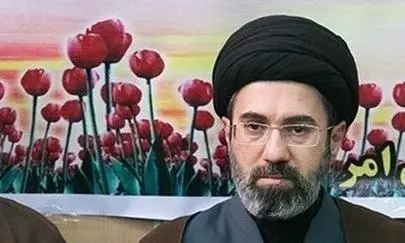
Who is Mojtaba Khamenei, Iran's new Supreme Leader?
Israeli media outlets have described him as even more hard-line than his father and have linked him to Iran’s harsh response to internal dissent, including nationwide protests in recent years, highlighting his close ties with the country’s security establishment

Iran’s Assembly of Experts have chosen Mojtaba Khamenei, the second oldest son of slain leader Ayatollah Ali Khamenei, as the next Supreme Leader, according to media reports.
Iranian officials familiar with internal discussions said Iran’s powerful clerical body, the Assembly of Experts, met on Tuesday (March 3) to deliberate on succession.
Who is Mojtaba?
Born in 1969 in the Iranian city of Mashhad, Mojtaba grew up during a politically charged era, as his father, Ayatollah Ali Khamenei, was emerging as a prominent cleric and activist opposing the rule of Shah Mohammad Reza Pahlavi in the years leading up to the 1979 Islamic Revolution.
Also read: Iran war: Why hasn't India condemned Khamenei's killing?
Though Mojtaba, 56, is not considered a high-ranking religious scholar, he had pursued religious studies in the seminaries of Qom, Iran’s most important Shiite theological centre, attaining the clerical rank of Hojjatoleslam.
He is widely regarded as wielding considerable behind-the-scenes influence in managing his father’s office, particularly through his close links with the Islamic Revolutionary Guard Corps (IRGC) and Quds Force. However, he has never held an elected office or any formal government position.
Mojtaba has properties and financial assets worth over 100 million British Pounds (Rs 1,229 crore), according to a Bloomberg report.
International scrutiny
He was also involved in the Iran–Iraq war and, in 2019, was sanctioned by the United States, which said he acted in an official capacity on behalf of Iran’s Supreme Leader despite never holding a formal government position.
Israeli media outlets have described him as even more hard-line than his father and have linked him to Iran’s harsh response to internal dissent, including nationwide protests in recent years, highlighting his close ties with the country’s security establishment.
Also read: Iran after Khamenei and its possible impact on the world | AI With Sanket
Media reports also claim that Mojtaba had access to luxury properties in London and maintained financial accounts in countries including the United Kingdom, Switzerland and Liechtenstein.
Why is the appointment crucial?
Mojtaba’s elevation would mark a significant shift. Though Mojtaba is believed to have played an influential role behind the scenes for years, he has never held an elected office or any formal government position.
Also read: Netanyahu: Attacked because Iran's nuclear programme would have been 'immune within months'
His appointment is seen as a historic decision as Iran’s leadership was against the idea of hereditary rule, and succession from father to son is not traditionally viewed favourably within Shia clerical circles.
According to the Treasury, the late Iranian leader had delegated certain responsibilities to Mojtaba, who worked closely with the commanders of the IRGC’s Quds Force and the Basij militia to pursue Iran’s regional and domestic objectives.