Iran war: Why hasn't India condemned Khamenei's killing?
The debate has intensified after senior Congress leader Sonia Gandhi said that India’s silence was not neutrality but “abdication”, particularly for a country aspiring to lead the Global South

As global reactions poured in following the killing of Iran’s Supreme Leader Ayatollah Ali Khamenei, India’s silence has triggered sharp political and diplomatic debate at home. Should New Delhi have condemned the act? Or is strategic restraint part of a larger recalibration of foreign policy?
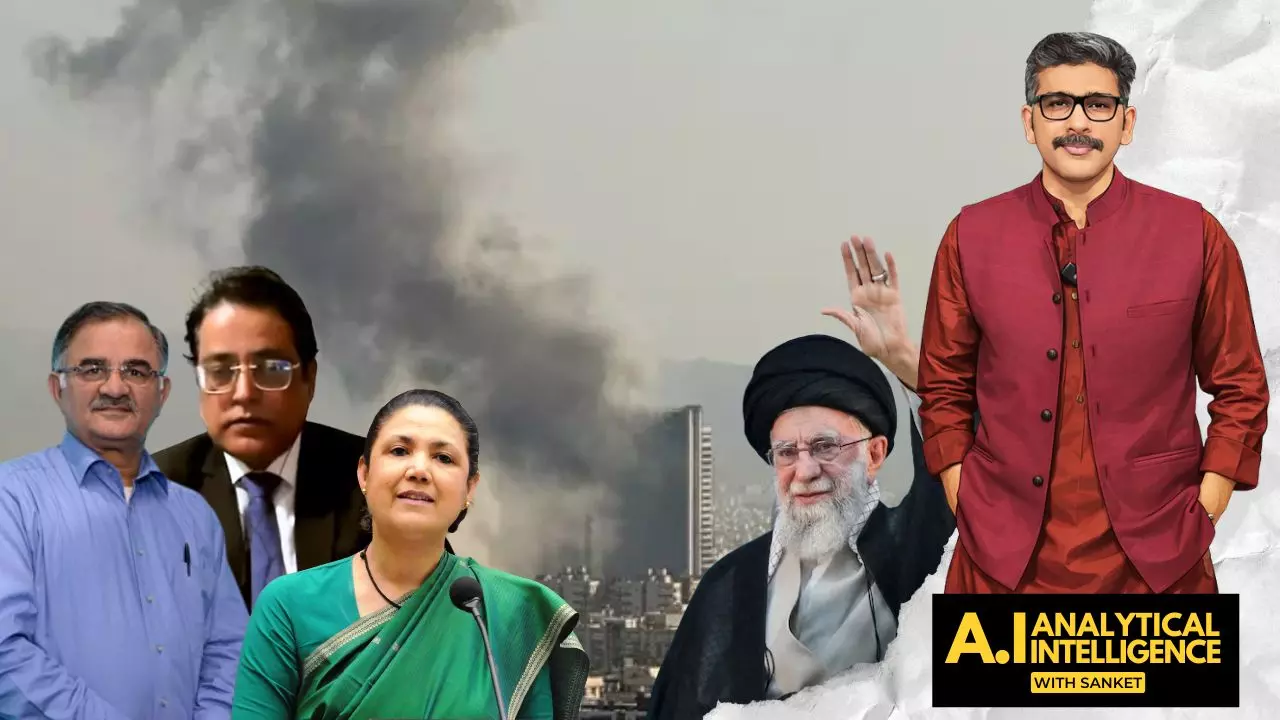
On AI With Sanket, The Federal spoke to Meera Shankar, former Indian Ambassador to the US, along with Middle East expert Dr. Zakir Hussain and senior journalist Javed Ansari, to unpack whether India’s stance reflects balance — or a decisive shift.
Violation of UN charter
Shankar was unequivocal in her legal assessment. She said the UN Charter clearly emphasises respect for sovereignty and territorial integrity, and that the choice of political leadership must remain with the country concerned.
Also read: When your 'best friends' start a war, silence is not diplomacy
According to her, while covert regime changes have occurred in the past, the open embrace of targeted assassinations as a declared military strategy marks a new and troubling phenomenon.
She argued that leadership assassinations as part of overt warfare represent a dangerous precedent in international relations.
India’s dilemma
Yet when asked why India has remained publicly silent, Shankar described New Delhi’s position as "delicate and complex".
On one hand, India has longstanding historical ties with Iran and traditionally championed principles of international law. On the other hand, it now maintains a special strategic partnership with Israel and deep relations with Gulf countries such as the UAE and Saudi Arabia.
Also read: How Iran war will stoke inflation, even if oil supplies do not dry up
Shankar suggested the government may be attempting to avoid offending while emphasising dialogue and de-escalation.
Global South question
The debate intensified after senior Congress leader Sonia Gandhi wrote in The Indian Express that India’s silence was not neutrality but “abdication”, particularly for a country aspiring to lead the Global South.
Responding to this, Shankar pointed out that India has also avoided condemning Russia’s military operation in Ukraine, instead urging dialogue and negotiation.
She acknowledged that while balancing interests and principles is a difficult and delicate task, there is a valid argument that India should stand firmly for certain foundational principles.
Strategic tilt?
Ansari was more direct. He argued that India has “clearly tilted” towards Israel.
Referring to Prime Minister Narendra Modi’s recent visit to Israel, Ansari said the messaging left little ambiguity about India’s strategic alignment. He emphasised that while balancing interests is understandable — given millions of Indians working across the Gulf — silence on the assassination of a head of state sends a strong signal.
“If this cannot prompt us to take a categorical position, then what will?” he asked, suggesting that silence in such circumstances is not neutrality.
Policy shift
Dr. Hussain described India’s approach not as nuance but as change. In his assessment, New Delhi has moved away from its traditional equidistance policy that characterised earlier governments.
He argued that post-2014, India has increasingly aligned with Western strategic thinking and distanced itself from Cold War-era non-alignment principles associated with leaders like Jawaharlal Nehru.
Dr. Hussain suggested that the government may believe the current Iranian regime is short-lived and that aligning with the US-Israel axis is a pragmatic calculation.
Connectivity and interests
Another significant shift, he said, concerns connectivity strategy. He argued that India appears less invested in Iran’s Chabahar port as a regional transit hub and more interested in alternative corridors aligned with broader geopolitical partnerships.
He also pointed to India’s growing comfort in working closely with Israel, Gulf states, and the United States as part of a broader recalibration of its West Asia strategy.
However, he cautioned that such a shift carries consequences and reflects a worldview where power and strategic leverage dominate moral positioning.
Domestic undertones
Ansari noted that foreign policy cannot be entirely separated from domestic political narratives. The BJP, he said, has historically been closer to Israel ideologically, and that alignment now shapes policy decisions.
He argued that India’s silence was not accidental but consistent with a well-defined strategic orientation. According to him, one does not need to “read between the lines” to understand the direction of travel.
Leadership ambitions
The larger question remains whether this stance undermines India’s claim to leadership of the Global South.
Dr. Hussain argued that India once sought to represent nations that lacked voice and influence, building platforms like the Non-Aligned Movement. Today, he said, the world order appears to be shaped more by brute power, financial strength, and technological dominance than by moral coalitions.
Whether this strategic recalibration enhances India’s national interest or weakens its moral authority, the panel agreed, will only become clear over time.
(The content above has been transcribed from video using a fine-tuned AI model. To ensure accuracy, quality, and editorial integrity, we employ a Human-In-The-Loop (HITL) process. While AI assists in creating the initial draft, our experienced editorial team carefully reviews, edits, and refines the content before publication. At The Federal, we combine the efficiency of AI with the expertise of human editors to deliver reliable and insightful journalism.)