


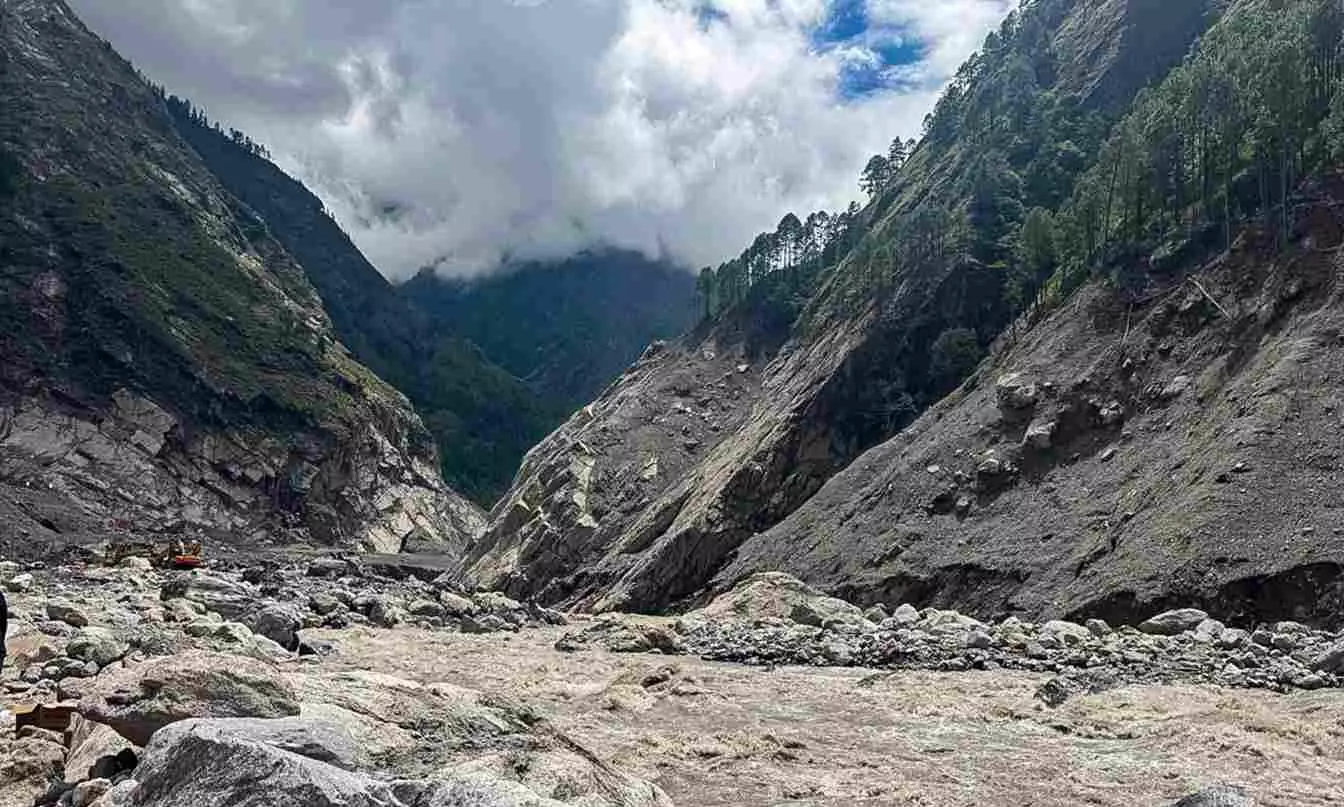
First images from Gyirong reveal flash-flood devastation at Tibet-Nepal border
China opens devastated Gyirong County to foreign media as rescuers search for hundreds missing and officials warn of growing Himalayan glacier risks

One of the most haunting images from the August 26 flash floods along the Tibet-Nepal border shows a massive wall of mud, rocks and debris engulfing a well-built immigration post within seconds.
The footage, which went viral worldwide, captured the sheer force of the floods and the devastating toll they took on lives and infrastructure.
Immigration post wiped out
China on Sunday, for the first time, opened up its devastated Gyirong County in Tibet – the site of the destroyed border immigration post – to PTI and select foreign media to show the scale of destruction caused by the flash floods, and the relief and reconstruction work underway.
Also read | ‘Nepal valley flooded twice in 14 months’: Expert slams ‘sheer madness’ of Himalayan development
Not only did the immigration post disappear without a trace, most rescue officials struggled to point out the exact location where the building once stood. A Chinese official overseeing the rescue and relief efforts pointed to iron rods protruding from the ground to indicate where the building once stood.
A small makeshift memorial with yellow flowers had been erected at what was believed to be the site of the immigration building’s gate on the Chinese side. The entire area had been reduced to slush and mud, with the flags of China and Nepal erected after the catastrophe to mark the border.
It wore a desolate look, with only a few monkeys moving around amid mountains scarred by mud and rocks that had hurtled down from hills more than 20 km away.
Death toll in Nepal crosses 1,300
Until Sunday, the full extent of the destruction had largely been seen from the Nepalese side of the border. The death toll stood at 1,344, while nearly 5,000 people, including 589 foreign nationals, remained missing, according to Nepal Police. Around 13,400 people have been rescued so far.
The disaster was triggered by an ice-rock avalanche near the Nepal-Tibet border on August 26, sending a massive surge of water and debris downstream through the Bhotekoshi River and devastating settlements in northern and central Nepal.
On Sunday, the scale of destruction on the Chinese side also came into view. China has been working to reconstruct roads to restore access to the cut-off border post and has sent relief materials to Nepal.
Chinese officials on Sunday updated the death toll to 43, with 519 others missing. The missing include 261 foreigners, including 49 from India and 22 from other countries.
Many of the foreign nationals killed or reported missing were believed to have been on or near the immigration building when it was engulfed by the flood.
Glacier collapse sparks warnings
Addressing the media on Sunday, Chinese officials described the painstaking process of recovering and identifying bodies using different methods, including artificial intelligence.
Also read | Nepal’s deadliest disasters: From earthquakes to flash floods and avalanches
Families of those missing continued to await news of their loved ones and their belongings.
Chinese officials said Nepal and China had officially determined that the August 26 disaster was caused by the collapse of a high-altitude glacier in Nepal.
The sudden glacier collapse has raised concerns about the risk of similar incidents in the Himalayan region, where glaciers are increasingly vulnerable to climate change.
A Chinese climate official warned that glaciers on the Tibetan Plateau were likely to become more unstable, potentially leading to further collapses and cascading disasters similar to the August 26 flash floods.
(With agency inputs)