



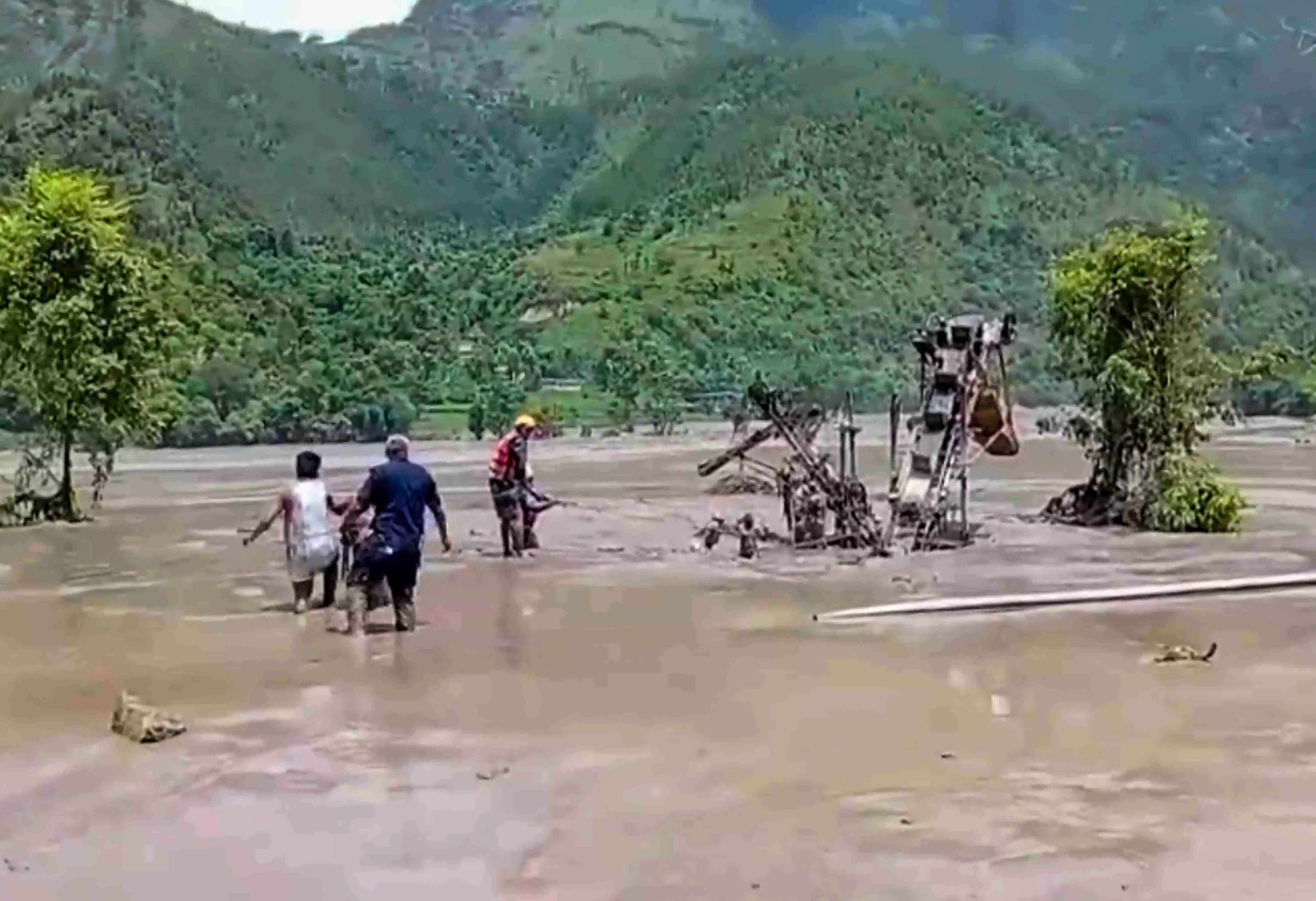
The latest flash flood resulted in at least eight deaths and over 100 Indians going missing. Photo: PTI
Nepal’s deadliest disasters: From earthquakes to flash floods and avalanches
From the 1934 earthquake to the latest Bhote Koshi flash flood, a look at Nepal’s deadliest earthquakes, floods, landslides and avalanches

Nepal has suffered repeated earthquakes, avalanches, floods and landslides. Some disasters have killed thousands, while others have devastated remote communities and disrupted access to essential services, with the latest being a deadly flash flood caused by a surge in the Bhote Koshi River that ripped through northern Nepal on Wednesday (August 26) morning, resulting in at least 19 deaths and 105 Indians going missing.
1934 earthquake devastated Nepal
An earthquake of magnitude estimated to be between 7.6 and 8.3 struck near Okhaldhunga on January 15, 1934, resulting in widespread destruction in Kathmandu and eastern Nepal. Mud-brick homes collapsed, while temples and other buildings were severely damaged.
Also Read: 8 dead, 100 Indians missing as flash flood sweeps through Nepal’s Rasuwa district
At least 8,519 people died in Nepal, with thousands more killed in India. According to reports in Reuters and Nepali Times, the Nepali government created a relief office to manage reconstruction in Kathmandu. Aid also came from India, Britain and Japan.
1988 earthquake
A magnitude 6.9 earthquake struck near the Nepal–India border in Udayapur District on August 21 1988, killing about 1,003 people while thousands were injured.
Also Read: What is GLOF, the phenomenon that triggered Sikkim flash floods?
Landslides and floods added to the destruction. Villages across southeastern Nepal were damaged, while an estimated 500,000 people lost their homes. Monsoon rain and poor infrastructure reportedly made relief operations harder for the Nepali Army and international agencies.
2014 Everest avalanche
A huge section of the Khumbu Icefall collapsed on April 18, 2014, triggering an avalanche that swept through camps below Mount Everest.
Thirteen Sherpa guides were killed, while at least three others were missing or presumed buried. Many more were injured. Rescue teams, including Nepalese army helicopters, recovered victims. The disaster halted Everest expeditions for weeks and led Sherpas to demand stronger safety measures and compensation.
2015 earthquake and Everest disaster
A magnitude 7.8 earthquake struck central Nepal near Gorkha district on April 25, 2015, followed by a magnitude 7.3 aftershock on May 12. According to a Reuters report, the combined toll reached about 9,000, making the disaster Nepal’s worst modern catastrophe.
Also Read: What Indian mountaineers feel about Nepal’s likely move to make permission for Everest climb tougher
The April earthquake triggered an avalanche from Pumori that swept into Everest’s South Base Camp. At least 17 people died, and 61 were injured, including climbers and Sherpa guides.
The injured were evacuated through helicopters, reported The Guardian.
May 2015 aftershock
The May 12, 2015 magnitude 7.3 aftershock caused fresh damage in eastern Nepal. Official figures recorded 218 deaths and more than 3,500 injuries, with major losses in Dolakha, Ramechhap and Sindhupalchowk.
Landslides and building collapses blocked routes into remote districts. Helicopters carried relief supplies while road crews worked to reopen access, reported Reuters.
2019 and 2020 monsoon disasters
Heavy monsoon rain caused floods and landslides across central and eastern Nepal in July 2019. Authorities reported 78 deaths, 40 injuries and 32 missing people. More than 17,500 people were displaced, reported the Indian Express.
Also Read: Nepal reels from climate extremes as droughts and floods wreak havoc
The 2020 monsoon brought further destruction. By mid-year, at least 196 people had died, and 188 were injured. Flash floods swept away homes and bridges, while river banks collapsed in the Terai.
2025 floods and avalanche
Heavy rainfall in early October 2025 triggered floods and landslides in eastern Nepal. By October 5, authorities reported 44 deaths and five missing people. Ilam recorded 37 landslide deaths. The Nepali Army used helicopters during rescue operations.
On 4 November, an avalanche struck a base camp on Mount Yalung Ri in Dolakha. Seven people died, including five foreign climbers and two Nepali guides. Poor weather delayed rescue teams, who later recovered the bodies, reported Al Jazeera.