



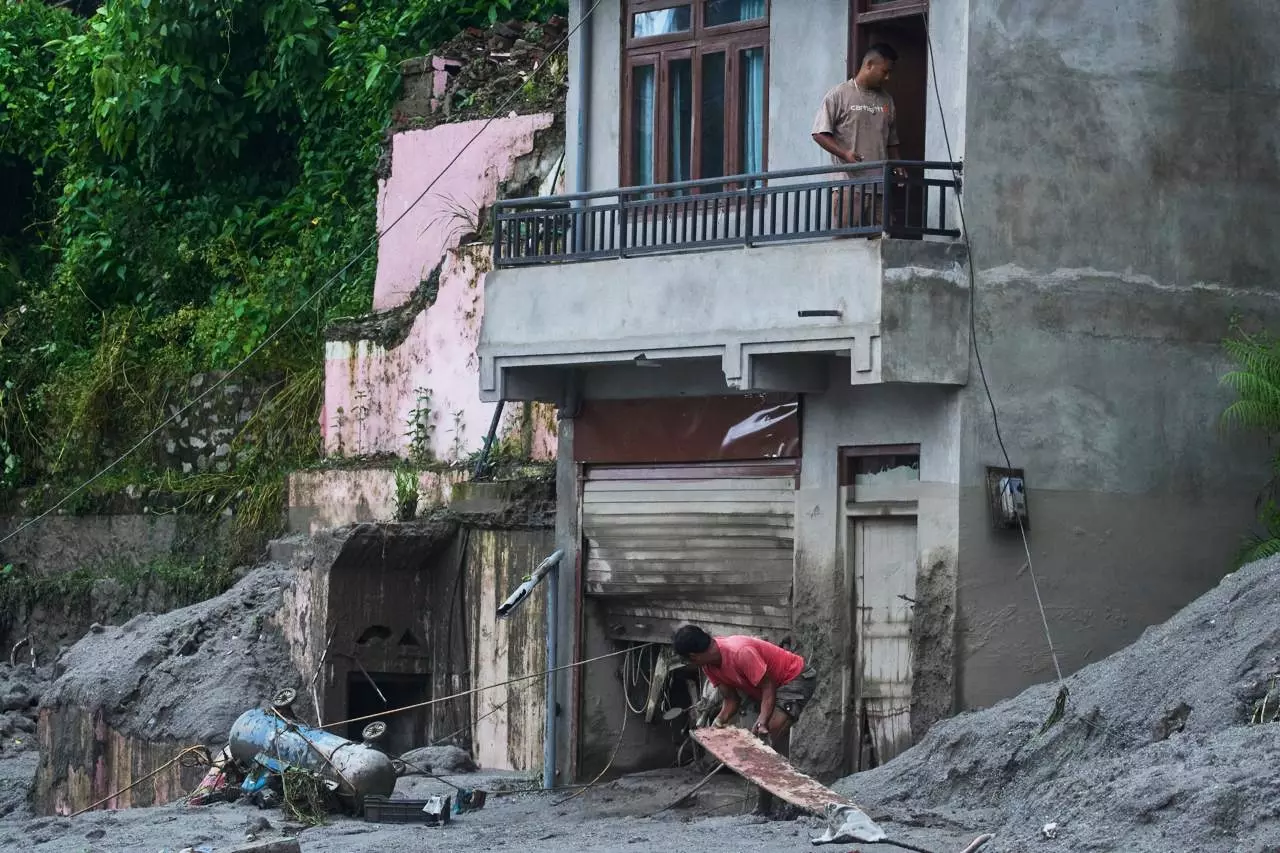
The Chinese embassy in Nepal stated that in such a situation “cooperation” rather than “accusation” was of primary importance. Photo: PTI
China rejects 'dam claims' over deadly Nepal flash floods, calls them ‘fake news ’
Beijing attributes the August 26 disaster to an earthquake or glacier collapse on the Nepali side, while Nepalese voices question the lack of an early warning

As Nepal is still reeling from the impact of the deadly flash floods that have left 177 dead and nearly 1300 missing, China on Thursday (August 27) came up with a sharp rebuttal against claims that the collapse of a “geological disaster dam” on the Chinese side was the reason behind the floods. Dubbing the claims as “fake news”, Beijing also dismissed allegations that it failed to issue an early warning to Nepal, which resulted in rising casualties.
China rejects dam claims
The Chinese embassy in Nepal, in a statement on X, stated that the devastating mudslides in the neighbouring country were triggered by an “earthquake or earthquake-like glacier collapse” on the Nepali side. It further stated that in such a situation “cooperation” rather than “accusation” was of primary importance.
Also Read: Nepal floods: 80 from Isha Foundation missing; Vijay calls emergency meeting
“The collapse of the geological disaster dam on the Chinese side caused major losses to the Nepali side. An earthquake or earthquake like glacier collapse occured on the Nepali side on the morning of August 26, 2026, triggering huge mudslides, which caused significant casualties and left people missing on both the Nepali and Chinese sides of the Gyirong-Rasuwagadhi border region. Accusation helps nothing Cooperation saves lives,” it added.
Questions over early warning
A section of netizens in Nepal, including journalists and former government body members, argued that despite Kathmandu diligently addressing Beijing’s security concerns, the same has not been reciprocated by the latter.
Also Read: Nepal floods: People from more than 30 countries reported missing
"Nepal has been addressing the legitimate security concerns of our neighbours. However, it must be said with sadness that our northern neighbour has significantly undermined us. By failing to provide early warning of such a massive disaster, we suffered immense loss of human life," Nepali Journalist with Naya Patrika, a Nepali daily Parshuram Kaphle, stated in a post on X.
"We have continually faced crises originating from their territory, while we continue to address all their concerns, necessary or unnecessary. Why must Nepal alone pay the price of one-sided love?" he added.
Calls for stronger GLOF monitoring
Dr Govind Raj Pokharel, Former Vice Chair of the National Planning Commission of Nepal and Former CEO of National Reconstruction, also took to social media stressing the need for both countries to have better monitoring facilities for glacial lake outburst floods.
Also Read: Killer floods: Is Nepal underprepared for natural disasters? Yubaraj Ghimire exclusive
"I thought Chinese have better monitoring systems for GLOF (Glacial Lake Outburst Flood) in the border region, but it seems not. They have also suffered heavy losses of life and properties," he stated in a post on X.
"I think Nepal and China must have strong monitoring and early warning systems in border areas regarding GLOF and flood,” added Pokharel.
Satellite technology under scrutiny
Speaking to NDTV, he said that since China possess advanced satellite systems and technology, they could have at least noticed an image of the impending disaster and conveyed the information to the Nepali side.
"I was expecting that because of the advanced satellite systems and technology they could have at least noticed an image or something like that. And they could have relayed the information to the Nepali side, but they could not notice that also,” said Pokharel.
“In our side, it was the lower side, but it was beyond our expectation, because it was, there was no rain etc. So, people downstream did not expect something like this. Policemen who were warning people not to go to the riverside were also swept away because they themselves could not estimate the level of flood…We need to have better coordination with China when it comes to disasters like GLOF, flood or earthquake," said Pokharel.