



Trump and Anthropic clash over AI ethics
Trump slams Anthropic over AI limits for Pentagon use, as tech firms debate ethical red lines on military AI and autonomous weapons.

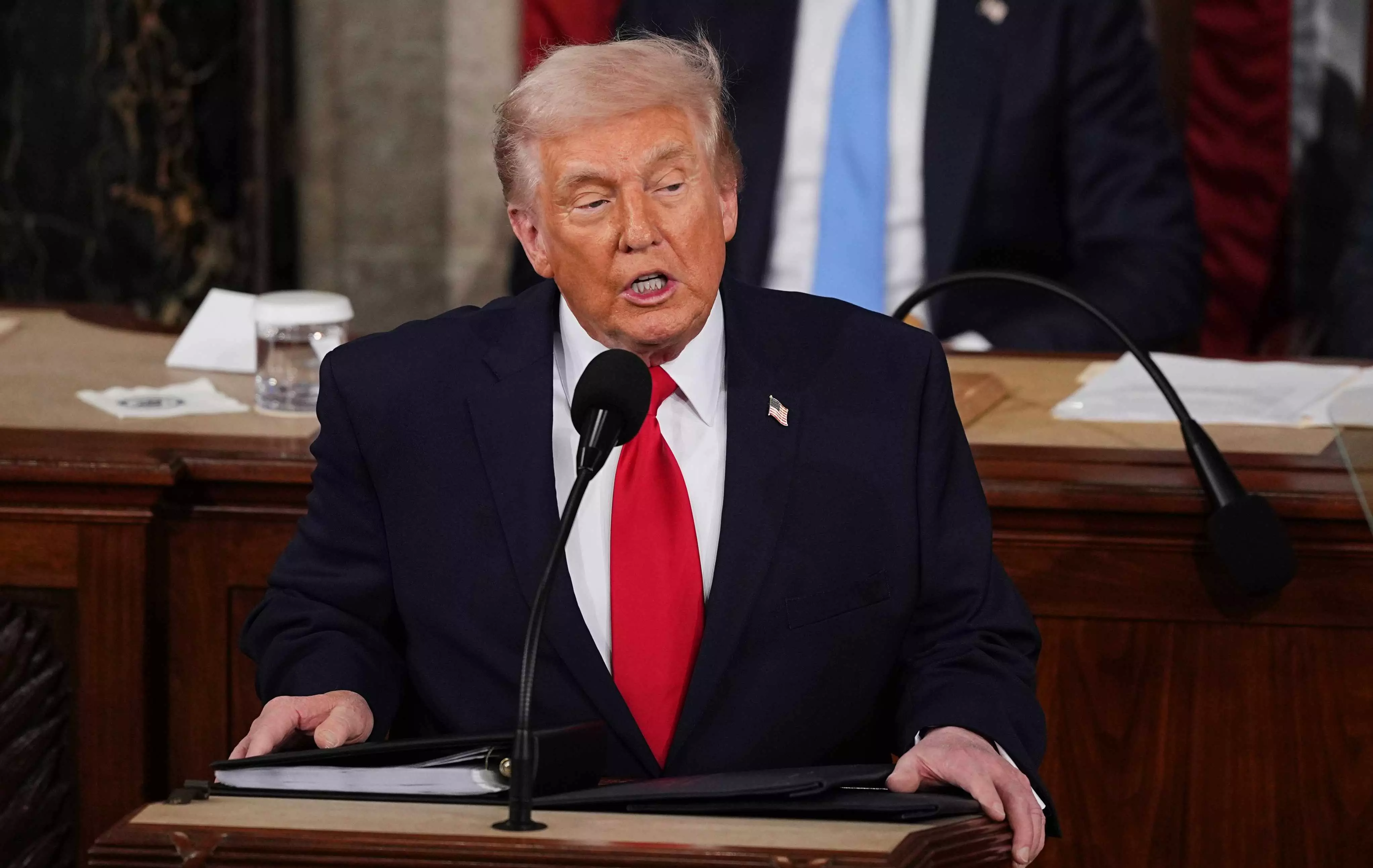
A public, online clash has erupted between the White House and leading artificial intelligence firms after President Donald J. Trump accused Anthropic of attempting to dictate how the US military should operate.
In a strongly worded social media post, Trump declared that “the United States of America will never allow a radical left, woke company to dictate how our great military fights and wins wars,” asserting that such decisions rest solely with the Commander-in-Chief and the military leadership appointed by him. He described Anthropic’s stance as a “disastrous mistake.”
'We don't need it'
In a post on Truth Social, the Republican leader further stated that he has directed all federal agencies to stop using Anthropic's technology, adding that the government would not do any business with them.
Also Read: Why Anthropic is accusing Chinese AI companies of stealing its data
"Therefore, I am directing EVERY Federal Agency in the United States Government to IMMEDIATELY CEASE all use of Anthropic's technology. We don't need it, we don't want it, and will not do business with them again!" stated Trump.
"There will be a Six Month phase out period for Agencies like the Department of War who are using Anthropic's products, at various levels. Anthropic better get their act together, and be helpful during this phase out period, or I will use the Full Power of the Presidency to make them comply, with major civil and criminal consequences to follow," he added.
Dispute over Pentagon’s use of AI
The controversy centres on reported disagreements over how advanced AI systems, including Anthropic’s Claude model, may be used by the Pentagon. Anthropic has maintained that while it supports lawful national security applications, it will not permit its systems to be used for certain activities it considers ethically unacceptable, including mass domestic surveillance or fully autonomous lethal weapons.
Also Read: 'America's Anthropic has hit our brand,' says Karnataka's own Anthropic
Anthropic’s leadership has framed its position as a matter of responsible AI governance, arguing that private developers have a duty to set guardrails on powerful emerging technologies, even when working with governments.
What Anthropic CEO said
Earlier, the Anthropic CEO Dario Amodei had said that although the company had never raised objections to particular military operations or tried to restrict the use of its technology in an ad hoc manner, in certain cases, it believes that AI can undermine, rather than defend, democratic values.
Also Read: Infosys stock rises over 3 pc after strategic tie-up with Anthropic
“Anthropic understands that the Department of War, not private companies, makes military decisions. We have never raised objections to particular military operations nor attempted to limit use of our technology in an ad hoc manner,” said Amodei in a statement issued by the company.
“However, in a narrow set of cases, we believe AI can undermine, rather than defend, democratic values. Some uses are also simply outside the bounds of what today’s technology can safely and reliably do. Two such use cases have never been included in our contracts with the Department of War, and we believe they should not be included now,” he added.
Industry-wide ‘red lines’ debate
The debate widened after Sam Altman weighed in publicly. Altman indicated that the issue extends beyond one company and reflects broader industry concerns about defining “red lines” for military AI use.
Also Read: Claude AI maker Anthropic launches Bengaluru office, bets big on India market
He suggested that AI firms share common principles around restricting uses such as indiscriminate surveillance or fully autonomous weapons systems, underscoring that ethical safeguards should not be abandoned under political pressure.
Open AI strikes deal with Pentagon
Meanwhile, OpenAI CEO Sam Altman announced that his company struck a deal with the Pentagon to supply its AI to classified military networks, potentially filling a gap created by Anthropic's ouster.
But Altman said that the same red lines that were the sticking point in Anthropic's dispute with the Pentagon are now enshrined in OpenAI's new partnership.
“Two of our most important safety principles are prohibitions on domestic mass surveillance and human responsibility for the use of force, including for autonomous weapon systems,” Altman wrote, adding that the Defence Department “agrees with these principles, reflects them in law and policy, and we put them into our agreement.”
Altman also said he hopes the Pentagon will “offer these same terms to all AI companies” as a way to “de-escalate away from legal and governmental actions and toward reasonable agreements.”
Who sets the limits in AI warfare?
At stake is a fundamental question: who determines the limits of artificial intelligence in warfare — elected civilian leadership or the private companies building the technology?
Also Read: Elon Musk says Anthropic’s Claude AI is ‘misanthropic and evil’, 'hates men'
For the administration, the issue is one of executive authority and national security. For AI developers, it is about preventing misuse of systems whose capabilities are rapidly expanding.
As governments increasingly rely on advanced AI for defence planning, logistics and battlefield decision-making, the confrontation signals a new and consequential phase in the global debate over the militarisation of artificial intelligence.