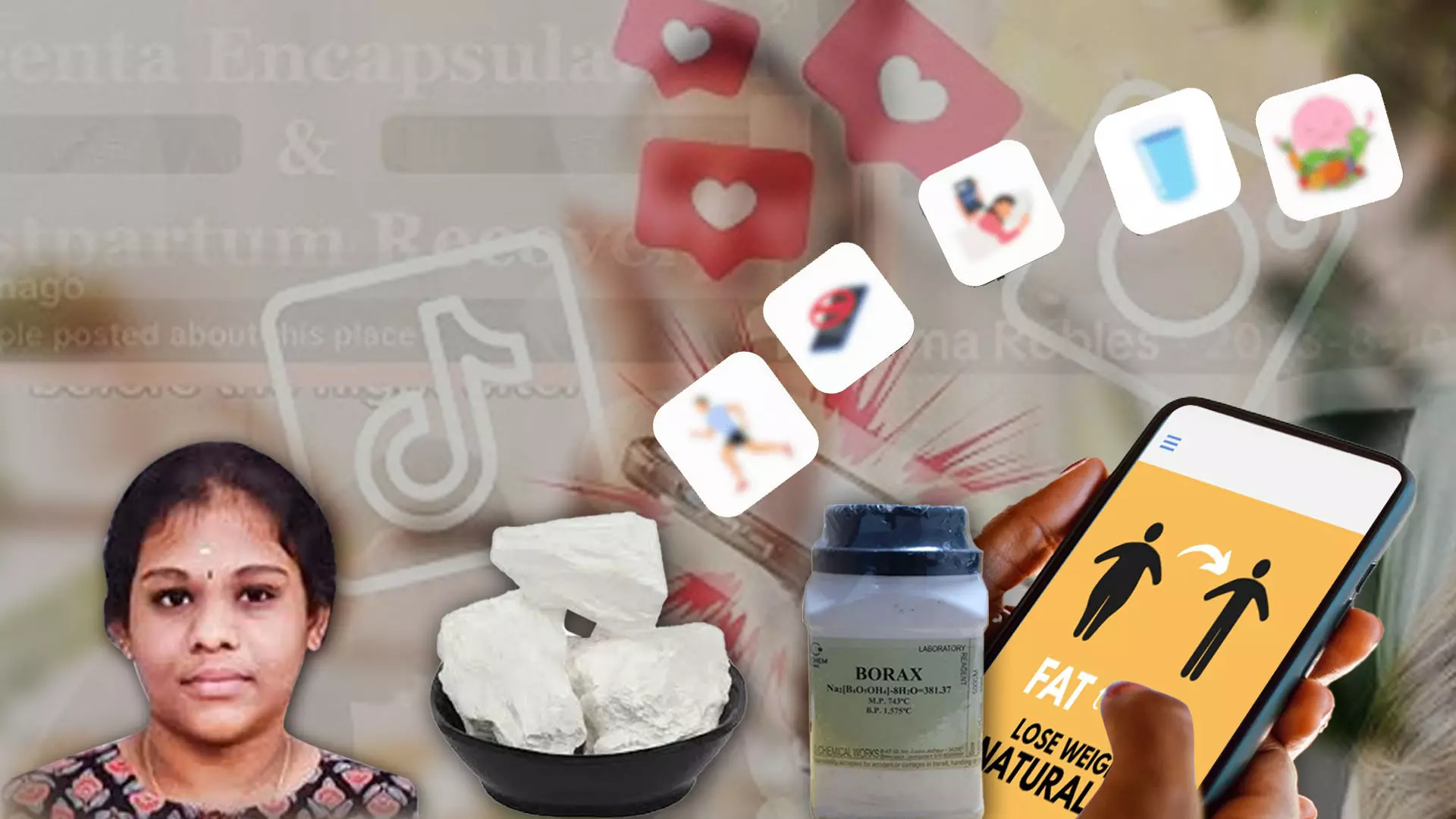
Doctors urge caution after YouTube weight-loss hack turns fatal for TN student
Kalaiyarasi, a college student from Madurai, died after following a YouTube video that wrongly claimed that consuming borax could help melt fat

In a stark reminder of the hidden dangers of unverified health hacks, a young woman, in pursuit of a slimmer body, lost her life after following advice from a YouTube video that promoted a toxic chemical as a weight-loss solution.
Kalaiyarasi, a first-year college student from Meenambalpuram in Sellur, Tamil Nadu, had been searching for quick ways to lose weight. She watched a video on YouTube that claimed “venkaaram”, commonly known as borax, could “melt fat” and help her slim down.
Also Read: New weight-loss and diabetes drugs: Are they truly game-changers? | Second Opinion
Borax is a chemical compound widely used in industrial cleaners and pesticides and is not meant for human consumption. However, acting on the video’s claims, Kalaiyarasi purchased the substance from a local native medicine shop on January 16.
A fatal health hack
Shortly after consuming borax, Kalaiyarasi had severe vomiting, stomach pain, and diarrhoea. Her family rushed her to a private clinic, but her condition deteriorated rapidly.
She was later shifted to Government Rajaji Hospital in Madurai, where doctors declared her dead on arrival. Police investigations confirmed that the cause of death was borax poisoning.
Medical experts say there is no scientific evidence supporting the use of borax, or sodium tetraborate, for weight loss. Ingesting it can lead to severe gastrointestinal injury, internal bleeding, organ failure, and death.
Doctors explain the risk
Dr R Sundararaman, Senior Consultant in Internal Medicine at SIMS Hospital, said the desire to lose weight often drives people towards dangerous shortcuts.
“So, there is a big fad about reducing weight. Everyone wants to reduce their weight and look younger and healthier. The thought process is correct, but the methodologies can be disastrous,” he said.
Also Read: Ozempic launched in India, priced at Rs 2,200 per week
Referring to the incident, he explained that borax is typically used in industries such as paint manufacturing and not meant for ingestion. “Without knowing the dosage, she consumed a huge amount and succumbed to it. Borax can cause severe vomiting and retching, bleeding, rupture of the oesophagus or stomach, and death if not treated immediately,” Dr Sundararaman said.
He added that the only known treatment for borax poisoning is emergency haemodialysis, which requires immediate access to advanced medical facilities.
Obesity treatments
Dr Sundararaman stressed that obesity is a serious health concern but warned against relying on social media remedies. Citing studies, he said India has around 245 million people living with obesity.
“Strict exercise with proper dietary advice can help achieve 5 to 10 per cent weight loss. We are also in a golden period where excellent drugs are available — injections and tablets that are scientifically proven,” he said, emphasising the need for medical supervision.
Health experts underline that weight loss should involve a balanced diet, physical activity, and professional guidance, not unverified chemicals or shortcuts.
Not an isolated case
This tragedy is not an isolated incident. Tamil Nadu has witnessed several deaths linked to unverified medical advice circulated on online platforms.
In July 2025, a 17-year-old boy from Colachel died of suspected suffocation after following a fruit juice-only diet for three months based on YouTube videos, without consulting any medical professional.
In 2024, a newborn died in Pudukkottai district after a couple attempted a home birth guided by YouTube videos, with the delivery conducted by family members.
Earlier, in 2016, a self-styled “herbal doctor” in Tirunelveli district died along with two patients after consuming a toxic herbal concoction claimed to cure diabetes and blood pressure, highlighting the dangers of unregulated traditional remedies.
Scientific approach
Dr Baraneetharan of Kauvery Hospital said obesity management must follow a scientific and holistic approach.
“We must understand metabolism, sugar control, thyroid function, and cholesterol levels before weight management. Today, there are scientifically proven medications, including diabetes drugs that also help control weight,” he said.
Also Read: Wegovy, weight-loss drug, launched in India: All you need to know
He warned against blindly following social media content. “It is always better to consult a physician and approach obesity scientifically. Don’t follow information without evidence and end up with serious problems,” Dr Baraneetharan added.
Need for regulation
Public health experts say these repeated tragedies highlight the urgent need for stricter regulation of misleading health content online.
Existing laws such as the Drugs and Magic Remedies (Objectionable Advertisements) Act, 1954, prohibit false claims of magical cures for conditions like obesity. The Consumer Protection Act, 2019, also allows penalties including fines and imprisonment for misleading advertisements.
For traditional medicine systems such as Ayurveda, Siddha, and Unani, the Drugs and Cosmetics Act, 1940, bans the manufacture and sale of misbranded or spurious drugs and prohibits unsubstantiated claims.
Public health expert Dr K Kolandaisamy said stronger action is needed against digital misinformation. “The government should mandate stricter guidelines for e-pharmacies and social media platforms, including swift takedowns of false content, heavier penalties for repeat offenders, and public awareness campaigns,” he said, noting that the Supreme Court has already urged states to crack down on misleading medical advertisements.
Experts urge caution
Experts caution that viral videos should never replace professional medical advice. The death of Kalaiyarasi stands as a reminder that health shortcuts promoted online can have irreversible consequences.
Also Read: I'm in the pink of health: Karan Johar denies taking weight loss drug
Your health is not worth a viral video. Always verify sources and consult qualified professionals before following any medical or health advice found online.
(The content above has been transcribed from video using a fine-tuned AI model. To ensure accuracy, quality, and editorial integrity, we employ a Human-In-The-Loop (HITL) process. While AI assists in creating the initial draft, our experienced editorial team carefully reviews, edits, and refines the content before publication. At The Federal, we combine the efficiency of AI with the expertise of human editors to deliver reliable and insightful journalism.)