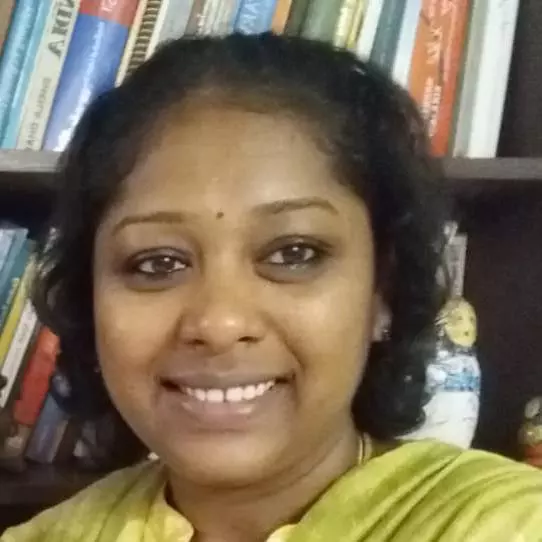
Veteran Tamil writer and critic S Tamilselvan believes the current climate supports pro-Hindutva ideas in the literary space
Creative freedom is under threat in this country: Sahitya Akademi winner S Tamilselvan
Veteran Tamil critic in The Federal interview alleges 3-month delay in announcing his award signals silencing of dissent and curtailment of creative freedom

Veteran Tamil writer and critic S Tamilselvan has broken his silence after winning the Sahitya Akademi Award for literary criticism, warning that the unprecedented three-month delay in the announcement of his award, is an "alarm bell" for creative freedom in India. It is not merely an administrative delay, he stressed, but it is sign of the growing censorship of independent voices and the undermining of institutions in the country.
“Creative freedom is under threat in this country,” said Tamilselvan, in an interview with The Federal.
Tamilselvan alleged that the delay also showed the growing government interference in autonomous cultural bodies."I believe I might be the last person whose work was viewed by juries who were independent. The interventions suggest a climate that fosters self-censorship and silences dissenting voices," he pointed out.
While the Union government attributed the postponement to a "restructuring process" aimed at improving transparency, Tamilselvan dismissed the claim, viewing it instead as an attempt to exert influence over the country’s literary space.
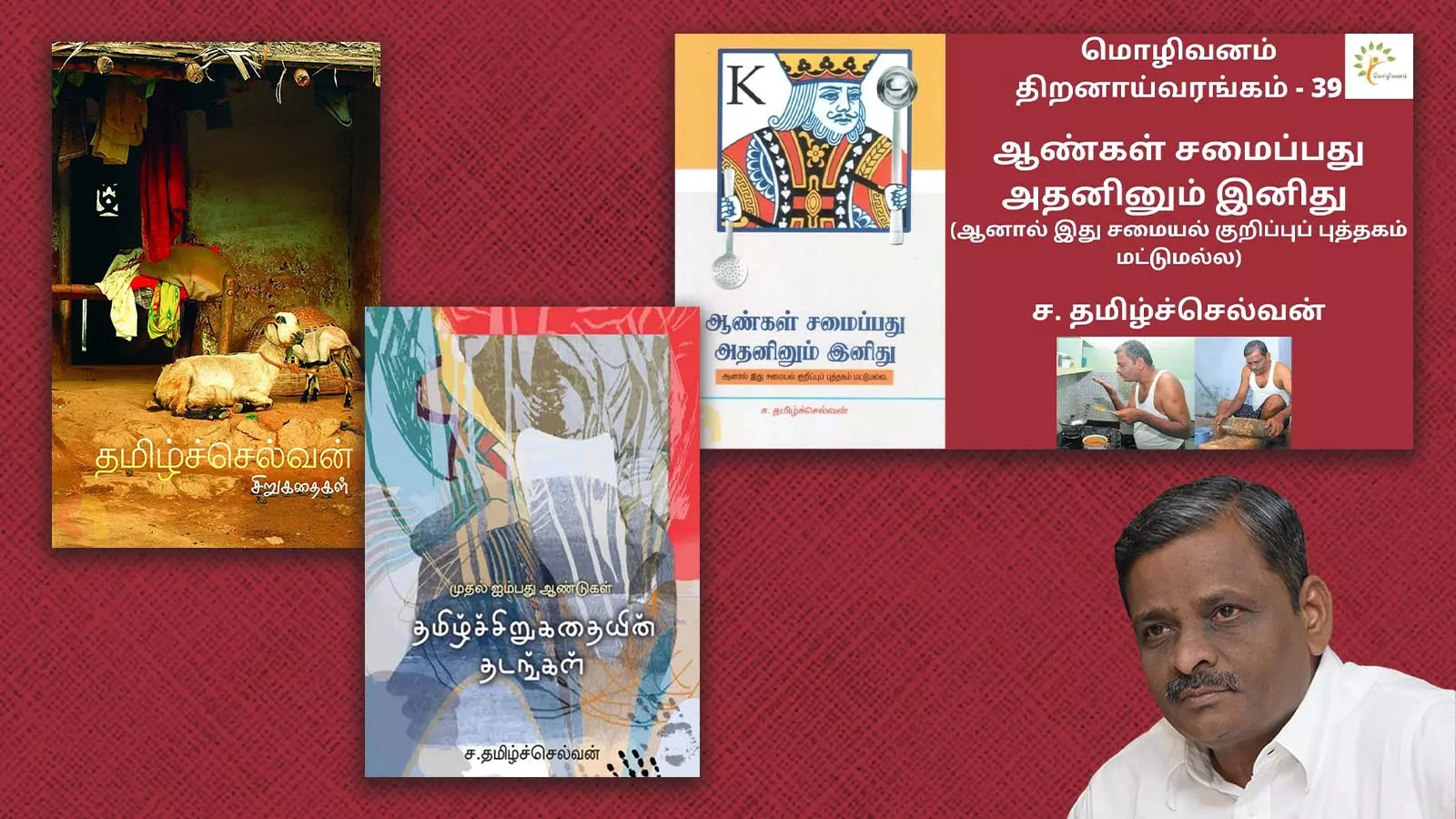
Tamilselvan, the former president of the Tamil Nadu Progressive Writers and Artistes Association, won the Sahitya Akademi Award in the literary criticism category for his seminal work, Tamizh Sirugathaiyin Thadangal.
The book is a comprehensive research project tracking the evolution of the Tamil short story through extensive reading and reseach on stories and formats, analysing socio-political narratives, and the shifting identities of authors over decades. His stories chronicled rural life, social and gender inequalities, and the social transformations as seen through the lens of Communist movements . He also explored why and how men took equal participation in cooking and the upbringing of their families.
Here are excerpts from the interview:
What is your view on the delay in announcing the Sahitya Akademi awards?
The three-month delay is not just an administrative lapse. It reflects a larger attempt to undermine the autonomy of independent cultural institutions. There is a political agenda behind such actions, and it is not limited to one institution. In the long run, this will create an atmosphere of self-censorship among writers. Writers may begin to avoid certain themes or opinions. This is dangerous because it gradually erodes freedom of expression.
Also read: How Imayam redefined realism in Tamil literature and proved his critics wrong
Three months ago, I received a call informing me that I had been selected for the award, and I was asked not to reveal the news until the official announcement. However, within a few hours, I received another call stating that the announcement had been put on hold. The organisers told me that the list was taken by the Union culture ministry at the last minute for some changes. That is when I realised there was interference.
This kind of interference is not limited to the Sahitya Akademi. It is also evident in institutions like the Sangeet Natak Akademi. Many independent bodies are being influenced or controlled by the government. I believe I may be among the last authors to have been selected by the Akademi exercising its full autonomy. The future of independent institutions like the Sahitya Akademi is under serious pressure.
Films are highly censored these days. Artistic work cannot flourish in a censored environment. Creativity is under threat in this country.
Tamizh Sirugathaiyin Thadangal was selected for the Sahitya Akademi Award 2025 in the literary criticism category. How long did it take you to write it, and how did you immerse yourself in such a voluminous work?
I consider myself more a passionate reader than a writer. I spent nearly 18 hours a day for almost two years reading short stories by various authors. I did not approach this work by reading just a few stories by each author. Instead, I made sure to read almost all their short stories before attempting to analyse their perspective. I also researched the support systems around each author, the significant social changes during their lifetime, and how they expressed their opinions through their characters.
The process was time-consuming, but deeply engaging. Though these stories are works of fiction, they often reveal the true face of the author and the socio-political climate during his time. At times, I felt as if I was seeing the author’s reflection through a mirror, the mirror being their own writing.
You are writing for the last fifty years. What is your view on the current social and literary climate in India?
The current climate supports pro-Hindutva ideas.
Naturally, literature reflecting that will grow. Minority voices are not finding enough space because the broader social climate does not support them.
Also read: Padma Shri for ex-JNU VC Jagadesh Kumar reignites debate over his academic legacy
At the same time, we are finding literature focussed on women’s oppression, caste oppression, and child-centric perspectives, and LGBTQ+ voices are also emerging. These are positive changes. But the intensity needed for real transformation has not yet reached its peak. We can see the emergence of exclusive publications run by women, Dalits, transgender people, and LGBTQ+ communities.
At the national level, I believe the Tamil literary landscape provides recognition and space for these sections to grow. In Marathi literature, caste-oppression narratives have perhaps strengthened more. But across India, these voices are still feeble. Earlier, these voices were unheard; now, there is at least some noise.
You mentioned a pro-Hindutva cultural climate in the country being reflected in the literary world. How do you interpret this?
Literature often reflects the dominant social climate. At present, such a climate exists in India, and naturally, it produces certain kinds of writing. However, this also calls for resistance and counter-voices. I believe that the long-term lethargy of secular forces has contributed to the excessive growth of right-wing literature.
The problem with this growth is that it can widen the gaps between people. It affects inclusivity and increases resistance to building an inclusive society. Literature plays a crucial role in helping people understand different cultures, religions, struggles, livelihoods, and processes of empowerment.
Right-wing literature, in many cases, promotes apolitical narratives that may divert readers from engaging critically as thinkers. I also believe there is a thin line between fiction and non-fiction. When we shrink creative and critical spaces and allow apolitical literature to dominate, it risks alienating marginalised communities from the mainstream.
Ideally, literature should bridge gaps, not widen them. If you don’t make the reader question and think clearly, you fail as a writer. We lack public platforms where people can assemble, discuss, raise questions, discuss criticism, and understand inclusivity. Now, that space is shrinking.
Do you think digital platforms, including social media, have created more opportunities for writers? What is your view on AI in creative fields?
Yes, they have made publishing much easier. However, the reach and influence of mainstream media are still far greater.
Today, writers have more choices, and the number of publishing houses has increased. That said, it is often when autonomous bodies like the Sahitya Akademi and other independent literary circles recognise and promote a literary work, with social concern and cause. Their recogintion would enable the reach to a larger sections of society.
Digital platforms have certainly expanded the space for writers, but it is equally important to ensure that literature continues to be celebrated in the mainstream. AI is a tool. It can assist in certain aspects of creative work, but it cannot replace original human creativity. The depth of lived experience cannot be replicated by machines.
I strongly believe despite AI penetration, original literature always has premium space for itself.