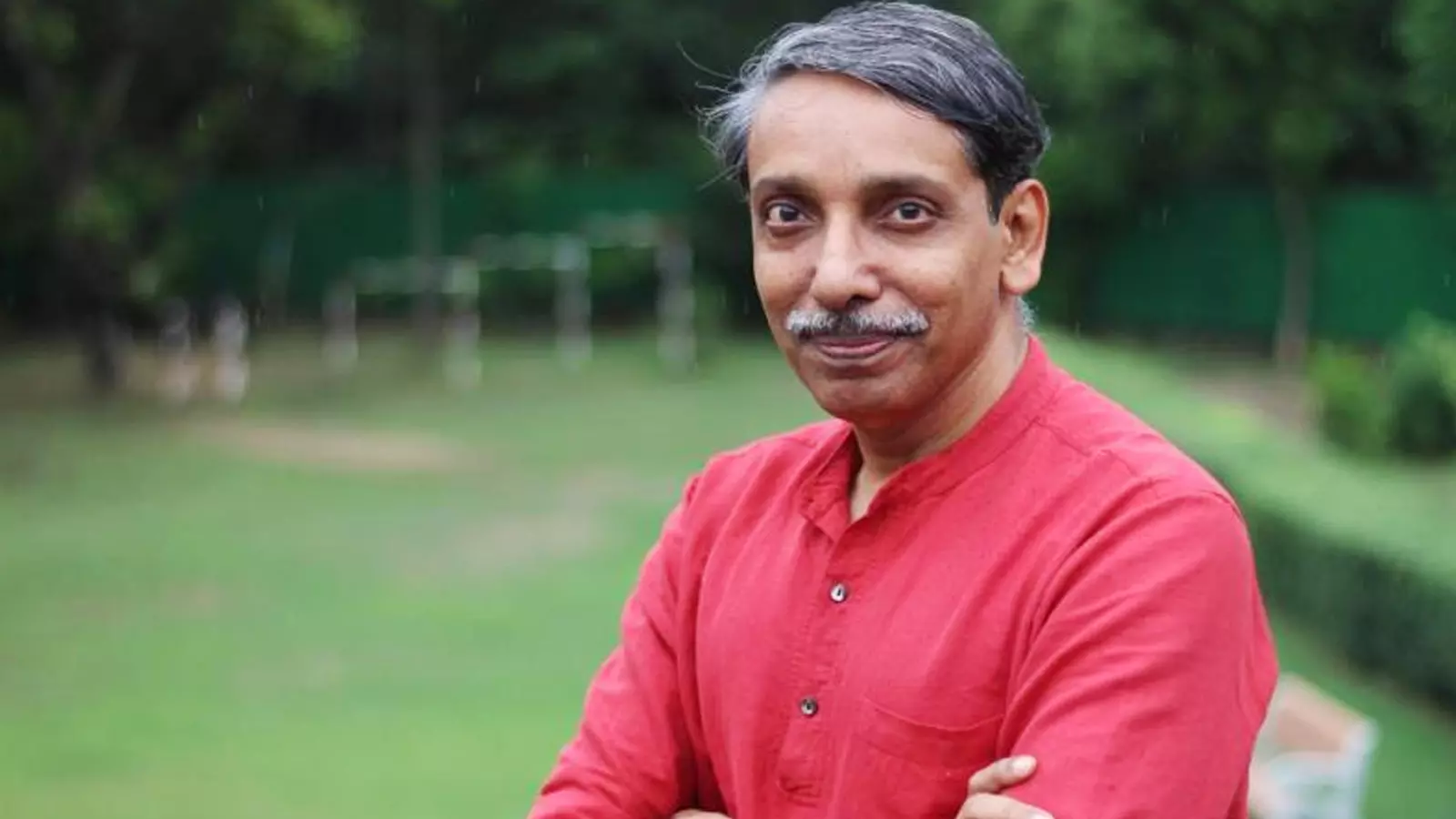
Padma Shri for ex-JNU VC Jagadesh Kumar reignites debate over his academic legacy
Former JNU VC and UGC chief's recognition in 'literature and education' category draws sharp reactions over his record on campus dissent and reforms

The Padma Shri, one of India’s highest civilian awards, for “literature and education” has been bestowed upon an administrator whose legacy, for many within the academic community, is inseparable from the systematic disciplining of campuses and the remaking of public universities into sites of managed compliance rather than critical inquiry.
A polarising figure
Mamidala Jagadesh Kumar, who served as the vice-chancellor of Jawaharlal Nehru University (JNU) from 2016 to 2022 and as University Grants Commission (UGC) chairperson from 2022 to 2025, has remained a deeply polarising figure in Indian higher education. For a large section of students and teachers, his career has come to symbolise a decisive shift in how public universities are governed: away from deliberation and dissent, and towards surveillance, discipline and executive control.
Also Read: Decade after Rohith Vemula's death, students flag systemic caste bias on campuses
His tenure at JNU began in January 2016 and almost immediately coincided with one of the most consequential moments in the university’s history. In February that year, following a student event organised on the anniversary of the hanging of Afzal Guru, convicted in the Parliament attack case, and amid allegations of “seditious” slogans being raised, Kumar allowed the Delhi Police to enter the campus and arrest three students, an unprecedented move that was widely condemned by faculty and students as a breach of institutional autonomy and a break from JNU’s long-standing academic and democratic traditions.
Sustained campus confrontation
What followed were six years of near-continuous confrontation. Students’ and teachers’ organisations repeatedly accused the administration under Kumar of criminalising dissent and replacing dialogue with disciplinary action. Protests erupted over punitive measures against students, changes to admission policies, attendance rules, hostel regulations and fee structures. Administrative buildings were repeatedly barricaded during agitations, while disciplinary proceedings against protesting students became routine flashpoints.
In response, Kumar disallowed protests within 100 metres of the administrative block, another first, going so far as to install iron grills to prevent students from agitating. A major flashpoint emerged in October-November 2018, when the administration announced steep hostel fee hikes and changes to hostel rules. The decision triggered weeks of protests, including marches to Parliament and the then HRD Ministry, repeated barricading of administrative buildings, and clashes with police outside the campus.
It was also during his tenure that one of the most violent episodes in JNU’s history unfolded. In January 2020, a mob of around 50 masked people entered the campus and went on a rampage, gravely injuring students and teachers, including then JNU Students’ Union (JNUSU) president Aishe Ghosh, whose bleeding head made headlines across the country.
The university administration, led by Kumar, responded by lodging an FIR against those who had been assaulted, including Ghosh. This was followed by another prolonged confrontation from January to February 2020, when students and teachers protested changes to JNU’s admission policy — including viva weightage and intake cuts — which they argued would exclude marginalised students.
Statutory forums bypassed
Elected bodies such as the JNUSU and the JNU Teachers’ Association (JNUTA) alleged that statutory forums were increasingly bypassed, with decisions pushed through via executive orders and circulars. Faculty members argued that the university’s consultative culture — central to JNU’s academic identity — was steadily hollowed out. For many on campus, these years marked a transformation of the university from a site of intellectual contestation into one governed through procedure, policing and compliance.
Also Read: Padma awards 2026: Dharmendra, Rohit Sharma, Mammootty among 131 named
Kumar’s tenure was also marked by allegations that established procedures for constituting selection committees in faculty appointments were routinely bypassed, casting doubts over the integrity of recruitment processes on campus. The JNUTA warned that such deviations eroded transparency, weakened subject expertise in selection panels, and created space for arbitrary or pre-determined appointments, raising deeper concerns about the dismantling of institutional safeguards and the long-term damage to academic standards and autonomy in faculty recruitment.
Critics denounce Padma award
Kumar consistently rejected these charges, maintaining that his actions were guided by UGC regulations, court orders and statutory requirements, and that discipline and uniform enforcement of rules were necessary to restore “normalcy”.
For critics, however, the Padma award represents not an aberration but a culmination.
“Any person who has been awarded, whether scientists or policymakers, has been recognised because they have contributed something. The only contribution of Mamidala Jagadesh Kumar is destruction. What the government is doing is setting up a template: if you destroy institutions in the way we want, you will be rewarded with a state award. This is a dangerous precedent,” said former JNUSU president N Sai Balaji.
“Second, this is the same Mamidala Jagadesh Kumar who, for the first time in independent India’s history, forced the police to file a sedition case against his own students on the basis of doctored evidence. So, the moment you give him an award, you are effectively telling vice-chancellors: go ahead, manufacture, fabricate and doctor evidence, file criminal cases against students, and score petty political points… He is not an educationist. He is a destroyer-in-chief. And by giving a Padma award to the destroyer-in-chief of higher education, the government is saying clearly that it is not for education,” he added.
From JNU to UGC
When Kumar moved to the UGC in 2022, this model of governance was scaled up to the national level, opponents argue. As the chairperson of India’s apex higher-education regulator, he oversaw the rapid implementation of the National Education Policy (NEP) 2020, pushing through structural reforms that triggered protests across campuses.
The most contentious of these was the rollout of the Common University Entrance Test (CUET) for undergraduate and postgraduate admissions. While framed by the UGC as a move towards equity and transparency, CUET was marred by repeated technical failures, shifting schedules and widespread student distress. Teachers’ bodies warned that the centralised testing regime undermined universities’ autonomy and flattened diverse academic traditions into a standardised framework.
Under Kumar’s leadership, the UGC also advanced the four-year undergraduate programme with multiple exit options, the Academic Bank of Credits, expanded online and distance education norms, and revised regulations governing faculty recruitment and promotion. With the four-year programme implemented in Delhi University, teachers say it has caused large-scale havoc.
Basis of award questioned
Former JNUTA president Ayesha Kidwai questioned the very basis of the award.
“Prof. Kumar has been given the Padma Shri in the category of education and literature. It’s very unlikely that he has been given the award for education, as he has had very little to do with education in the last 10 years, in his stints as JNU VC and after that as UGC chairperson. A Padma Shri given to the man whose career of the last 10 years has ensured the criminalisation of questioning, of breaking every educational programme run in this country by the disastrous Common Entrance Tests, of enshrining push-out and seat-cuts from every level of the higher education system, and of wresting from the universities their rights to academic autonomy and academic freedom, this award cannot be a recognition of his contributions to education,” she said.
Also Read: Professional milestones to personal moments — what Umar and Sharjeel have lost since 2020 arrest
“But it cannot be for literature either, as the dystopia that his tenure ushered in first into JNU and then the UGC in the last year is neither well-written nor dedicated to realising a new future. It is a shame that he has been rewarded by the State; it signifies that the destruction he has wreaked has its approval,” she added.
UGC autonomy under scrutiny
For teachers’ organisations, the Padma award also signals the political meaning of Kumar’s tenure at the UGC.
“As UGC chairperson, it was clear there was no autonomy. The government has not withdrawn the VBSA Bill; it is still pending and has now reportedly been sent to a Joint Parliamentary Committee. Even so, the National Education Policy was implemented through UGC regulations without any debate. This only shows how completely the autonomy of the UGC was surrendered. In my understanding, this award is recognition of that surrender, of how institutions were handed over to the government,” said Abha Dev Habib, Secretary of the Democratic Teachers’ Federation.
M Jagadesh Kumar did not respond to queries from The Federal.