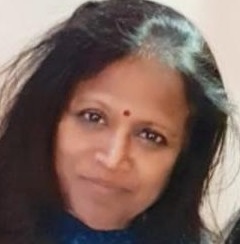
From her entry into LeT's Muridke complex after 26/11 to her reporting on Kashmir, Operation Bluestar and Babri Masjid demolition, Harinder Baweja talks about conflict journalism and what still keeps the nation on edge

When reporters in New Delhi were hotfooting to Mumbai to cover the 26/11 bloody strike on the city by 10 gun-toting terrorists in 2008, one journalist from the capital headed to Pakistan instead. The journalist, Harinder Baweja, had one aim: to bridge the gates of Muridke — the town associated with Hafiz Saeed-led terror outfit in Pakistan — that most Indians are familiar with after Operation Sindoor. She felt the real story was at Muridke, after the sole surviving Pakistani terrorist, Ajmal Kasab, who was captured in the Mumbai mayhem, was spilling the beans that he had received his initial training in the place, known worldwide as the Lashkar-e-Taiba (LeT) headquarters.
It looked practically impossible. Baweja, who has chronicled her experiences reporting on volatile conflict zones in ‘They Will Shoot You Madam:’ My Life Through Conflict (Roli Books), tells The Federal: “Who would want an Indian journalist to be snooping on Pakistani soil, especially, when Kasab was giving details to intelligence agencies? But I saw on television that the LeT communications chief was escorting a group of international journalists to Muridke, as part of a propaganda exercise, portraying it as nothing but a charitable organisation running hospitals and schools.”
Reporting from the conflict zones
Terror groups also need publicity, points out Baweja dryly. Defying all the odds, Baweja landed in Pakistan and with the help of a former Pakistani minister, she was soon ushered into the sprawling Lashkar-e-Taiba complex. During her conducted tour, Hafiz Saeed’s son-in-law, Khalid Walid, was firmly by her side.
Clearly, Baweja did not come across firing ranges or target shooting in progress, as Pakistan was at pains to dispel the notion that it was nurturing a terrorist camp. The tour was “surreal” she recalls, as she was shepherded past a hostel, schools, mosque and a hospital with empty beds. The conversations with her hosts appeared unreal as they discussed Kasab, and terrorism.
In the book, she brings in how she was a “witness to how non-state actors like Walid work and how valuable they are to their masters in the ISI and the army”. The two are intertwined, she says, pointing out that she could not have entered Muridke without Walid. It was clear who was calling the shots at Muridke, she writes.
Also read: How India’s linguistic federalism shaped the conflict over a national language
Besides this detailed narration of her interactions with a global terror network, the book contains her “collection of reportage from the battlefields of Punjab to Kashmir” and to Afghanistan as well, where she writes about her encounters with the Taliban. But this book goes beyond chronicling contemporary history.
It not only sets the facts right — for instance, when, as a reporter with India Today, she went to Kashmir to investigate whether temples had indeed been destroyed after the Babri Masjid demolition, as claimed by the BJP — it also offers her insight into these troubled zones; bristles with insider stories from intelligence agencies; sheds light on the political machinations that often add “more layers to conflicts”; and includes interviews with both state and non-state actors.
It features a candid interview she conducted for India Today with the then-fugitive underworld don Chhota Rajan in Kuala Lumpur, whom she describes as an “amiable person,” in a chapter that reveals how Indian intelligence agencies play one don against another; and another revealing conversation with separatist leader and former militant Yasin Malik.
Baweja wasn’t seeking the ‘echoes of gunfire’, she insists. Instead, her coverage attempts to tell the stories of the “bruised part of the population, the civilians who bear the brunt of violence”. She adds: “It’s their lives that get upended. I have also examined why conflict takes root, the minds of militants, and what makes them pick up the gun.”
On the angst-ridden Kashmir
Her chapters on trouble-torn Kashmir, which she has covered since the Rubaiya Sayeed kidnapping in 1989, are among the most engrossing in the book. A thread of sadness runs through the narration like a mournful beat in the background, as she explains how the ‘crown on India’s head’ came to be treated like a “piece of real estate”. After staying close to Kashmir events for more than three and half decades, her book tries to pinpoint why violence continues in Kashmir and why communities continue to support a certain brand of militant ideology.
“When I interviewed the father of Burhan Wani (the leader of Hizbul Mujahideen, a militant organisation), my head was spinning. It seemed like he was holding a classroom on jihad. Though he lost two sons to violence, he continued to talk in that language. Interestingly, both his sons, including Burhan, made the switch from being normal students to militancy. The question then is: why were educated boys leaving the comfort of their classrooms to pick up the gun?” she asks.
In her view, young people, especially, two generations of Kashmiris, have grown up thinking violence is normal. “They have grown up in a dark environment of death and despair, where they see no light. They only hear about violence and injustice from their parents and grandparents, and they live in a situation where they are even denied their basic dignity,” she says. When historian Ramachandra Guha asked her at a talk on her book in Bengaluru what the call to ‘Azaadi (freedom)’ in Kashmir means, she replied, “It is a sentiment, a call for liberation from oppression and human rights violations.
Also read: What lies ahead for Nepal and Sushila Karki’s interim govt after the Gen Z uprising
Baweja recalls that in the 1990s, she remembers people stepping out only after tucking their addresses in their pockets because they never knew if they would return home alive. “They had to ensure their body came back to the right home. Imagine the psychology of such a community? They are tired of being subjected to curfews, deaths in families, and disappearing sons,” she says. Baweja also refers to the unbridled competition between the BSF and other armed security forces to catch terrorists in the valley, which adds to the complexity. She describes how terrorists who surrender were treated and how the troops often operate on the premise that Kashmiris are anti-Indian.
No healing touch by Delhi
Political outreach in Kashmir by several prime ministers has just remained a slogan, rues Baweja. “PV Narsimha Rao said, ‘anything short of azaadi’, Deve Gowda said ‘sky is the limit’, while PM Modi, after the 2019 abrogation of Article 370 at an all-party meet, spoke of ‘Dil ke Duri’, and the need to reduce the distance between Delhi and Srinagar in the hearts of people. But see what’s happening in Kashmir. The houses of anyone suspected of being remotely connected to militancy are strapped with explosives and blasted. What we are seeing today is the strong arm of the government, not a healing touch,” stresses Baweja.
Harinder Baweja in conversation with Ramachandra Guha at an event in Bengaluru recently.
In her book, she writes how, after the Pahalgam attack, when Kashmiris took to the streets to protest, Delhi paid scant attention to the “once-in-a-lifetime” opportunity to reach out to the alienated population. “That has been Kashmir’s greatest tragedy, the government has missed one opportunity after another,” she reiterates.
“I’ve covered every twist and turn in Kashmir since 1989. Never in my wildest dreams did I think I would see Kashmiris take out a tiranga yatra to protest against the attack on innocent Indian tourists. It hit Kashmiris hard to see innocent tourists sent back in coffins, and they made their displeasure known. The saddest thing for me was when one of the widows, Himanshi Narwal, got trolled for speaking up to say, ‘Don’t demonise the Kashmiris and Muslims; they are the ones who helped us, who saved our lives’. What can be sadder than that?”
She quotes former Supreme Court judge, Justice Sanjay Kishan Lal, who also deliberated in the case involving the abrogation of article 370, in her book. He says that first there should be “acknowledgement of the acts of violation done by the state and its actors” for wounds to heal. “Sadly, the acts of violations continue today despite the response of the ordinary Kashmiri after Pahalgam,” Baweja adds.
In her book, she also warns that Operation Sindoor can power off the terror that Pakistan exports into India. To which, she reacts, “India has to be constantly on the alert. The one thing I've learned about Kashmir is that the pendulum can swing without notice. The valley swings between hope and hopelessness. Pahalgam happened, honestly, because of complacency and with the government buying into its own narrative of a Naya Kashmir, where everything is normal.”
On wounds that don’t heal
Being a Sikh herself, Baweja’s first conflict assignment — the 1984 Operation Bluestar — must have been close to her heart. But having grown up as a “fauji kid” in Air Force cantonments, she shares that she grew up in a “pluralistic, secular-centric” environment. In the book, she talks about the rise of the Sikh militant figure Jarnail Singh Bhindranwale, and how Machiavellian machinations helped him grow more powerful, adding another layer to the conflict.
“Bhindranwale was allowed to become what he became because the Congress was using him to curtail the power of the Akali Dal. What I found fascinating, which was revealed to me by Captain Amarinder Singh (former Punjab chief minister), is that Mrs Gandhi asked him to set up a meeting between Bhindranwale and Rajiv Gandhi.” She explains how the two meetings were fixed but they were both aborted at the last minute.
“Mrs Gandhi was afraid it may be an ambush and she was scared that she would lose her second son as well. This is all new information that has come to light,” claims Baweja. One of the few journalists who went into the Golden Temple after Operation Bluestar, she remembers seeing women “weeping inconsolably, caressing the temple walls and putting pieces of debris into their dupattas to carry away as mementos”.
Also read: The Eleventh Hour review: Rushdie returns to peak form with tales of decline and death
The anti-Sikh riots that followed after Mrs Gandhi’s assassination were painful for Baweja. “Three thousand Sikhs were killed under the nose of the government in the capital. It’s a very, very deep wound and it affected the Sikh psyche,” she adds. “For my father, an Air Force officer, his uniform did not matter on that day. He had to cross the AIIMS, where Mrs Gandhi’s body was lying, to return home from office. Delhi’s skyline was billowing with smoke. I remember my father arriving home quaking with fear and he had to take off his turban to wear a helmet, to reach home safely. That wound did not heal for my father, and it has not healed for the community even today,” she says.
She gives two examples to drive home this point: Mrs Gandhi’s assassin Beant Singh’s son, Sarabjit Singh Khalsa, is a Member of Parliament today, after winning the Faridkot seat in Punjab in the 2024 Lok Sabha elections, and secondly, the attack on Lieutenant General Kuldip Singh Brar in London years after the operation in 2012. Brar was the one who led the troops during Operation Blue Star. She says, “While covering conflicts, you get to the underbelly of India’s fault lines. One of the lessons I learnt is that the embers of violence never die. They become a part of the subconscious of a community. They lie there and are always easy to stoke.”
On the new fault lines
In her book, Baweja explores the new fault lines in India’s socio-political fabric as well, drawing on her extensive coverage of the Babri Masjid demolition and the subsequent construction of the Ram Mandir. “Unfortunately, this new fault line is adding to the many fractures in the nation. Electoral strategies seem to be at the core, driven by the belief that the deeper the divide, the longer you will rule,” Baweja says in a dejected tone.
“In my book, I talk about how five Muslim intellectuals, out of deep despair, sought a meeting with RSS chief Mohan Bhagwat. I believe we need more such dialogues, but will such conversations happen that is a big question,” she points out.
Undeniably, journalism has changed since the time she entered the profession, she says. “Earlier, we were trained to question, to speak truth to power, seek accountability from the highest echelons of power — all of that has gone. The media is willing to kneel in the interest of business, but what is scary are ‘jihadi journalists’. It is dark times,” she admits. She ends her note with a hopeful note, turning to a Mohammed Rafi’s song for solace.