Scene-stealer, or chor? Divya Dutta on her on-screen face-offs with Manoj Bajpayee, and more
The actor refusing to be boxed in, and why women actors are rarely allowed the “range” that men are praised for

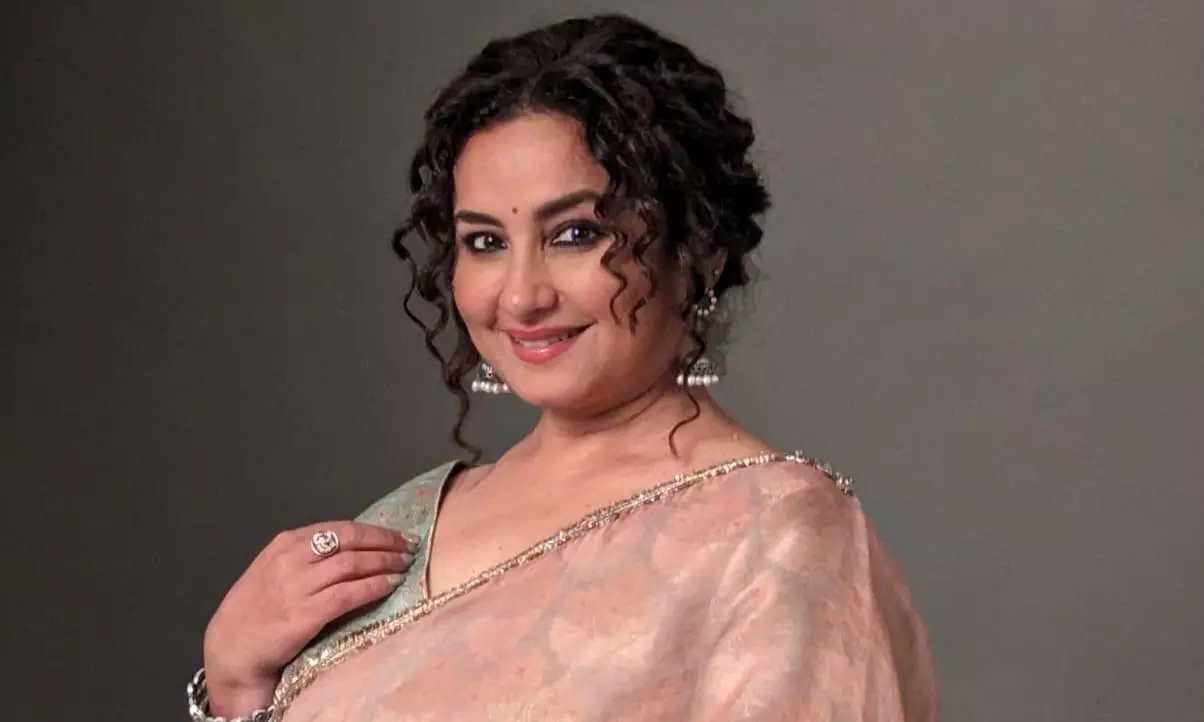
Actor Divya Dutta's filmography is marked by ambiguous and complex women who cannot be judged through a particular lens. File photo: X/@divyadutta25
Actor Manoj Bajpayee has called co-actor Divya Dutta a chor (thief) for being a scene-stealer every time they have collaborated. The two actors come together in Neeraj Pandey’s procedural nail-biter Gajab Raat, just weeks after their last screen outing, the social thriller Last Man in the Tower.
Sudhir Mishra’s next, Gandhi and My Mother, completes the hat-trick. Ironically, though Divya and Manoj have been part of four films in the past – Veer-Zaara, Special 26, LOC and Traffic – they had never shared the same frame until now.
“I totally love the man for who he is and for what he is. It is his generosity and it’s just so beautiful to hear that from someone as super talented as he is. Apart from that, his humility and being the grounded person that he is, it is a rare combination. The wait has paid its dividends,” says Divya Dutta.
A different equation
From Sangeeta, a middle-aged woman whose instinct for survival becomes entangled with greed in Last Man in the Tower, an adaptation of Arvind Adiga’s bestseller of the same name, she now steps in as Sunita Chaudhury, a cold, calculated politician involved in an international conspiracy. Does she seem to have made a habit of playing characters who are constantly pushing back against Manoj Bajpayee’s on-screen characters?
Also read: Marital rape: Why law in India doesn’t criminalise it despite constitutional guarantees
“This has actually become a joke too amongst us. But the fact is each of these roles is different and so are our interactions. I am enjoying this space because we are both in a different box, and each time I’m in a different box in each film, it doesn’t look like they are again in a film together. These moments have been magical. He is effortless and, more than that, he is secure in space, which is very rare in these times.”
Beyond Bajpayee’s onscreen charisma, Divya has discovered another talent of his: cooking.
“He cooks for us all, so one moment he is feeding you what he has made that day and the next moment he transforms into the part, and you don’t see Manoj because he has become the part with such efficiency and you have no choice but to slip into yours and absorb that moment. What I enjoy most are the improvisations and the synergy until it’s a cut and then you are back to being Manoj and Divya.”
Owning her characters
Gajab Raat also marks the fourth collaboration between Divya and Neeraj Pandey after Special 26, Special Ops and Sikander Ka Muqaddar. Her Sunita in Gajab Raat is distinct from her turn as Iravati, a woman in politics navigating a male domain in Mahasabha. And with Delhi playing a key character, did that add to the dynamics too?
Also read: Last Man in Tower review: Manoj Bajpayee gives a terrific performance in film that needed more rage
“I have never seen a portrayal like Sunita. Look at her look and stance, it is very different from Mahasabha. These are two entirely different characters. But yes, Delhi does feel like the centre of everything, and has a pulsating power which rubs on to you. But Delhi is personal for me because I’ve lived there and that’s where my beginnings were, so the euphoria lent a spirited feel. Neither did I have any references nor take any, because I am not that kind of a person. Taking references only makes things a mess. I belong to the project, and make it a point to own that world, and this was something very different from what I had ever done.”
Trusting the director
Sharing an anecdote about when she first worked with Neeraj Pandey, she recalls having questioned him non-stop and his response being just to enjoy and see what happens. It was the clarity and assurance that instilled confidence in her.
“Neeraj Pandey is clear with his vision, with what he wants in his character, the pacing and execution. Ritesh Shah, the director, too, knew exactly what they wanted from the physicality and emotional graph of the character. Adding to it was the way it was shot, there is so much power in the pacing. It has now reached a point that I just give my dates to Neeraj, and then enter the set waiting for every scene to unravel, not just as an actor or the role you’re portraying, but also as an audience, it is all about assimilating.”
Beyond labels
Her filmography is marked by ambiguous and complex women who cannot be judged through a particular lens. In the 2017 thriller Irada, which won a National Film Award, she brought moral complexity to a woman caught between duty and conscience. In Dhaakad (2022), she played a ruthless crime lord.
More recently, in the 2026 series Chiraiya, which confronts the issue of marital rape, she played a middle-aged woman who breaks her silence about the crimes within her own home. Divya says these are the stories and narratives that seek her rather than the other way round. However, it wasn’t so when she made her debut in 1994, starring in mainstream potboilers such as Ishq Mein Jeena Ishq Mein Marna and Veergati.
Also read: How team of web-series The Revolutionaries is widening the frame on India's freedom narrative
“I could have taken up these challenges even earlier. It just didn’t come. But I think one has to wait and be patient, which is a virtue every actor needs to have in this industry, which wasn’t mine either. But you’ve got to be patient, especially when you’re crazily passionate about something, and I did, and am glad it’s paid off nicely and beautifully. The roles are coming my way, layered and with lots of complexities. I don’t get labelled as a particular kind of actor either.
There was a label which I detested when I started, and I was very clear about that. Do not use any labels for me, because you never do that for male actors; rather, they define it as range and how they move between genres. But for females, they will see them as unidimensional: either she is a villain, or a comic or a particular kind… but I would want to do and play all of this; it is my choice. I don’t need to be boxed into something and told you belong here. I want the entire sky to be mine. And so it feels nice when people register it, acknowledge it, and compliment me that I have created a space beyond those labels.”
A moment in history
Her upcoming biographical drama Gandhi and My Mother marks her first collaboration with Sudhir Mishra. The film talks about personal stories shared by Mishra’s mother, who had interacted with Mahatma Gandhi as a child, as well as a 21-day chapter in Gandhiji’s life when he moved away from Delhi and embarked on a personal journey. Divya plays Dr Sushila Nayyar, physician to Gandhiji (Manoj Bajpayee), while veteran actor Waheeda Rehman plays Putli Bai, Gandhiji’s mother.
Also read: Akka review: Radhika Apte, Keerthy Suresh rule the screen, but series falls short
“I would say that film is an honour to just be a part of. It is one of those films you just have to be a part of. To be directed by Sudhir for the first time, he is the most improvising director and that’s the fun of it. To share screen space with Waheeda ji after Delhi-6, and just to see her perform, her zest and the sheer focus. I love and admire her, and there is Manoj. Also, this character, a woman who hasn’t been spoken about much in history, but when you do read it, she is a very integral part of the entire story. I could actually feel the moments of history while portraying this role, and that says a lot. It wasn’t acting at all, it was feeling those times.”
Her wishlist
Is there a part Divya would now want to sink her teeth into? She reminds one that she has never played a cop, and knows the kind she wants to play. “I love Delhi Crime and Kohrra. I think the women in these shows have gravitas, layers and vulnerability, which is so wholesome. It would be lovely to explore these shades.”