Akka review: Radhika Apte, Keerthy Suresh rule the screen, but series falls short
The leading ladies bring force to Netflix’s tale of women-ruled kingdom, but series settles for a gender-swapped gangster drama instead of challenging the genre

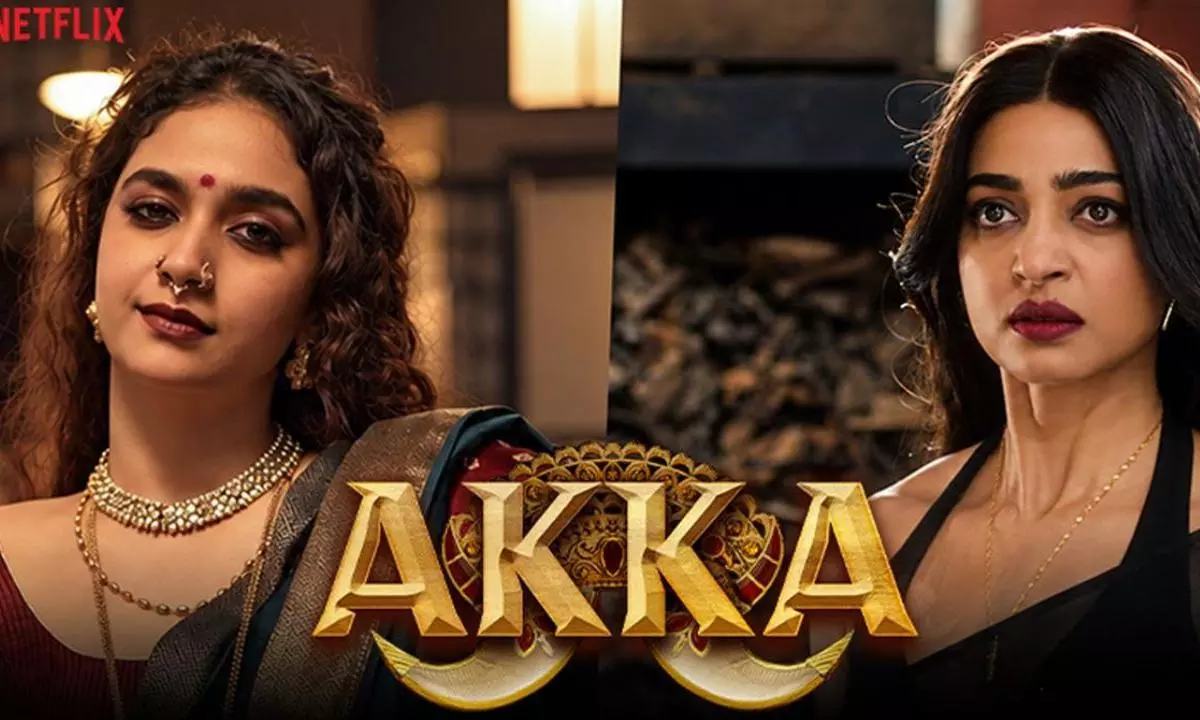
Despite its intriguing premise and strong performances by Keerthy Suresh and Radhika Apte, the series reproduces the very gangster conventions it could have reimagined.
Indian streaming turns ten this year, and Akka is what Netflix has to show for it. The platform introduced itself to the country with Anurag Kashyap and Vikramaditya Motwane’s Sacred Games, a series with a worldview and the nerve to be bleak. Now we get a Netflix show set in Pernuru, a fictional kingdom ruled by women where an outsider arrives and threatens the peace. It could have been a chance to rethink the gangster genre. But Akka is happy to imagine a female version of it, with the same swagger and the same rituals of loyalty and betrayal, only the pronouns changed, leaving the genre otherwise untouched.
That complacency says everything about the moment. Creators and platforms alike treat streaming as an afterthought. Netflix still hasn’t cracked the country, which has no single media appetite and no single disposable income, so its shows keep falling back on the grammar of television: the loud score, the lots of mutual glaring between characters, the plot that explains itself through expository dialogue, and a narrative content to drag itself to oblivion.
Also read: Dorothy Movie Review: Karthik Subbaraj’s latest is bold, beautiful & unprecedented in Tamil cinema
The idiot box is back, and this time we pay a monthly fee for it.
A promising premise
Written and directed by first-time filmmaker Dharmaraj Shetty and produced by Yash Raj Films, Akka is a five-episode series with a spectacular premise. Decades of matriarchal rule have turned the kingdom’s gender norms upside down. Men beg for marriage, and the women are content to let the birthrate fall. A society where women hold power, and where that power threatens the very idea of masculinity, is rich ground for a period drama about hierarchy, and the social, cultural, and moral codes that grow out of it should make for a thrilling investigation. (The show’s cinematographer, Pratik Shah, who has been accused of sexual misconduct, goes uncredited, although YRF reportedly called him back to reshoot scenes.)
But if the last decade of Indian streaming has taught us anything, it’s that premises that sound good on paper don’t necessarily translate into something as promising on screen. The missed opportunity is frustrating, but it is also routine by now.
Three houses, one rule
Akka, a disappointing and thoroughly misjudged series, hints at these contradictions and never develops them. It can’t decide whether it wants to focus on being a love story, a gangster epic, or a rivalry saga in which only a woman can defeat another woman. So, over five episodes, it drifts through the expected themes of love, sacrifice, betrayal, and duty.
Also read: Lust Stories 3 review: New Netflix anthology season offers pleasures, but not quite the satisfaction
The show opens in the 1980s, with frequent flashbacks to independent India. In the present day, Pernuru is split into three houses, each ruled by an “akka,” and the title passes from mother to daughter like an inheritance. The one rule is that no ‘akka’ may marry, since refusing marriage is what keeps them free, so men are good for reproduction and little else. Bhavani Akka (Keerthy Suresh), next in line to the Malamaar house after Muthakka (Tanvi Azmi), juggles business, tradition, and romance. Then Rudra (Radhika Apte) arrives from Bombay, the first worthy opponent the kingdom has faced, and turns out to share a family tie with the ‘akkas’. These women are ruthless, and they don’t forgive. What follows is a string of fights and killings, mounted with no thought, intrigue, or energy.
Performances undermined
Suresh is a commanding presence as Bhavani, and a rare, surprising casting choice that works. She plays wonderfully against Apte, whose Rudra is unhinged and sinister in equal measure, and the two make the best case for sticking with the show. It is disappointing, then, to watch both hemmed in by a screenplay that burdens them with the clunkiest dialogue and staging that gives them little to work with.
The show lacks bite, and there may be a reason. Akka has reportedly been ready since 2024 and has undergone several reshoots, with gory sequences cut to make it more palatable for audiences as the makers felt that the brutality could be toned down. That is a strange instinct for a series that puts ruthless women at its centre. If you build a kingdom of killers, you have to let them kill. Akka wants the image of violent women and flinches from the universe that comes with it.
A disjointed ending
The troubles behind the production show in the pacing and the edit. The series feels disjointed, as if sequences were added and subtracted as they pleased, with no thought for cohesion. The proof of the compromises is in the ending, where threads are resolved in a hurry, including what had begun to look like a searing commentary on upper-caste women oppressing lower-caste tribal women in the name of sisterhood. It was the show’s most interesting idea, and it gets tidied away.
Also read: Best of the Best review: Netflix dramedy channels Bollywood love, but misses the beat
Shetty leaves nothing memorable behind, joining the ranks of newcomers who end up as another name without a personality. This is a series with the personality of cardboard, and a writers’ room might be the place for YRF to start on its next outing.
In fact, midway through Akka, there is a scene where Bhavani asks Rudra, “Are you content with acting like a man in a man’s world?” I bring it up because the same could be said about what the show is content to ask of its women.