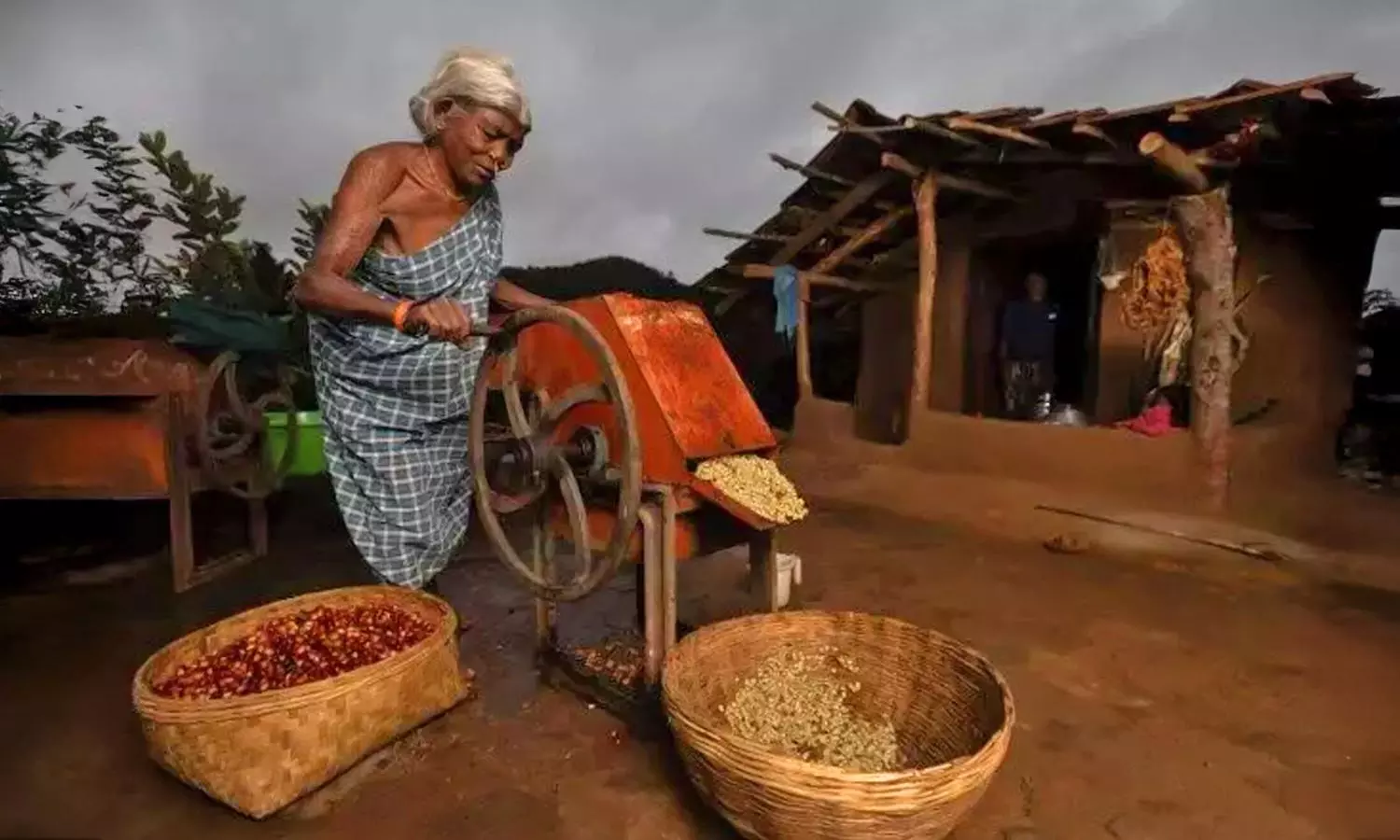
Araku is a significant coffee-producing region, with this year's crop standing at 18,000 tonnes, according to the Coffee Board of India.
Why Araku’s coffee farmers are bearing the brunt of the Iran-US-Israel war
As the war disrupts global shipping routes, demand collapses, prices fall, and tribal growers in Andhra Pradesh are left with unsold stock and mounting debt

The Iran-US war has found an unlikely casualty in the coffee plantations of Araku, in Andhra Pradesh's Alluri Sitarama Raju district. Demand for the region’s famed Arabica beans has fallen sharply, leading to stocks piling up and farmers' distress.
Araku is a significant coffee-producing region, with this year's crop standing at 18,000 tonnes, according to the Coffee Board of India. Around 90 per cent of the production, nearly 15,000 metric tonnes, is exported to Europe, the UAE, and other markets.
Shipping routes disrupted
The war has made the Strait of Hormuz and the Red Sea (Suez Canal) route too dangerous to use. Ships are now being rerouted around the Cape of Good Hope, adding three to four weeks to delivery times for European buyers. Freight costs have jumped fivefold, insurance premiums have surged, and crude oil prices have risen 28 per cent — with a barrel now touching USD 107. Foreign buyers, uncertain about delivery timelines, are holding back new orders.
Also read: Iran war puts USD 11.8 bn worth of India's farm exports at risk: GTRI
Exporter Ravi Kiran put it plainly, "It's not just the cost — containers have become impossible to find. A shipment to Europe that used to cost USD 2,000 now costs over USD 10,000. And because ships are going around Africa, it takes twice as long for containers to return."
Prices in freefall
Arabica prices have fallen 2.31 per cent in recent trading, while Robusta dropped 4.69 per cent. Global supply pressures are adding to the pain - Brazil is projected to produce a record 75.3 million bags, with world output potentially reaching 180 million bags.
Locally, farmer K Gopal said parchment coffee was fetching Rs 540 per kg in January-February, but by the first week of March, that had fallen to Rs 446.
"Now no one is buying even at Rs 400," he said. "They just say — war."
Also read: Iran conflict: Banarasi sarees, Agra leather and Bhadohi carpets, UP's export sector bleeds
Tribal farmer Simhachalam from Pachipenta, near the Araku valley, was blunt about what it means on the ground, "We sweated all year for a good harvest. When we finally brought it to market, they said 'war'. I can't see how I'll repay my debts."
Govt agencies halt purchases
Traders and middlemen who bought early are now sitting on unsold stock, waiting for prices to recover before buying more from farmers. Government agencies — the Girijan Cooperative Corporation (GCC) and the Integrated Tribal Development Agency (ITDA) — have also suspended purchases, leaving farmers with nowhere to turn. Farmers are now demanding that the GCC intervene immediately to buy up the surplus.
Traders and middlemen who bought early are now sitting on unsold stock, waiting for prices to recover before buying more from farmers.
Quality of beans at risk
Experts warn that prolonged storage could reduce moisture levels in the beans, diminishing their aroma, threatening the hard-won brand image of Araku coffee in international markets.
Coffee Board official Ramesh acknowledged that the war had dampened purchases, though he maintained that market fluctuations were normal and that local prices would recover when national market rates improved.
Also read: From weddings to exports: How West Asia crisis has shaken Karnataka economy
For now, Araku farmers, once proud of growing one of the world's most admired coffees, are trapped in a crisis that is entirely beyond their control, and one that may only resolve when the guns fall silent.(This article was originally published in The Federal Andhra Pradesh)