



From weddings to exports: How West Asia crisis has shaken Karnataka economy
Blockaded shipping routes and gas shortages hit 15,000 wedding halls and squeeze exporters, even as the state's IT sector remains cautiously optimistic

In a closely connected world, nothing goes untouched.
As the conflict between Israel-US and Iran continues in West Asia, the repercussions are only expanding across sectors, from formal to informal, adding to the people’s concerns and posing threats to day-to-day life.
Wedding events hit
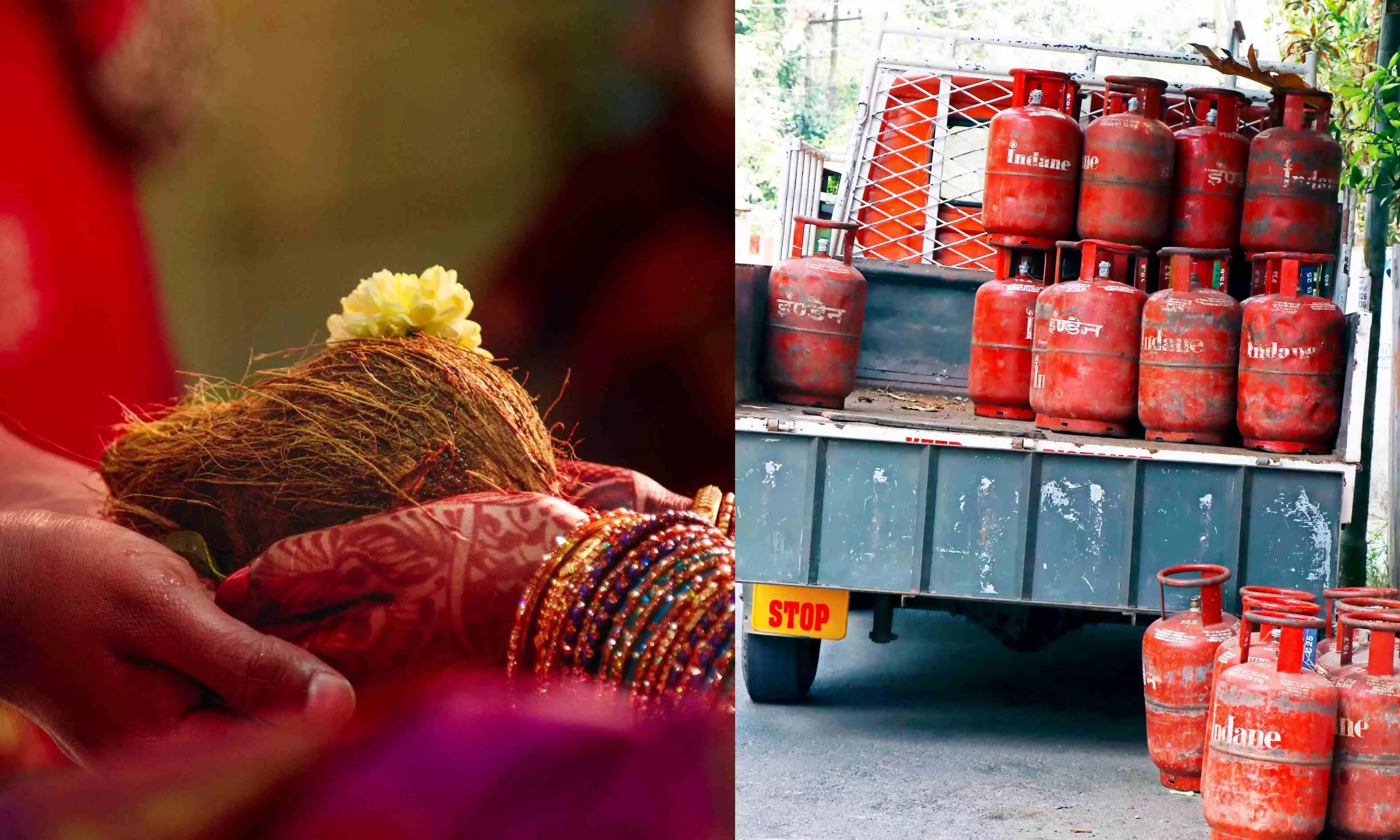
One of the major casualties of the war has been the supply of cooking gas. Iran’s decision to blockade the Strait of Hormuz, through which a large shipment of oil and natural gas to India takes place, has affected the supply of essential fuel in the Indian market, disrupting, among others, wedding ceremonies in Karnataka.
Also read: West Asia conflict has Karnataka’s garment, silk sectors rattled
Since January to July is a peak season for marriages in the state, fluctuation in the supply of gas cylinders has imperilled the catering business, just like the hospitality industry.
There are approximately 15,000 wedding halls in Karnataka and more than 1,000 wedding halls in Bengaluru city alone. Due to the lack of timely gas supply, many wedding halls have been forced to resort to wood-burning stoves or electric stoves.
Since wedding ceremonies are like economic chains involving many sectors, an LPG disruption is bound to produce a chain effect, hitting the buying of clothes, jewellery, food items, and gifts, among others. It also puts into danger the earning opportunities of staff members, such as cooks and cleaners.
For organisers, the current situation is also making the bills expensive due to increased prices. “Private agencies are taking advantage of this opportunity and selling cylinders at high prices,” Hanumaiah, a resident of the Ullal suburb of Bengaluru and owner of Shreyas Catering, told The Federal.
Also read: Telangana’s pharma giants prepare for massive hit amid West Asia crisis
“At least 8 to 12 cylinders are required to prepare food for a wedding of 500 people. A big wedding of 1,000 people may require more than 20 cylinders. Due to the shortage of cooking gas for the last two to three days, we are looking at alternative systems,” he said.
“Using steam boilers can reduce dependence on gas. However, most of the welfare halls do not have that system,” he said, adding that if the war situation continues, it will severely impact the catering industry.
Catering services become expensive
Due to the rise in cylinder prices, catering expenses have become a major headache for wedding planners. Catering contractors have hiked the prices on a per-plate or overall contract basis, making things dearer for families that selected wedding dates during this time. Menu cards are being reassessed to give prominence to dishes that require less time and energy to prepare. Desserts and special dishes are also being compromised upon.
Apprehension is also doing the rounds that an increase in fuel, such as petrol and diesel, would increase the cost of transporting vegetables, groceries and materials required for wedding events.
Experts split over IT sector impact
The Information Technology (IT) sector, one of the major economic engines of Karnataka and also India, is also facing the heat, besides those such as aerospace, engineering and food exports.
Karnataka exports IT products and services worth an estimated Rs 3 lakh crore annually to many countries, including Saudi Arabia, the UAE, and Qatar.
Also read: TN's export engine stalls as West Asia war chokes egg, knitwear commerce
Due to the war, there has been a disruption in the supply. If the war continues for a long time or spreads to more countries, the state's IT sector will suffer big losses and even see a loss of jobs, certain experts have expressed concern.
However, for some others, the situation is not that threatening at this moment.
Currently, there is not much export of software products to West Asia. If the war is prolonged, the industry will see huge losses, say officials of STPI (Software Technology Park of India) and Visvesvaraya Trade Promotion Centre (VTPC).
“Software is exported from Karnataka, but its quantity is low. Most of the technology and developed software are exported online. Semiconductors, chips and other IT-related products are being exported by air cargo,” B K Shivakumar, managing director of the VTPC, told The Federal.
Sharanu Mugali of Bengaluru-based Prem Computer Technologies said that the West Asian conflict has had little impact on the IT sector. According to him, India is exporting the technology that it has developed online.
IT entrepreneur Yathindranath Tarikere told this publication that the war is not affecting IT much, but if one includes research in the defence sector, the impact would be big.
Currently, Karnataka exports defence equipment, aerospace, engineering, heavy machinery, electronic goods, mobile devices, coffee, fruits and many other products to West Asian and European countries. However, software-related products were being sent through Dubai. They are being exported to the US through Frankfurt and Paris, Shivakumar said.
Exporters impacted by delays, rising costs
The war has also impacted India’s export traders. Since the war has forced companies to take longer routes, such as the Cape of Good Hope in Africa, it has not only made things more time-consuming but also more expensive.
While the transit time has increased by 15 to 20 days, shipping costs have grown by 40 to 60 per cent. This has reduced the profit margins of exporters.
Also read: How Iran conflict is devastating mango and banana farmers in Andhra
India is the world’s largest producer and exporter of chillies. There is a huge demand for the Byadgi chillies from Andhra Pradesh and Karnataka in West Asia.
Since the hospitality and food processing industries in Arab countries have seen a slump due to the war, it has affected the exports. Due to the delay in exports, the stock of chillies in local markets is increasing, and there is a fear that the farmers’ earnings will plummet.
Speaking to this publication, S R Patil, former president of the Byadgi Chilli Chamber of Commerce, Haveri, said that usually more than one and a half thousand tonnes of Byadgi chillies were exported per month. But due to shipping problems now, the export volume has been hit. Thousands of containers carrying Byadgi chillies are stuck there as the ships are stranded at sea.
The rental rates have skyrocketed.
“The exporters are facing financial problems as they are charging up to Rs 2 lakh for just one container. An average container of a ship can carry 18 tonnes of goods, but due to the expensive rental, the export cost is increasing more than the profit,” he said.
Rice exports have also taken a toll. Saudi Arabia, Iran, the UAE and Iraq are the major customers for the Sona Masuri variety from the state. Other types of rice are also exported to the Gulf region from various districts such as Koppal, Bellary, Davangere and Shivamogga.
Also read: Beyond oil and LPG: How Iran conflict is wrecking multiple sectors
Due to the war, some countries are trying to stockpile rice. While this has temporarily increased demand, payment problems are plaguing the exporters.
Speaking to The Federal, Mohammad Ismail, a rice mill entrepreneur in Tumakuru, said that approximately 50 tonnes of rice used to be exported daily from each of his mills. But now the quantity has come down. In some places, it has completely stopped. Due to this, the rice mill industry is staring at a crisis. According to Ismail, the entrepreneurs are losing an estimated Rs 2 lakh per tonne.
Former Federation of Karnataka Chambers of Commerce & Industry senior vice-president Ramesh Chandra Lahoti advised against pressing the panic button. He told The Federal that India exports only four per cent of its agricultural products, and despite the war situation, preservation of food items has been made in advance.
“The war is likely to end by the time the food items are finished. It is not right to create unnecessary anxiety,” he said.
Also read: Investors' wealth tumbles by Rs 5.14 lakh crore as markets plunge nearly 2 pc
The lemon-exporting industry has also taken a hit. Dried lemons have a high demand in West Asia. However, a normal container is not enough to transport lemons; it requires those with 'cold storage' facilities. The rent for these was always high, and with the outbreak of the war, it has gone up by three to four times.
The rent for transporting a container, which was between Rs 80,000 and Rs 1 lakh, has now crossed Rs 2.5 to 3 lakh. This has reduced the exporters’ profit margins.